
Most Romanians drink water directly from the tap, even though there are some stories you probably heard (that’s why you’re here, after all!) saying that tap water is not safe to drink here.
As someone who has lived here my entire life, I completely understand the hesitation. So I’ve decided to talk about this important subject and let you know whether or not it is safe to drink tap water in Romania.
TL;DR / The Short Answer
Officially, yes, you can drink tap water in any Romanian city or town without worrying that you will get sick.
The water leaving the treatment plants is perfectly safe and Romania follows strict EU drinking water directives. Authorities run daily water tests to keep everything well within safety limits.
But there are some practical details to consider before you start filling your glass straight from the sink, including details about the local water supply and the city you are visiting.
I will talk about those below, but the bottom line is that due to heavy chlorination and aging building plumbing, many locals and expats prefer to buy bottled water for daily consumption or at the very least use a filtering pitcher.
While prices in Romania are constantly going up, you can still buy a large 5-liter jug of water for as low as 1 Euro (store brands) and 2 Euros if you prefer a fancier brand.
Tap Water Quality in Major Romanian Cities
Not all cities here are equal when it comes to the taste of water, but also its quality and source.
Cities located near the mountains naturally have much better-tasting water coming from cleaner mountain sources, some holding pride in the fact that they have bottled-water quality in their tap water.
On the other hand, Bucharest relies on heavily treated river water from the Argeș and Dâmbovița rivers. My former home, Constanta, has various sources, including deep-level underground streams.
My home city of Drobeta-Turnu Severin, on the other hand, gets its supply from the Danube and I don’t think there’s any amount of treatment that can make Danube a good drinking option.
In other words – ask around based on the city or cities you’re visiting, as a general answer to cover them all would not be correct.
Why Does Romanian Tap Water Taste Like Chlorine?
In all cases, the water that you get on tap is highly chlorinated. Although this adds a specific smell to it and a particular taste, it’s not something bad, as chlorine is used to destroy all living organisms in the said water in order to make it safe.
Some cities use more, while others need to add less chlorine to keep the water safe to drink. This is all controlled by experts, and the amount of added chlorine is not harmful to your health.
It’s actually beneficial, because it’s the chlorine itself that makes the tap water safe to drink!
Several years ago, there was a scandal in Bucharest regarding the quality of the tap water, where the City Hall was claiming that there was too much chlorine added to it.
The company handling this stated that they indeed used more chlorine than usual for a short time because of recent floods that made the water quality worse. Yet, the water itself was still safe to drink and there was no potential harm to people drinking it.
The easiest way to get rid of that unpleasant chlorine smell and taste is to let the water sit for a while.
Additionally, if you spend more time in the country, you can buy a water filtering can (like Brita) which will not only remove chlorine but also other heavy metals.
The Real Problem: Old Plumbing and Infrastructure
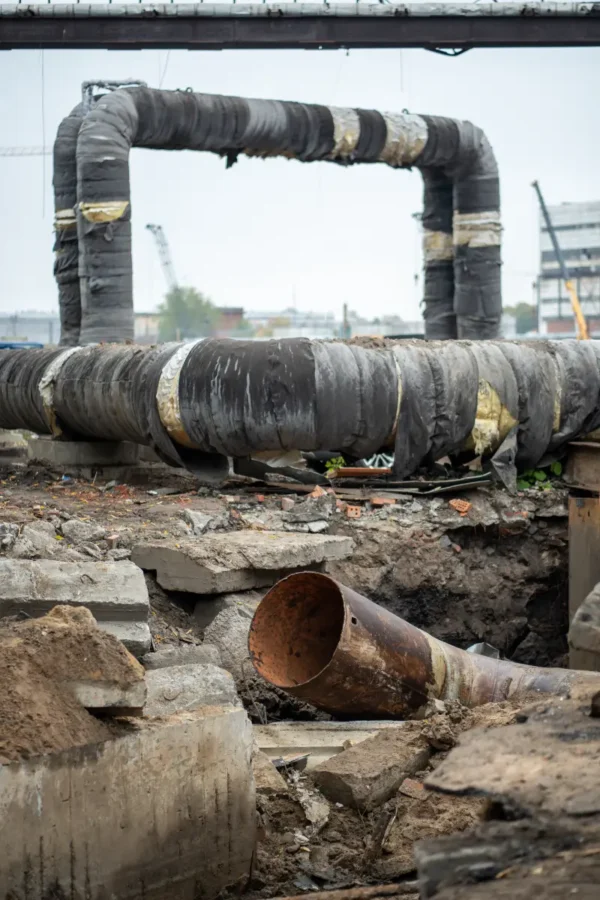
The main problem with drinking from the tap here is actually created by the pipes transporting the said water. These are very old, just like the internal plumbing in many communist-era apartment blocks.
You can sometimes expect your water to pick up traces of rust and various metals on its way to your faucet. The same goes for trace pesticides or nitrates, which are kept within legal safety limits but might still be present.
This is exactly why I recommend adding an extra layer of safety and use a filtering bottle. Although many don’t.
The good thing is that at least some of the cities have started replacing the old water pipes, so the quality is only increasing.
Can You Ask for Tap Water in Romanian Restaurants?
If you visit a restaurant in the US or the UK, a waiter will immediately bring a jug of ice water to your table – for free.
That is not the norm in Romania. If you ask for tap water at a local restaurant, the staff will most likely look at you funny. However, a recent law has been passed and they are now obliged to offer you free tap water if you ask for it.
So ignore their (potential) stares and ask for that, if that’s what you want.
Culturally, restaurants here exclusively serve bottled water. You will need to order either still water (apă plată) or sparkling water (apă minerală).
Not all places in Romania have tap water!
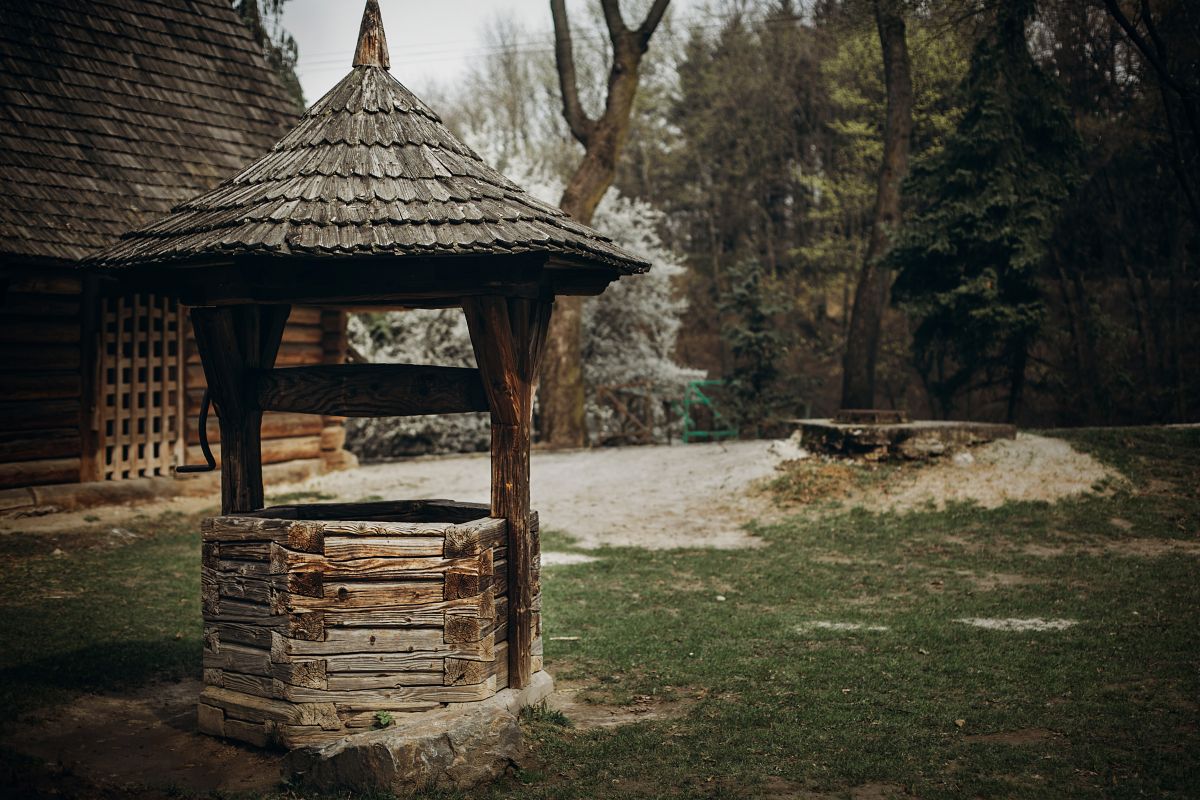
While all the cities and towns in the country offer safe to drink tap water, many of the villages still don’t have access to water on the tap.
Instead, here you will be served water from the old wells that are either scattered throughout the village or in the backyard of the house.
It is very risky to drink this type of water, especially if it comes from the old, open wells. If it’s a more modern setup with a hydrophore, things should be better.
But I personally don’t drink water from the wells (although many people swear by it and consider it better than anything). If I do, I usually get an upset stomach. Better avoid that when traveling.
So, even though all the people in the village will tell you that the water is safe to drink and refreshing and better than bottled water, I would never risk having it if it’s coming from a well – at least one you can’t see with your own eyes.
Chances are that if you see how it looks, you’ll never drink water from it! Ha!
As some of you might know already, we have recently purchased a village house in Romania.
The first thing that we did was test the tap water quality and we were surprised to find out that it was safe to drink.
It was very hard water according to the tests (so we use a filter can), but it was safe to drink. So even in smaller villages, it looks like the water treatment facilities are doing their job well.
Final Verdict: Should You Drink Tap Water in Romania?
This is mostly a matter of personal preference. I know a ton of people who swear by the tap water in Romania and who have never had problems with it.
I also know foreigners who visited the country and drank tap water. Again – no problems.
I prefer a different approach to limit the amount of heavy metals I ingest from those aging pipes. If you are only visiting Romania for a few days, I suggest buying bottled water just to be safe.
If you plan to stay long term, a water filter is the smartest investment you can make. I always use a standard filtering pitcher from brands like Brita or Aquaphor.
You can find them in any hypermarket for about 100 to 150 RON (20 to 30 Euros). A good filter removes the chlorine taste, filters out rust from old building pipes, and makes the water excellent for cooking or making coffee.
You can also install under-sink filters, some having more features, including removal of living organisms (although that is not a problem with the tap water in Romania). So a simple pitcher is the easiest and most practical choice.
So keep yourself hydrated, enjoy your travels, and know that you have plenty of safe options available in this country.
Now over to you – do you usually drink the tap water in Romania (or plan to for your next visit) or you go the “safe route” and choose bottled water instead?

I am a journalist and local expert who has been documenting life in Romania since 2013. Based in Constanta (after living in Bucharest and Drobeta Turnu Severin), I provide up-to-date, on-the-ground advice for expats and travelers. My articles are based on real life experiences and plenty of research – from paying Romanian bills to exploring the wild “Rawmania” countryside.
I am leery of drinking tap water anywhere. Not because l think it’s bad, but because of the taste. I can detect even trace amounts of minerals and l hate that last in my mouth, so l am one of the horrible people that buy bottled water but recycle. Nice to know the water is safe, even though chlorinated.
If you are sensitive to taste, then you would definitely hate the taste of tap water in Romania 🙂 In the city where I live, since the tap water comes from the Danube (just imagine!) they use a ton of chlorine. Still, I was recently in Timisoara and found out that their tap water has a particularly bad taste – it was difficult even to brush my teeth with it. So probably it’s a different story in each city in Romania….
My 90 year old mother and I took a trip to Romania so she could visit our relatives one last time about 10 years ago. We spent 25 days there, mostly in Bucharest. However, we spent time in Arpasu de jos and Deva. I am a water drinker and drank tap water and well water. The best well water I have ever had was in Arpasu de jos. It was ice cold and wonderful.
Romanians should actively lobby their local politicians to apply for EU funds and replace aging water mains as well as upgrade water treatment plants, both for drinking and wastewater. This will result in jobs and modern infrastructure, as well as save the environment from needless plastic bottles that eventually end up in landfills, river tributaries or the sea where they breakdown and pollute our environment.
I remember driving along the Danube a few years back and seeing the river banks lined with thousands of plastic bottles…so sad. Also, water filters with activated carbon should eliminate the taste of chlorine in the water as well as metals. The taste and smell results from the evaporation of the gas from the water.
Technically speaking, the jury is still out on whether volatile organic compounds (VOCs), like dissolved chlorine, pose a health risk to humans as there haven’t been any long term studies conducted to assess the effects of what is essentially a carcinogen. Ozone is the way to go for treating drinking water, but this works best in highly dense urban areas. That said, any treated water is better than untreated water as the elimination or microorganisms is key and chlorine will do this.
sadly Ozone is not even standard in the West. I would love to have this here in Austria, but nope….falling quality and rising Chlorine content…
Ideally, the drinking water should not have high levels of chlorine as modern water treatment plants use filtration and UV treatment to remove particles, bacteria, and protozoa from the water. Ozone is then used to prevent bacterial growth in the pipe system however it breaks down easily so several ozone pump stations would then be required. This isn’t economical if population centers are very spread out, which isn’t the case in Romania.
But, if a municipality would want to avoid any additional ozone being pumped into the drinking water system it could add minimal amounts of chlorine to avoid bacterial growth in the pipes. However, if there is a significant chlorine odor it would be wise for the city residents to lobby the mayor to adopt a filtration/UV treatment process as chlorine can create Volatile Organic Compounds in the water, such as Trihalomethane, which research has shown to be carcinogenic.
An activated carbon water filter, either attached to your kitchen sink faucet or in a portable water jug, will effectively remove the smell of chlorine as well as those VOCs. As an advocate for eliminating plastic water bottles and for preserving local drinking water, I highly recommend such a filter while also asking the municipality to invest in the necessary infrastructure.
and who pays for that? when not even villages or towns, even cities in the West have Ozone treatment, nit to speak to press all needed water through osmosis filters like in desalination plants 3-4 euros/m3 in Austria and get chlorinated stuff, often with sediments…and we are supposed to have a good water here…in the plains they have high Nitrate levels it’s awful
and Germany tells it has a Uranium problem rising in the groundwater from Phosphate fertilizers so where to start, but Danube water just chlorinated is horrible! who does this! at least dig some wells beneath the river or use osmosis filters!
I’m an international student in Pitesti and after reading your article I decided to try a creative solution: to mix mineral water with tap water! Let’s see what happens to me!
Haha, I am sure nothing bad will happen! Good luck!
I got very ill drinking just a mouthful of tap water (to take vitamins) in Bucharest in 2007. Perhaps the water improved after that.
Well water IS the best water and I am one of the ones who swears by it. But nice to know that tap water can be good as well.