
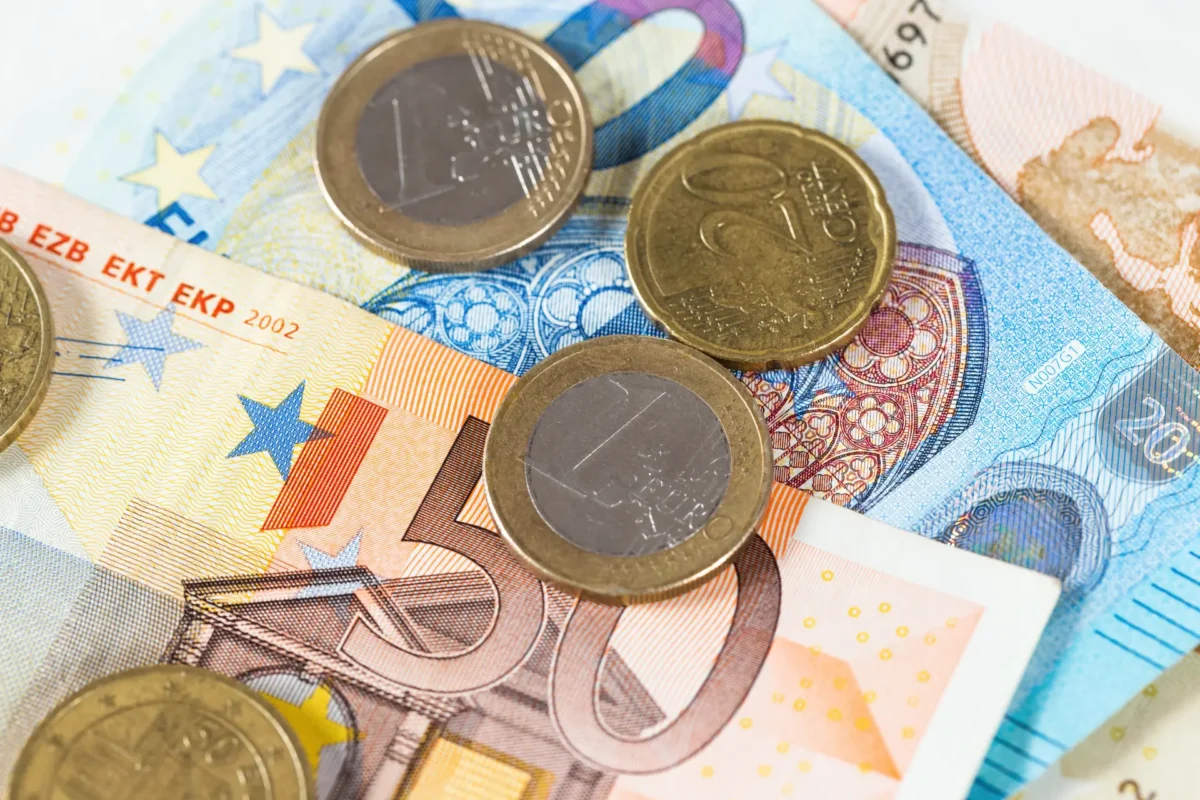
Are you packing your bags for Bucharest or Transylvania and wondering what currency to bring? I get plenty of emails asking if you can use Euros or US Dollars here, and the answer is a bit nuanced, although one approach is the easiest.
The easiest approach is to have Romanian Lei (RON) on hand, as you generally can’t pay with Euros or any currency in most shops, restaurants or anywhere in the country.
The Romanian Leu (Lion) is the country’s official currency and plans for the country to switch to using Euros have been constantly delayed.
So even though Romania is in the EU and even in Schengen, its official currency is not the Euro, so you will have to use the local one.
Now, let me save you some time and a lot of money in exchange fees: here is everything you should know about paying for goods and services here in Romania.
Can You Pay with Euros in Romanian Stores?
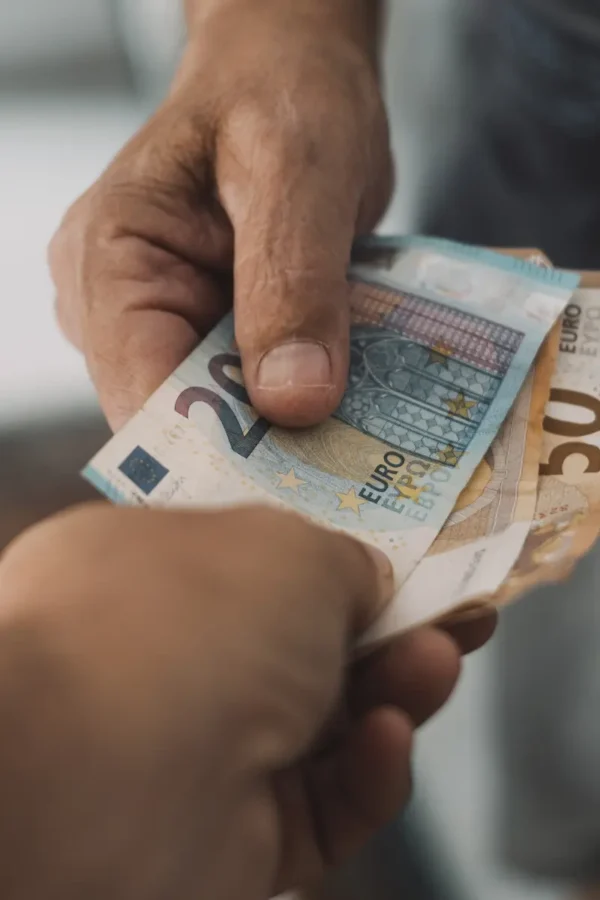
The situation is a bit more complex than most of foreigners traveling to the country would probably like it to be.
However, it would be safest to assume that you won’t be able to pay using Euros anywhere in Romania, including stores.
There are indeed places where they might accept Euros – from stores to restaurants and attractions in the more touristy places. But even if they do, the rates that you would get would be absolutely terrible, so you’d end up paying a lot more than you should.
So you would save a lot of money if you exchanged your Euros into Romanian Lei and used those to pay. Or use a card with a good exchange rate or ideally with multiple currencies, like Wise or Revolut.
While card payments have become highly popular and even the law now says that all sellers should accept them, the reality is that in some places they “won’t work,” so having at least some cash on hand is always a good idea.
Ask before making a purchase if you can pay by card if you want to be 100% sure.
To make things even more confusing for travelers, some prices might be listed in Euros in Romania, although you are still expected to pay in Lei (the national currency).
We’re talking about real estate (renting or buying), larger items (cars) and even mobile phone plans will usually have their prices listed in Euros. But remember – you are still expected to pay in Romanian Leu.
In conclusion, remember that Romania is still a very cash-friendly country, and the farther you get from the larger cities, the more difficult it might be to pay by card.
So your best bet is to find a local exchange firm with 0% commission and a good rate. Surprisingly, many of these independent exchange houses offer better rates than some banks or ATM withdrawals.
And if you want to know what to expect in terms of costs, I recommend reading my previous article about prices in Romania.
Will Romanian stores accept US Dollars?

While you might be able to pay in Euros here and there throughout Romania, chances of anybody accepting US Dollars are slim to none.
Some more touristy places might accept your dollar bills – I know none that do, though – but if they do, the exchange rate they’ll offer will be terrible as well.
When it comes to using your US-issued card, the advice depends entirely on your bank.
Using a standard US debit card to make purchases will probably cost you a lot in commissions and foreign transaction fees.
However, if you travel with a modern credit or debit card like Chase Sapphire, Capital One, or Charles Schwab, you will pay zero foreign transaction fees. Make sure you check your bank’s rates before visiting.
If you only have USD in cash, my recommendation is to exchange it at a local 0% commission exchange house. Use that cash to pay for all services in order to save money where card payments are unavailable. Paying with physical US Dollars is virtually impossible throughout the country.
Best Ways to Handle Money at ATMs
If you prefer to withdraw cash directly instead of carrying bills to an exchange office, you need to be careful about which ATM you choose.
Some independent ATM networks charge high fees and use dynamic currency conversion to give you a very poor exchange rate.
Instead, stick to official bank ATMs attached to physical bank branches here in Romania. Look for names like Banca Transilvania (the largest Romanian-owned bank), BCR (part of the Erste group), BRD, or ING.
These will offer you the fairest withdrawal rates, especially if your travel card waives international ATM fees.

Conclusion
I hope that these answers make it easier for you to plan your finances and how to handle money when you travel to Romania.
Basically, expect to only pay in Romanian Lei, even if some of the high-value prices might be listed in Euros. Have a card with low fees or one that allows you to keep the local currency.
And always find an exchange with 0% commission to keep some physical bills on hand, because cash is still very much a necessity in Romania.
If you have additional questions about this, don’t hesitate to let me know by commenting below.

I am a journalist and local expert who has been documenting life in Romania since 2013. Based in Constanta (after living in Bucharest and Drobeta Turnu Severin), I provide up-to-date, on-the-ground advice for expats and travelers. My articles are based on real life experiences and plenty of research – from paying Romanian bills to exploring the wild “Rawmania” countryside.
Dear Romaniaexperience.com,
I am a U.S. citizen living in Bucharest. Your article about paying in Leu, Euros or U.S. dollars is pretty spot on with the exception of one note. I have a U.S. credit card from CapitalOne- a financial institution based in the U.S. It is a Visa card and I use it daily in Romania at all pay counters that have a POS. Now, the thing about this credit card which makes it a financial boon is that they CHARGE NO INTERNATIONAL TRANSACTION FEE, as do all other credit cards, that I am aware of, which charge a 1% to 3% added fee to every international transaction that goes through their card. FURTHERMORE, CapitalOne gives the ROMANIAN BNR RATE in effect for the Leu/U.S$ exchange rate at the time of the purchase made…It is an exceptional credit card and has saved me thousands of U.S. dollars since I have been here. Your article, otherwise, is pretty savvy…Cheers!
Thank you for adding that! This is really useful information indeed. I did believe that some banks offer nice incentives (I know that some US banks pay back the fees for example), but it’s always good to have confirmation!
I have also heard Charles Schwab highly praised along with CapitalOne in several YouTubes made by expatriates. I believe they reimburse any ATM fees you might pay overseas. I unfortunately cannot take advantage of any of these accounts thanks to the Patriot Act which treats many Americans living overseas like myself as terrorists or drug money launderers. Unless you have an American address and all kinds of IDs, you cannot open a checking account at any American bank. Charles Schwab told me no. CapitalOne told me no. I am stuck with a terrible checking account I had when I left the USA. It charges me $5 for out-of-network ATMs plus an international exchange fee that is a percent of the total amount. My investment fund company used to have an ATM card with no such exchange fee but they announced they were discontinuing the service last year. I am now stuck doing international wires from my investment company at $10 a pop and getting a bad exchange rate from my local Japanese bank. But at least I can transfer a larger amount at a time unlike my checking account ATM card. This week American expatriates are also experiencing the “joy” of a weakening US Dollar. It has descended from the usual 109 Yen to the $ to just 104.5 Yen which means I will get about 99,000 less Yen on the $22,000 I am transferring. That’s almost $950 out the window. Yes, exchange rate fluctuations over time can sink many a retirement plan.
Great info as well! I head about banks that repay the ATM fees, but I didn’t know any. Thanks for sharing this additional detail, it’s more than welcome!
I know that I had to make some payments in USD as well and it was horrible fees-wise. I guess that banks need to make some money too, right? And with the fees here being low to none for EUR transfers, they rip off other currencies. And it seems that happens everywhere in the world, not just here in Romania.
My favorite thing to do when l travel is to use the ATM to withdraw in the local currency. So much better rates than what you get with the currency exchange places. We have a Schwab card but stopped using it eons ago. In Nigeria, peopel welcome U.S dollars or English pounds. In fact, most airlines will only accept those currencies which suck as the banks don’t change currency. You can only exchange money on the black market. So wrong in so many ways.
Yes, I remember the days when the black market was flourishing here as well, but fortunately (or at least as far as I know) it died a long while ago.
With Romanian banks, I saw that most exchanges offer better rates – which is surprising. But then again, Romania is not as touristy as other places, so the ones exchanging money are the locals who can do the research for the best rates easier.
Because this article is several years old, I would like to know if now, in 2025, Romania still does not use euros. We will be in Romania this September. If Romania does not use euros, can we buy Romanian leis in the US? Or do we have to wait until we arrive in Romania? Should we exchange them at a Romanian bank?
Do most vendors in Romania accept the Visa credit card?
Thank you,
Karen Woo
I updated this article in 2023, and I will do my best to keep it up to date. But few things have changed – Romania still doesn’t use Euros, and you will have to pay in Lei.
It’s best to exchange your USD at Romanian banks or exchange offices – just make sure they have a 0% commission (and stay away from those at the airport, as rates are usually lower than elsewhere).
All vendors should accept card payments, but the reality is that some still don’t, so having at least some cash on hand is the safest way to go.
EDIT: While you can pay with your USD card here, I strongly advise not to do it, as you will most likely have huge commissions with each payment and also, most likely, poor exchange rates too.