
With Easter coming soon, you might want to hone your Romanian language skills and learn how to say Happy Easter in Romanian and maybe learn a few other greetings in the process.
No matter whether you’re trying to impress your loved one, co-workers, or friends, you’ll learn everything you need to know about pronunciation, various types of phrases, and Easter in Romania in general.
I already talked about traditional Easter foods in my previous article, so make sure you check that out, especially if it’s your first time celebrating it in Romania.
How to Say Happy Easter in Romanian
Now, let’s get to the Romanian language lessons! Here are the Easter greetings you need to know:
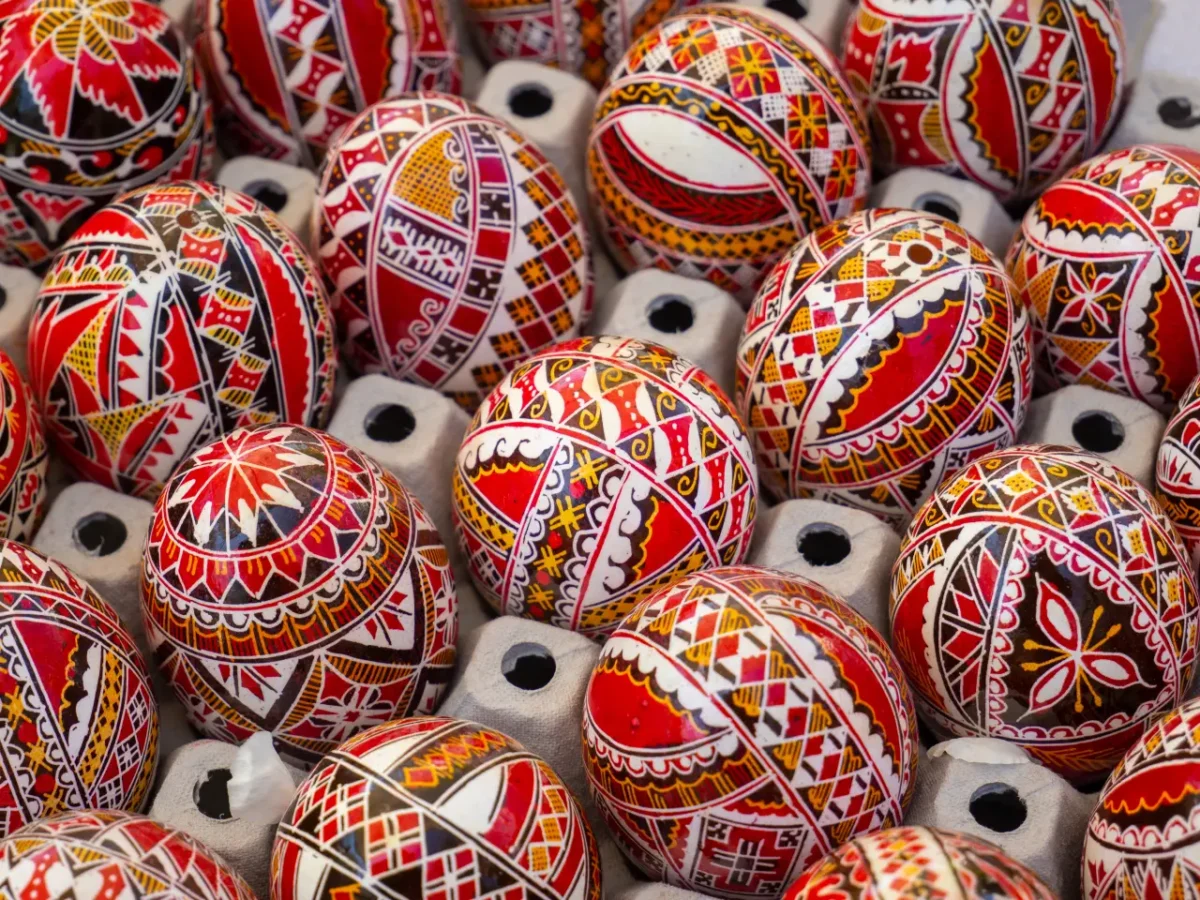
Happy Easter in Romanian is “Paște fericit!”
This is how you say it: Pash-teh feh-ree-CHEET
This is the main greeting that everybody uses. You shouldn’t go for anything else, in my opinion, but if you want to, there are a few options below.
You might also come across “Sărbători Pascale fericite!” (Happy Easter holidays) which is very formal and rarely used within groups of friends. But if you want to keep it formal, this is what you need to say.
If you want to keep things a bit more generic, you could use the traditional Happy Holidays – Sărbători fericite! (pronounce it Sər-bə-TOHR-ee feh-ree-CHEE-teh)
But this one is usually used more as a Christmas Greeting and not so much on Easter. I prefer to leave it out of my Easter vocabulary completely to avoid confusion. (Note: if you want to prepare in advance, learn how to say Merry Christmas in Romanian here)
Other Religious Easter Greetings: Hristos a Înviat
Unlike the winter holidays that come with a huge variety of potential greetings, there is a very distinct Romanian Easter tradition involving a special phrase.
That phrase is used mostly in the first week after Easter Sunday. During this time, people greet each other with:
“Hristos a Înviat!” (Christ has risen)
Pronounced: Hree-stos ah een-vee-aht
When someone greets you this way, the proper response is:
“Adevărat a Înviat!” (Indeed He has risen)
Pronounced: Ah-deh-vuh-raht ah een-vee-aht
The Church uses this greeting up until the Ascension, which is 40 days after Easter Day.
But in everyday life, you will hear it heavily for the first three days of Easter, and maybe the rest of the first week. After you have exchanged this specific greeting with someone once, you can revert back to traditional hellos for the rest of the season.
Learn these two greetings above, though, as you will use them to knock Easter eggs with others – more on this below!
Other interesting traditions you should learn about are Martisor and Dragobete – celebrations you probably never heard about until now.
Egg-Knocking Tradition (Ciocnitul Ouălor)
Romanians don’t traditionally have egg hunting during Easter (although this is starting to be adopted more and more as a fun activity for kids).
Instead, we have what I find to be an even more entertaining activity: knocking painted eggs, known locally as “ciocnitul ouălor.”
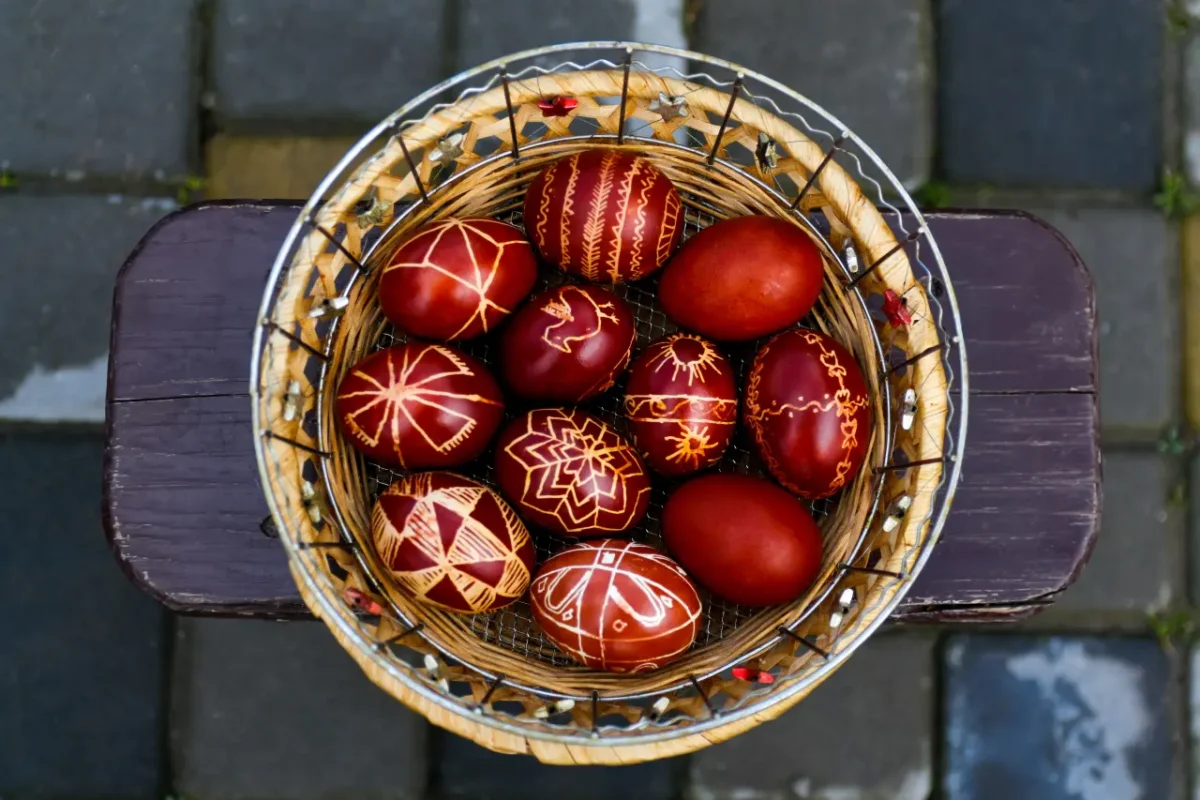
Traditionally, the Easter eggs were painted red, symbolizing the blood of Christ, but nowadays plenty of colors and combinations are used. No matter the colors, though, egg knocking is an important Easter activity.
Here’s how you do it:
- One person holds the egg (pointy end up), while the other gently taps it with their own egg.
- The person doing the tapping says “Hristos a Înviat!” before the tap (but waiting for the answer first)
- The one holding replies, “Adevărat a Înviat!”
- Then the first person knocks eggs, trying to aim exactly in the top center – otherwise, it’s considered cheating. Whichever egg cracks first is the “loser,” although you’ll get plenty of rematches during the holidays.
There are plenty of strategies involving choosing the “right” egg, with people keeping their winners separate from the rest and trying to become the ultimate Easter egg knocking champions. It’s fun!
You can read more about other amazing Romanian traditions here.
When Is Easter Celebrated in Romania?
Most Romanians are Orthodox Christians, which means they generally celebrate Easter according to the Orthodox calendar and each year it’s a different date.
This date rarely coincides with Catholic Easter. In 2026, you should mark your calendars with these specific dates:
- Catholic Easter: April 5, 2026
- Orthodox Easter: April 12, 2026
Supermarkets and restaurants are starting to look for those who celebrate the Catholic Easter (which is usually before the Orthodox one), but the best deals, discounts and most of the celebrations happen on the Orthodox Easter.
The best deals, days off, and festivities in Romania usually revolve around the Orthodox date, so be sure to double-check the calendar if you’re visiting or have Romanian friends.
Students receive days off during the Orthodox Easter, no matter what their religion is – and the same goes for the days off from work.
And that’s pretty much it – easy and straightforward. You have “Paște fericit!”, “Hristos a Înviat!”, and “Adevărat a Înviat!” to get you through the Romanian Easter holiday like a local.
If you want to learn how to say other things related to Easter in the Romanian language, let me know and I will gladly help!

I am a journalist and local expert who has been documenting life in Romania since 2013. Based in Constanta (after living in Bucharest and Drobeta Turnu Severin), I provide up-to-date, on-the-ground advice for expats and travelers. My articles are based on real life experiences and plenty of research – from paying Romanian bills to exploring the wild “Rawmania” countryside.
I don’t speak Romanian, but now I know why my friend always sends everyone “Hristos a Inviat” this time of year.
After 15 years I will have the proper response.
Hristos Anesti !
(based on your name, if I’m not mistaken 😉