
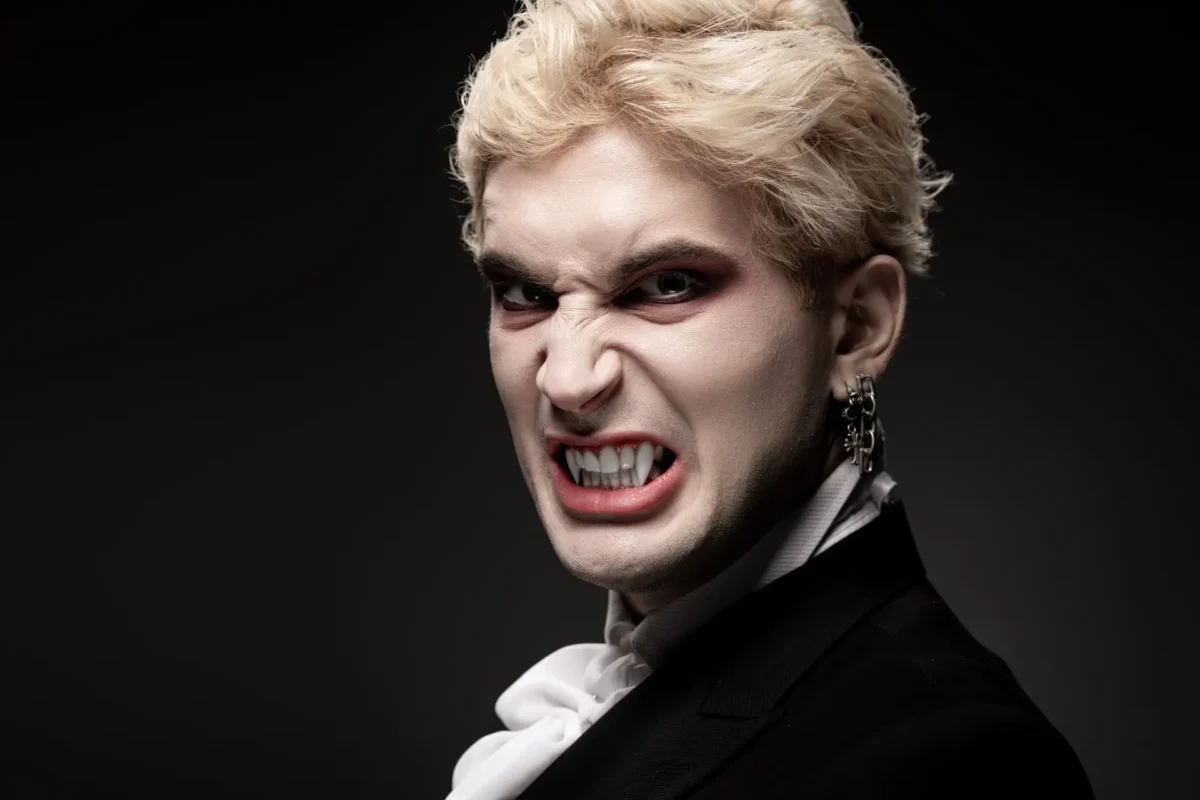
Many people might not know where Romania is on the map, but most likely they do know that it is the country of Dracula and vampires.
This is one of the most popular stereotypes about Romania actually and today we’re going to learn how these legends were created.
In modern-day Romania, most locals don’t spend their time thinking about vampire lore. For the average Romanian, these legends are a distant curiosity, a subject for those passionate about folklore, mysticism, or the occult rather than a part of daily life.
For the rest – it’s just a fact. Vampires are from Romania, especially the Transylvania region. And that’s just how things are.
Are vampires from Romania or Transylvania?
Just ask somebody: “Are vampires from Romania” and the answer is yes. Vampires are from Romania, Transylvania – and you’ll get some Dracula references mixed in as well.
So, like it or not, Romania and Vampires are strongly bonded, maybe even more for people across the globe than it is really for Romanian people.
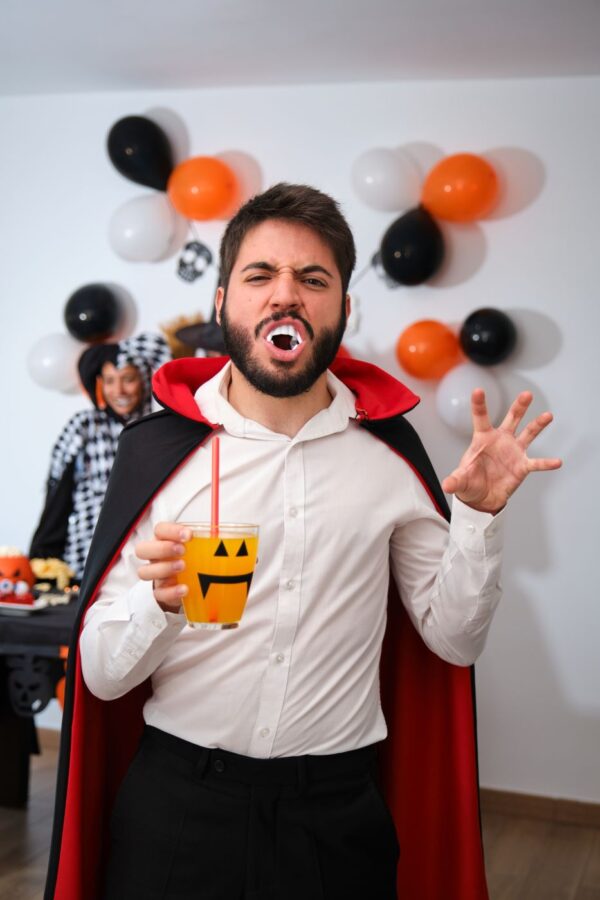
So, going back to our subject: why is Romania known for vampires? How were these legends created? Who came up first with the idea of Dracula? What connection is there between the Romanian mythology and the vampires, and since when do they believe in supernatural monsters in Romania?
These are the questions that I’m going to answer in today’s article about vampire Romania.
I think that given their importance within the Romanian mythology, learning more about the origins of vampire legends here will also bring you closer to the Romanian culture, history and mythology. So let’s get more in-depth!
Romanian Vampire History: Three Main Sources
There are countless stories regarding the source of vampire legends here. To make sense of them, we can classify the origins into three main categories:
1. Romanian Vampires in Literature
The vampire subject may be ambiguous, but we have specific pieces of literature where these creatures were first described and popularized. This is the foundation of the modern myth.
1.1 Dracula, by Bram Stoker
The first reference that we know about Romania and Vampires can be found in Bram Stoker’s novel, Dracula. This is probably the main thing that made Romania the place where vampires live.
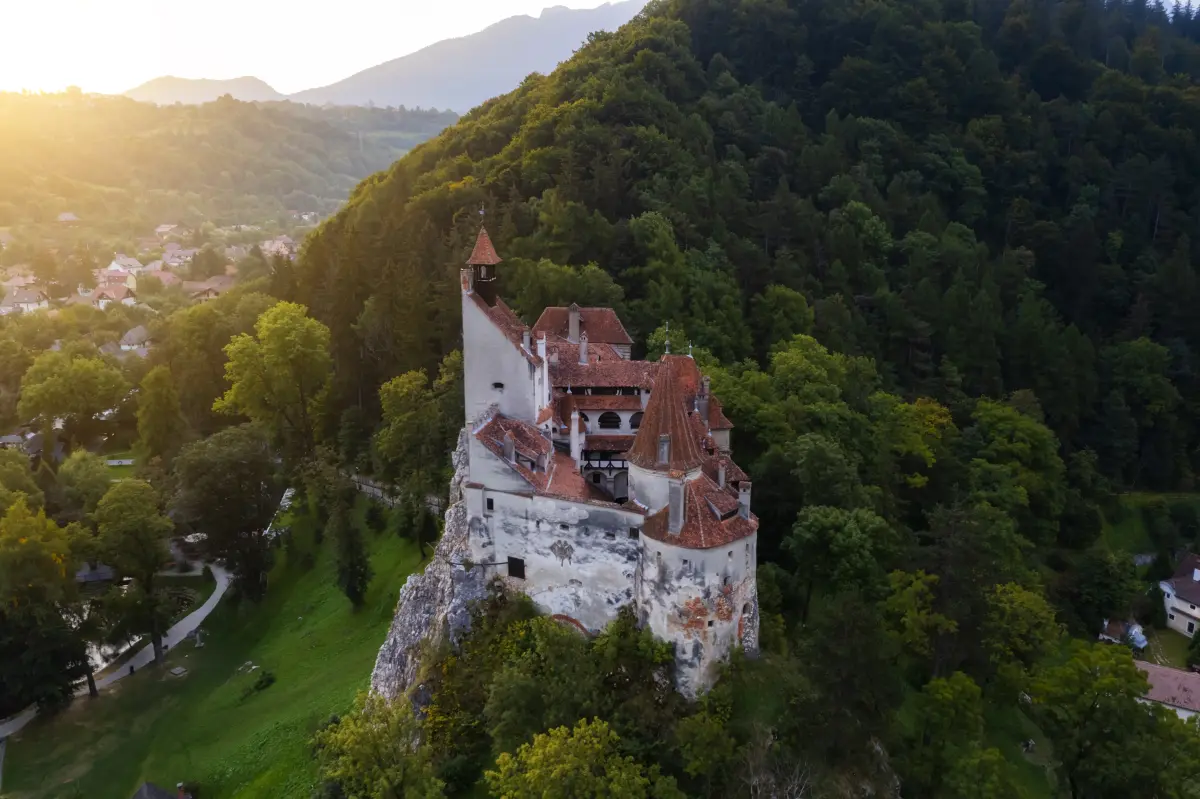
The classic horror Gothic story was published in 1897 by the Irish writer, and describes the bloody habits and stories of Dracula, a vampire living in a Romanian castle, identified as Bran Castle – you can see it below:
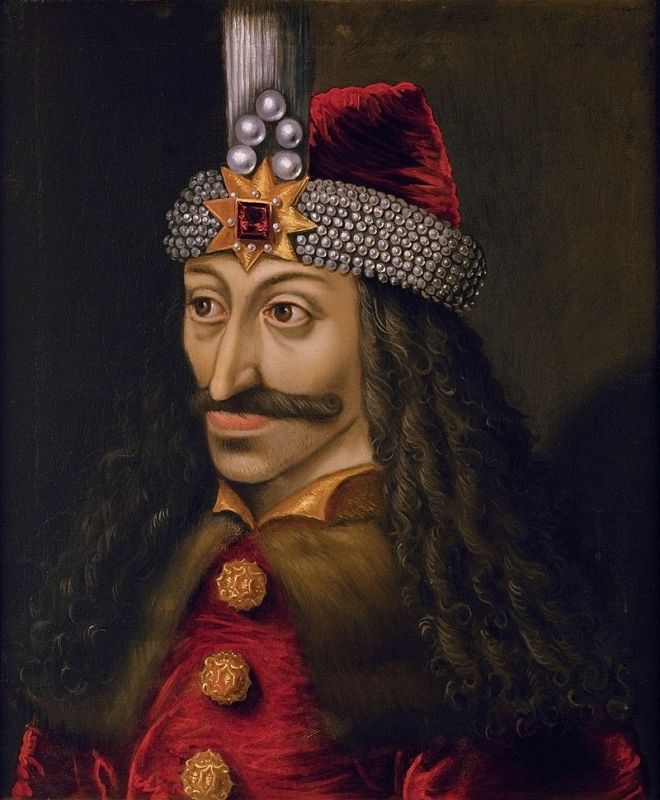
Bram Stoker cleverly blended reality with fiction when creating this character. His source of inspiration was Vlad Țepeș (Vlad the Impaler), a former ruler of Wallachia.
He was a very strict and cruel leader who had terrible punishments for those who broke the law or offended him – no little how small their mistake was.
His favorite and most popular way of killing thieves and criminals was impaling them – this was actually a practice during those times in the entire region, but for some reason it was Vlad who stuck as “the Impaler”.
His actual name was Vlad Drăculea. But in most languages, that is written as Vlad Draculea – which is very close to “Dracula” and his nickname of Vlad Dracul (aka Vlad the Devil).
But this was more of a word play, combined with the fact that he was so cruel – and not really a vampire that found the gates of hell and came to Romania.
He did have a “thirst for blood” – but the metaphor was taken literally and popularized by Bram Stoker’s book… and the rest is history!
Even more interesting is the fact that Bran Castle aka Dracula’s castle has absolutely nothing to do with Vlad the Impaler (or Dracula). It just resembles the castle that Bram Stoker used in his novel and most likely the one that he used as inspiration.
But whenever you’re visiting Dracula’s Castle, do know this bit: the “real” Dracula, Vlad Tepes, never lived there!
As another interesting and fun fact, I think you should know that Bram Stoker actually never even visited Transylvania. Or any other place in Romania!
1.2. Romanian Mythology, by Tudor Pamfile
Looking deeper into literature, we find Tudor Pamfile, a Romanian ethnologist. In his 1915 book, Romanian Mythology, he provides a detailed analysis of the “strigoi” (the local name for vampires).
Pamfile breaks down the types of entities found in Romanian belief:
- Female vampires: often associated with witches.
- Living vampires: sorcerers or people born with a “caul” (a piece of amniotic membrane on their head).
- Dead vampires: the reanimated corpses, considered the most dangerous, their name ranging from strigoi to moroi, depending on the region
If you want to dig deeper into the academic side of these myths, you can also look up works by Dimitrie Cantemir, Radu Florescu, and Teodor Burada.
1.3. My Swordhand Is Singing, by Marcus Sedqwick
Modern literature continues to keep the legend alive. A great example is My Swordhand is Singing (2007) by British writer Marcus Sedgwick.
The novel follows Romanian characters fighting dead strigoi and amplifies the fear associated with the region. Along with novels by Wilhelm Schmidt or Franz Hartmann, these stories ensure the myth never dies out.
2. Vampire Romania in Cinematography
Inspired by literature or not, movies about Dracula and vampires generally make reference to this country and contribute to creating and spreading more awareness about the link between Romania and Vampires.
2.1. Bram Stoker’s Dracula (the movie)
The famous legend created by Bram Stoker became even more famous in 1992, when Francis Ford Coppola created the Dracula movie.
While it doesn’t have any real historical accuracy (it’s a work of fiction, after all), the movie did help establish the myth that Romania – and especially Transylvania – is the land of Vampires and the home of Vlad Dracula.
Many other movies based on Stoker’s novel were released over the years being more or less successful.
2.2. Nosferatu – Eine Symphonie des Grauens
One of the first movies presenting vampires in connection to Romania, ever, was the German production entitled Nosferatu – Eine Symphonie des Grauens.
Translated, this means “Nosferatu, the Symphony of Horror”, and it is an unauthorized adaptation of Bram Stoker’s Dracula novel. The movie was published in 1922, and it is one of the most popular expressionist movies.
The film is mute and contains five scenes. This is one of the first sources spreading the belief that vampires are scared or can be killed by daylight (which did not originate from the Romanian folklore).
2.3 The Nun and Wednesday
Modern cinematography continues to amplify the connection between Romania and the supernatural and I am sure it will keep doing so.
Although it doesn’t make certain references to vampires, The Nun (2018) is a great example of how today’s movies keep spreading and creating more legends regarding paranormal phenomenon and supernatural events in Romania.
Scenes from The Nun were filmed in Sighisoara and Corvin’s Castle from Transylvania, again amplifying and re-creating legends about Transylvanian supernatural forces and events in Romania.
Wednesday
Even more recently, the smash-hit series Wednesday was filmed largely in Romania. Locations included the Cantacuzino Castle (Nevermore Academy), the Bucharest Botanical Gardens, and the Royal Train Station in Sinaia.
While the show is about the Addams Family, filming it in Romania was a deliberate choice to tap into the country’s “gothic” reputation.
And if you are interested in checking out Nevermore Academy, I recommend booking this day tour from Bucharest: it takes you there, as well as to Dracula’s castle and the amazing Peles castle.
3. Folklore and Traditions
This is the really important part, the grain of truth, even though not as popular on a world scale as the other two above.
However, we should not skip the massive influence of genuine Romanian folklore. Within the Romanian culture, we can find several traditions, celebrations and rituals with references to vampire protection, which also contributes to the creation of several legends and beliefs about these creatures.
3.1. Popular Romanian names for vampires
The word “Vampire” (Vampir) is used in Romania today, but it is a modern borrowing from Western culture. Historically, Romanians used different terms depending on the region and the nature of the spirit.
- Strigoi: The most common term, referring to troubled spirits that rise from the grave.
- Moroi: Often used in parts of Transylvania and Wallachia, sometimes referring to the ghosts of unbaptized children or a different category of spirit.
- Pricolici: These are undead souls, often violent men in life, who rise from the grave and take the form of wolves or large dogs. This connects the vampire legends with werewolf mythology.
- Also called Vidma or Varcolac (werewolf).
What is the Romanian word for vampire?
The word for “Vampire” in Romanian is easy: Vampir. There are other local variations that you can use, but today it’s the “vampir” that is most popular than the traditional Romanian words for vampire.
3.2. Folkloric stories and Romanian beliefs about vampires
Furthermore, because of the fear of vampires and the superstitions surrounding them, Romanians have a collection of highly imaginative folkloric stories about vampires habits and lives.
For example, they believed that vampires were created when a child died un-Christianized, when the seventh child of the same sex was born in a family, when a person died after a life of sin, or when someone died because of suicide or because of the curse of a witch.
3.3. Romanian celebrations and rituals for vampire protection
The connection between Romania and vampires is strongest during specific times of the year.
St. Andrew’s Eve (November 29th) is known as the “Night of the Spirits” (Noaptea Strigoilor), basically the Romanian Halloween. According to tradition, this is when the barriers between the living and the dead are thinnest, and strigoi are most likely to rise and attack.
To defeat them, superstitious people hang garlic or onions at the windows and entrances of their homes. This is where the Hollywood trope comes from – Romanians genuinely believed strong scents would repel evil spirits.
Other rituals included:
- Placing garlic in the mouth of the deceased.
- Turning the body face-down in the coffin, so if they woke up, they would dig down toward hell rather than up toward the living.
- In extreme cases (which happened in rural areas even in recent history), villagers would exhume the body, remove the heart, burn it, and drink the ashes mixed with water to break the curse.
- More peacefully, splashing the body with Holy Water seems to work just as well.
Conclusion
If you are passionate about Romanian mythology, occultism in general or especially about vampires, I am sure you know plenty of other interesting facts about these creatures, and I would be glad to find them out from you.
But, all in all, I hope that after reading this article you have a quite clear answer to the questions “what connection is there between Romania and Vampires” and “how were these legends created”.
All the works of fiction I talked to you about and all the traditional superstitions contributed to spreading more and more awareness of legends with vampires from Romania.
If you want to visit Romania because you are passionate about these stories, make sure you don’t skip Bran Castle, Sighisoara and Transylvania – because these are the closest to these legends.
But, if you ever wanted to visit Romania and were reluctant, fearing that there might be a drop of reality and that you might encounter supernatural beings, well… come to visit without any worries. The only blood-sucking creatures that you’ll find here are the mosquitoes.
I promise you Romania is a very beautiful country, modern and aligned to European standards, clean and safe.
Legends may spice up the history a bit and attract those passionate of mythology, but in reality there is absolutely nothing to fear other than your own imagination!

I am a journalist and local expert who has been documenting life in Romania since 2013. Based in Constanta (after living in Bucharest and Drobeta Turnu Severin), I provide up-to-date, on-the-ground advice for expats and travelers. My articles are based on real life experiences and plenty of research – from paying Romanian bills to exploring the wild “Rawmania” countryside.
Interestingly, Calin, this is a very timely article for me. I have a friend in California that runs a small theater group. Usually, around Halloween, they will do a horror story for one of their productions. This year he has asked me to write a play, peppered with my intimate knowledge of Romania and, subsequently, the myth of vampires.
Researching for this project I found an interesting piece of information. There is an actual medical condition called porphyria, AKA “The Vampire Disease.” This condition, which is genetic, has symptoms that include sensitivity to sunlight, which leads to pale skin and facial contortions; recession of gums, giving the appearance of fangs; dark red urine that was once believed originated from drinking blood; and an aversion to garlic.
Why garlic? Because garlic has a high amount of sulfur, which those who suffer from porphyria are also sensitive. Easy to see how superstitious people from a less enlightened time could believe one affected by this disorder could have been under the influence of a curse or, perhaps, the Devil himself.
Amazing explanation, Jim! I didn’t know this, but it does make sense. As I was saying in a previous article about stereotypes – that there has to be a grain of truth behind them – the same stands behind vampires and other occult things. People always try to find an explanation to everything and sometimes they’re way off 🙂