
Romania has some amazing foods that I am sure anybody would love – and today I’m here to prove it by sharing the amazing traditional Romanian foods you must try when you visit.
While it is true that some of these have cousins in other countries in the region, we have added our distinct touch to make them uniquely ours (and, dare I say, more delicious).
Some of these traditional Romanian foods have cousins in other Balkan countries, but we have added our own distinct spin to make them uniquely ours, and they are part of Romanian culture.
But let’s skip the talking and instead let’s feast our eyes (for now) on the best traditional Romanian foods that you must try at least once in your lifetime. Preferably not all at once!
IMPORTANT: take my advice – don’t read this article on an empty stomach!
1. Sarmale (Cabbage Rolls)
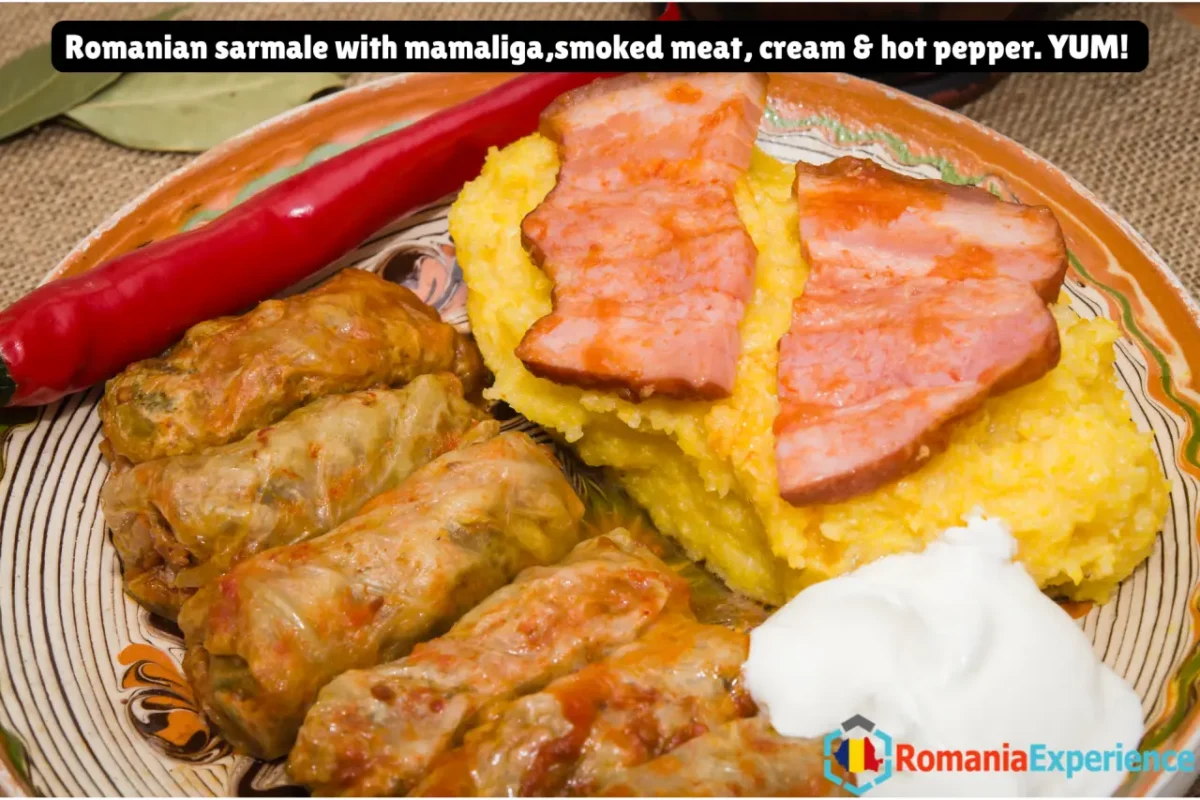
Sarmale (sar-MAH-leh) are probably the first thing locals will mention if asked to name a traditional Romanian dish.
These cabbage rolls are made of minced meat (usually pork) mixed with rice and spices, rolled into sour cabbage leaves (fermented cabbage), and boiled for hours in a special sauce made of sauerkraut juice, water, tomato juice, and even more spices.
It might not sound like a lot, but they are delicious!
You usually eat Sarmale with another piece of traditional Romanian food – Mamaliga (we’ll have more about it later), you can top them up with some sour cream and a bit of a hot pepper with each bite. Yum!
2. Mici (Grilled Minced Meat Rolls)
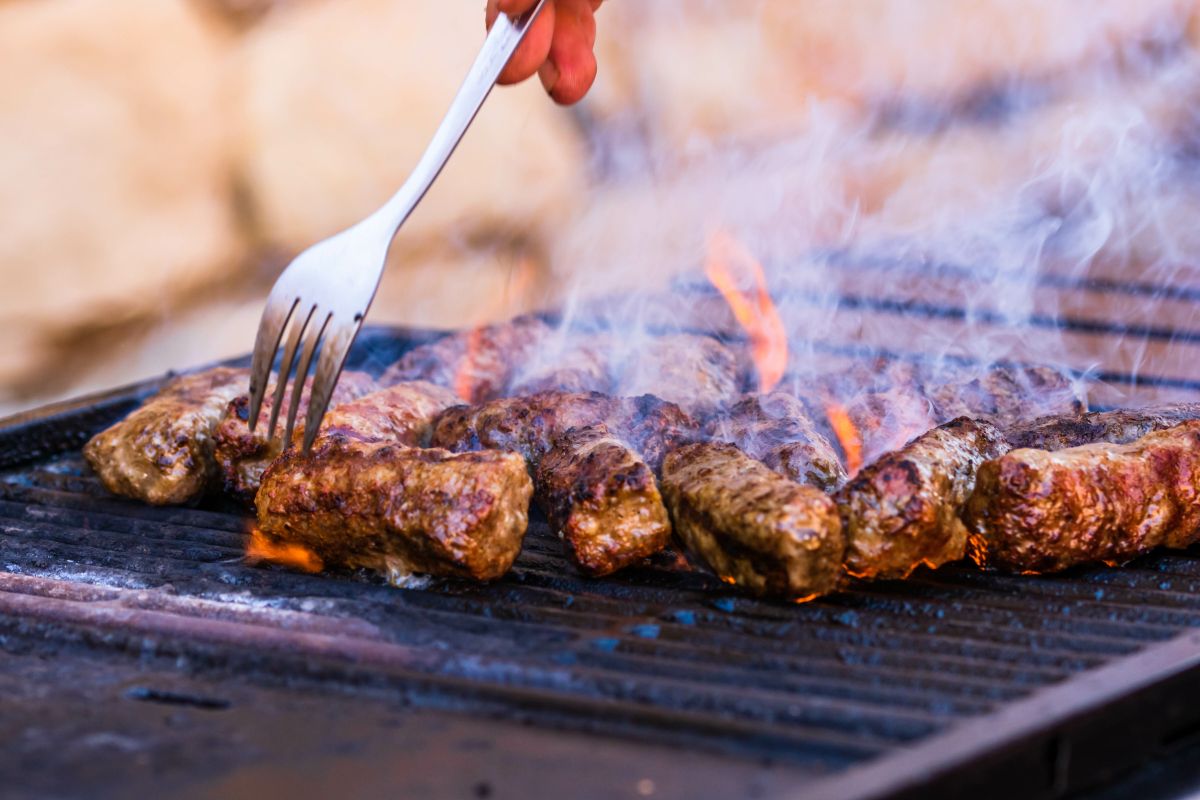
Mici (MEE-chee), also called Mititei, are literally translated as “Small ones.” While they got bigger and bigger over the years, they’re normally no longer than an adult’s finger.
Made from a mixture of minced pork and beef, mixed with spices, garlic, and sodium bicarbonate, they are then grilled and eaten hot with mustard and bread or fried potatoes.
They are very similar with the cevapi you can find in the Balkans, but the Romanian Mititei are usually fluffier and juicier. I also like their taste better.
3. Ciorba de Burta (Beef Tripe Soup)
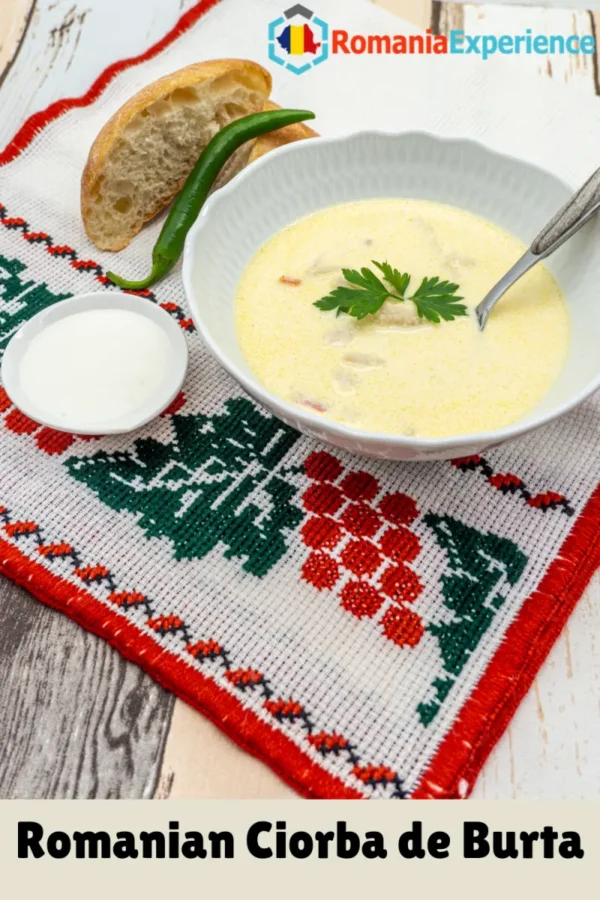
Eating beef tripe might not sound like the best idea, but that’s because you have never tried the Romanian Ciorba de burta (CHOR-bah deh BOOR-tah).
Serve it with sour cream, vinegar and a traditional garlic paste known as “mujdei” and all your pleasure spots will be tickled. No kidding – it might sound gross, but it’s delicious.
TIP: I’m not a huge fan of the actual beef tripe, so I only eat a small part on it, but feast on the liquid and call it a treat.
4. Mamaliga (Polenta)
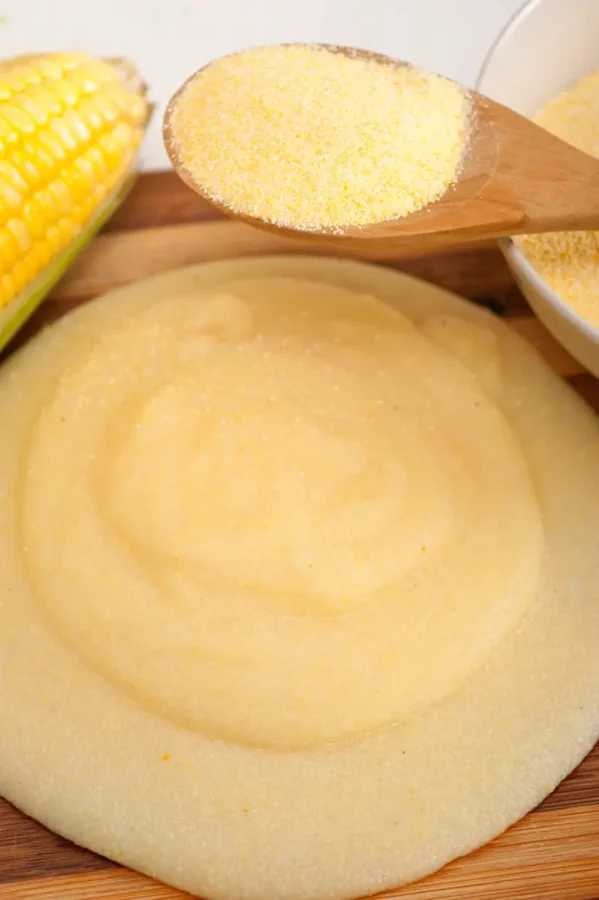
Mamaliga (mah-mah-LEE-gah) is also one of the better-known traditional Romanian foods, up there on the podium with Sarmale and Mici.
It is very similar to the Italian or Spanish Polenta, but ours is deceptively simple, yet still tasty. To make it, you just boil corn flour in water with a dash of salt and a few drops of sunflower oil or butter. That’s it!
The result is a creamy delight that you will eat instead of bread. And despite the simplicity of the recipe, it takes a lot of practice to know exactly how much corn flour to use in relation to the water. Otherwise, it will be either too hard or too runny.
Mamaliga is usually served with traditional Romanian white cheese and sour cream, or as a side for a plethora of dishes, from pork meat to Sarmale, mushroom stew, Varza a la Cluj and a lot more.
5. Varza a la Cluj (Cluj-style Cabbage)
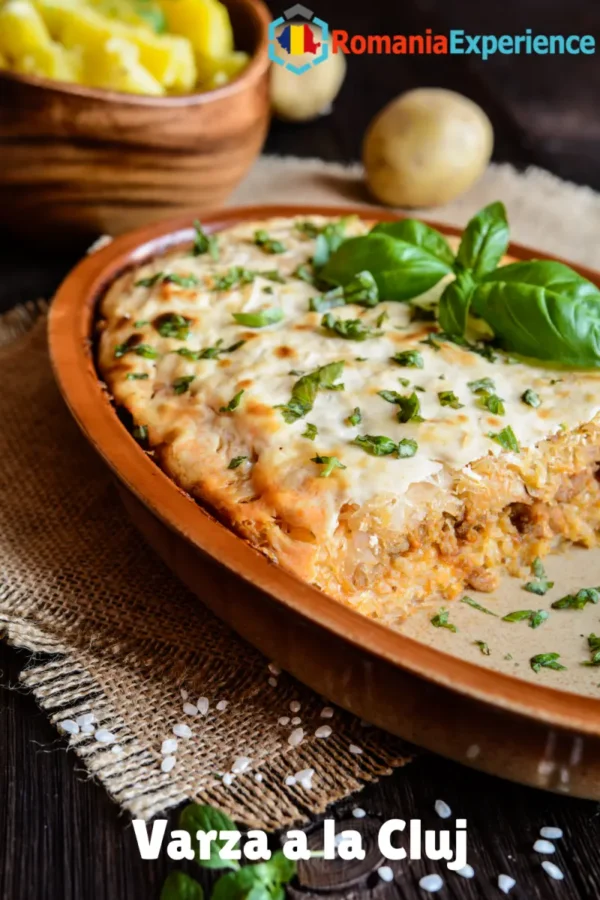
Varza a la Cluj (VAR-zah ah lah KLOOZH) is sort of a “sarmale for the lazy”. Instead of rolling the minced meat into the sauerkraut, you mix them all together and bake them in the oven.
This dish is more popular in the northern parts of the country and Transylvania, but it’s equally delicious no matter where you decide to eat it.
It’s usually sprinkled with some sour cream on top and eaten with a side of mamaliga.
6. Pomana porcului (Honoring the pig)
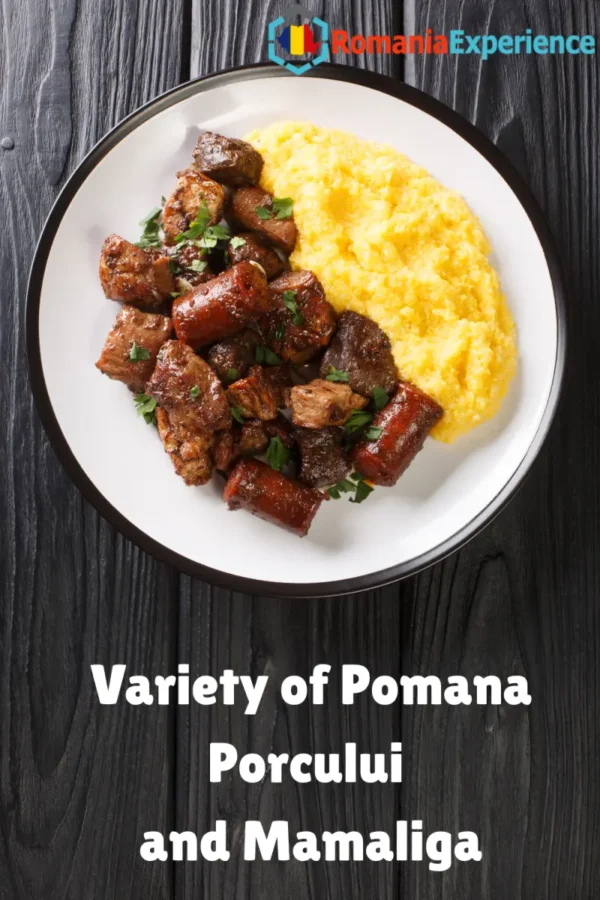
This is really an old tradition and difficult to explain as a whole: the Pomana porcului (poh-MAH-nah POR-koo-loo-ee) is eaten in honor of a pig that has just been slaughtered, usually in December, before Christmas.
Fresh meat from various parts of the pig is cut into larger pieces and fried in a deep pan, usually in the pig’s fat and paired with some sausage bits for good measure.
It is then served immediately to all those who participated at the pig’s slaughtering and always accompanied by the traditional “moonshine” – Tuica.
Or you can try it with water – even tap water in Romania is safe to drink.
Restaurants serve this dish as well, but obviously the meat is not as fresh. I can hardly tell the difference, though.
7. Papanasi
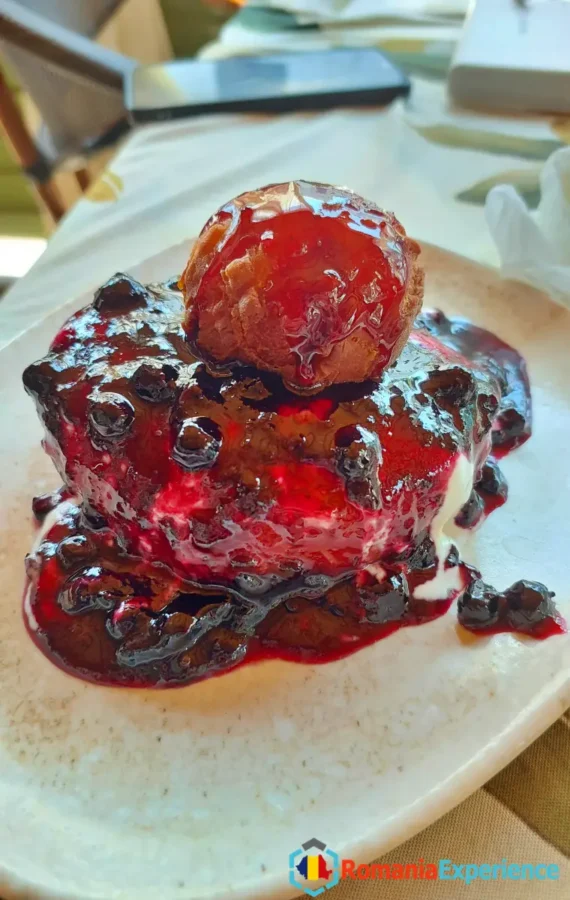
Papanasi (pah-pah-NASH) is a delicious dessert made usually of cottage cheese (or any type of sweet cow cheese) that is rolled into donut-like shapes and fried. The hot pastries are then smothered in thick sweet cream and topped with a tart jam.
Sour cherry or blackberry/blueberry jams are usually the main pairings, but there are all sorts of varieties available, depending on where you eat them.
They are pretty difficult to prepare and some restaurants to them better than others.
So definitely try ordering these in a few places to make sure that you get the truly great ones. (Yes, good excuse to have many portions of these!)
8. Ciorba Radauteana (Soup from Radauti)
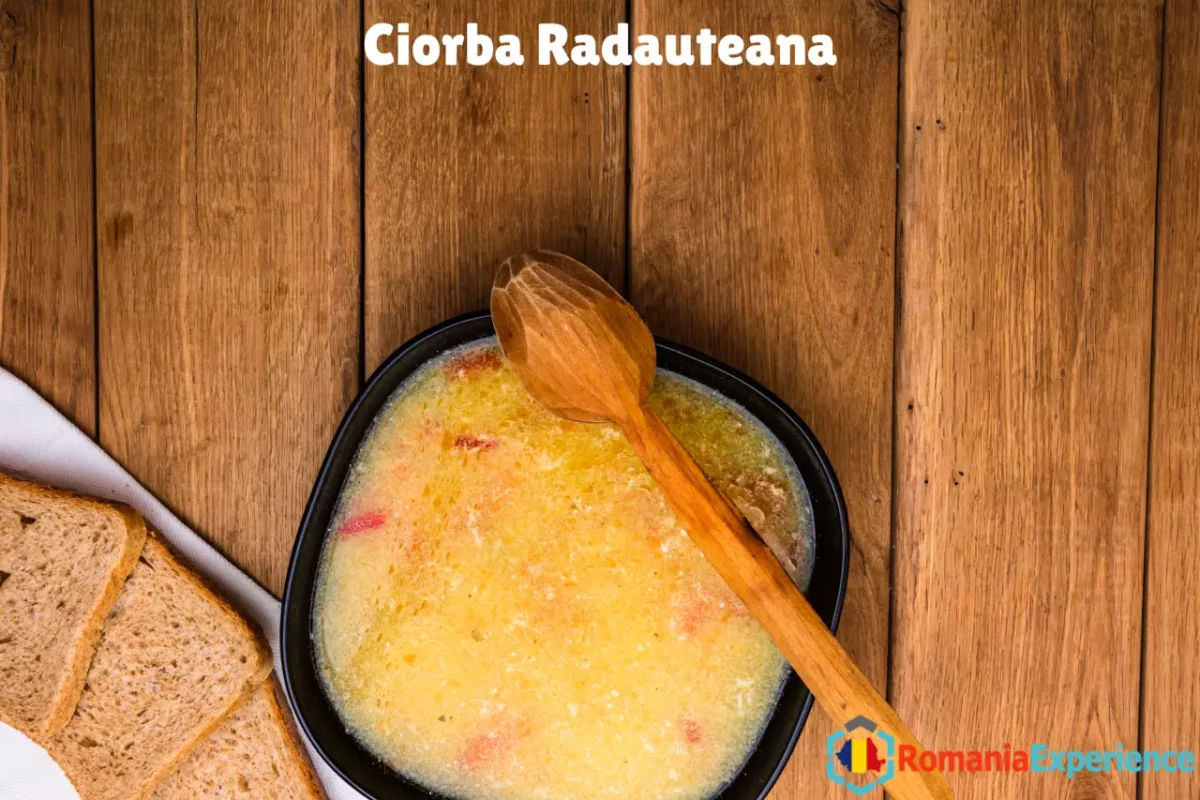
Ciorba Radauteana (CHOR-bah rah-dow-TSAH-nah) delicious, fatty soup made from chicken and plenty of vegetables. The difference from regular chicken both comes with the fact that it’s mixed with plenty of sour cream, egg yolks and garlic.
It was actually created in the 1970s as a lighter alternative to the heavy beef tripe soup I told you about earlier, so if you consider that one too much, this one’s very similar in taste.
But be warned: after you try it once, you won’t eat your chicken soup otherwise!
9. Jumari cu ceapa (Greaves with Onions)
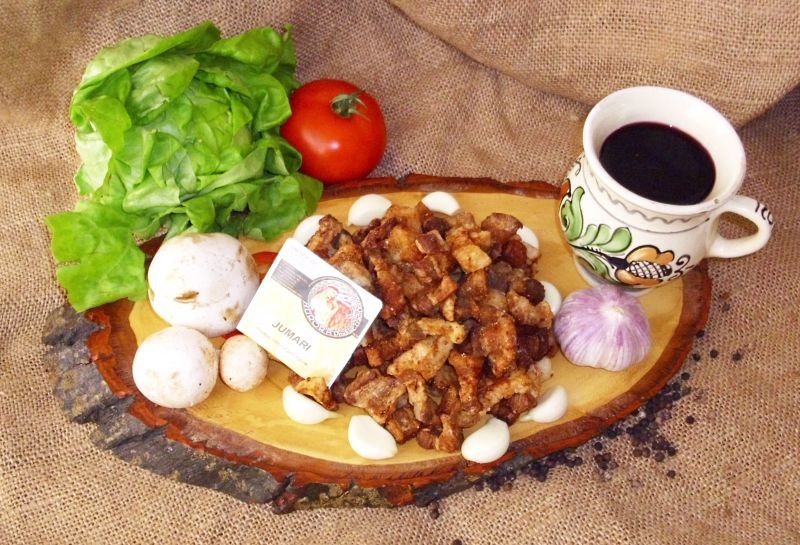
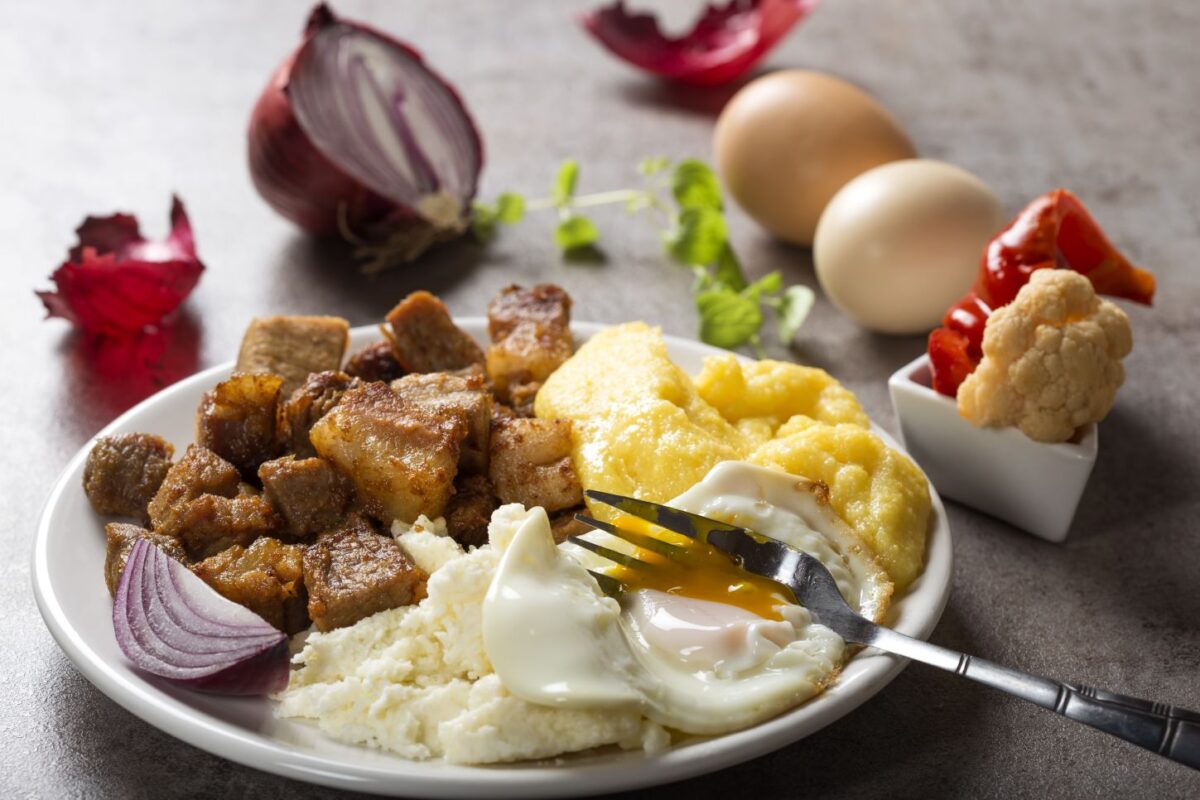
Probably the unhealthiest option on our list, jumari (zhoo-MAHR) are obtained by slowly frying chunks of pork fat and bacon until the lard renders out. They are as delicious as are unhealthy.
However, if you don’t overdo it and serve them warm with salt and large chunks of onion, you will surely love them. They make the traditional Tuica go down easier, too!
While you will find plenty of varieties in supermarkets, none will be anywhere near the real taste of the freshly made ones.
10. Cozonac
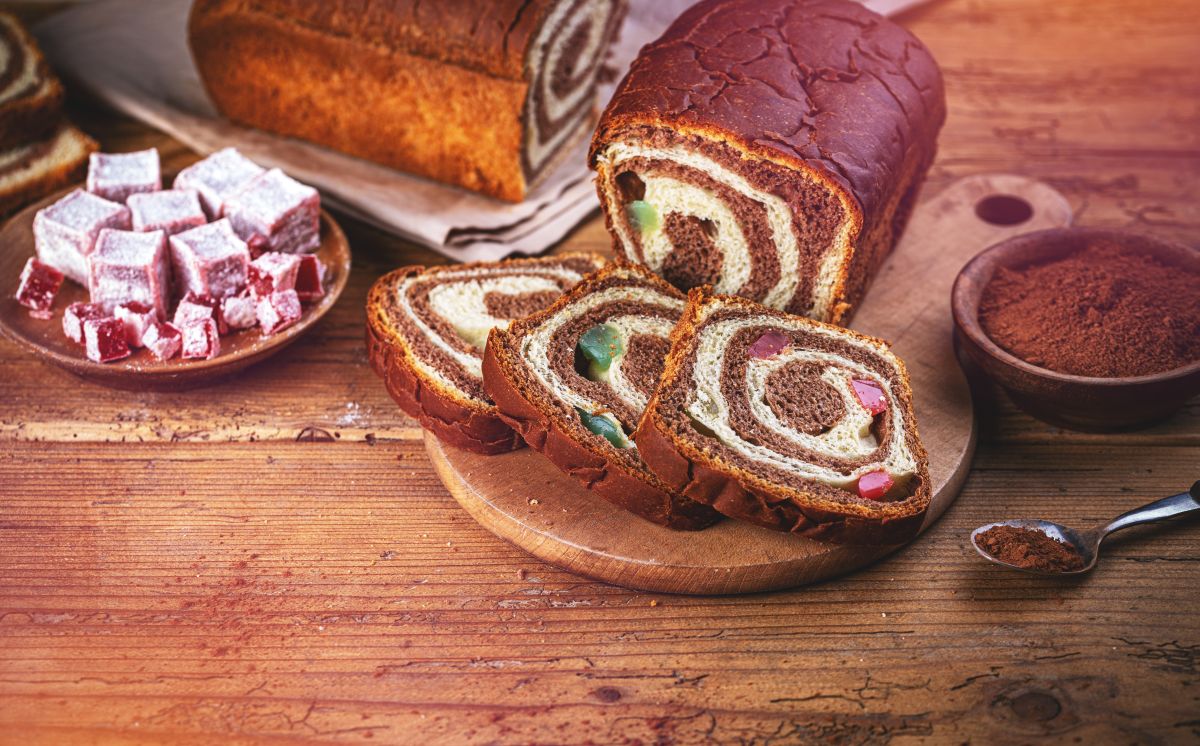
A sort of sweet bread filled with a sweet walnut paste, or poppy seeds paste or Turkish delight, this dessert is usually cooked during the holidays – Christmas and Easter mainly.
Now you can find it in every store here in Romania, but if you want to experience the real taste of the Cozonac (koh-zoh-NAHK), you have to try the homemade version which can’t be beaten.
Note: If you want to go down the rabbit hole, check out my articles about traditional Romanian Easter Dishes, as well as Traditional Christmas foods in Romania.
11. Iahnie cu ciolan (Beans with Hocks)
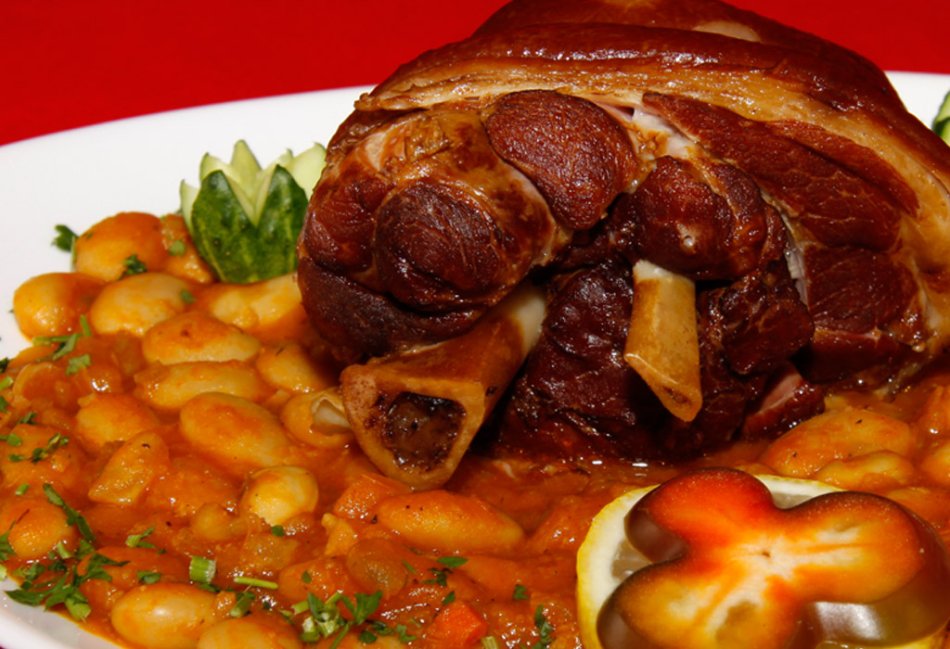
You can’t go wrong when you combine beans with a large chunk of a smoked pork hock or any other type of smoked meat. Usually eaten during the winter, together with pickles, it’s a culinary delight.
Yes, you will probably find this in various forms and shapes in many places around the world – but you still have to try the Romanian version – sometimes called Iahnie cu ciolan (yah-NEE-eh koo choh-LAHN), other times appearing in restaurant menus as “ciolan cu fasole”.
12. Mucenici (Sweet Dough Rolls)
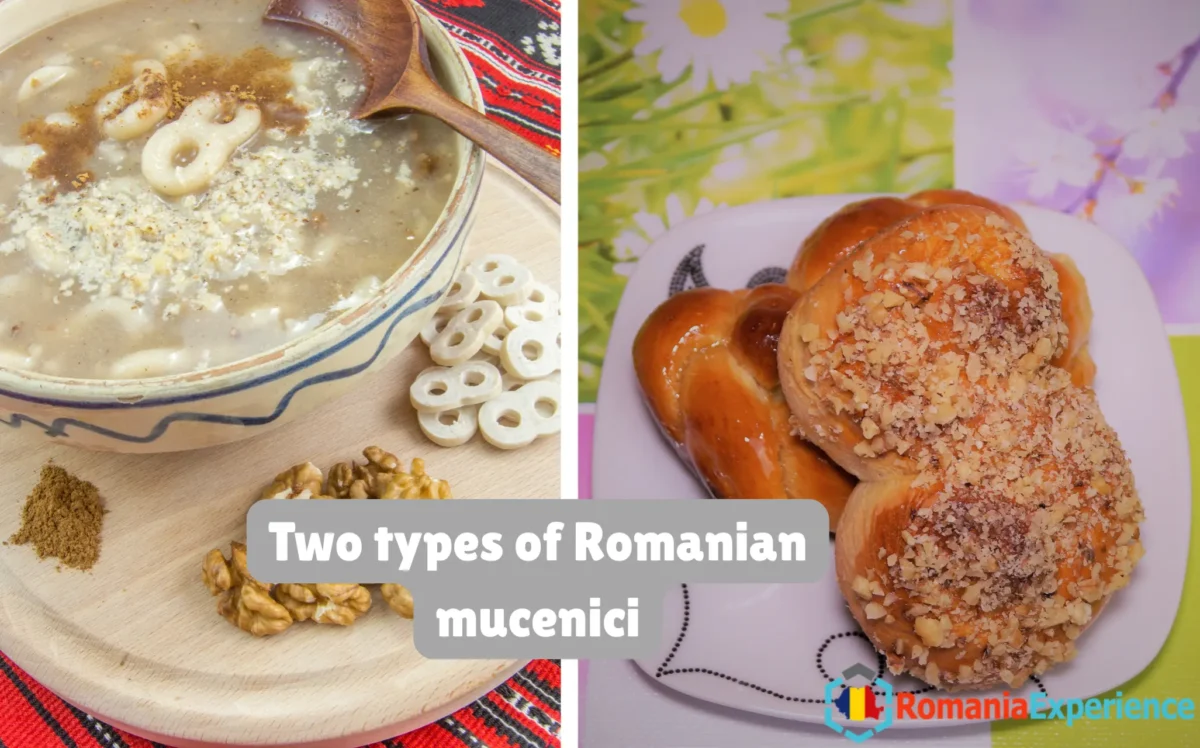
These sweet dough rolls are eaten once a year, on the 9th of March. There are actually two types of Mucenici in Romania and they are completely different from one another, as you can see in the photo above.
The Moldavian version features large, eight-shaped pieces of fluffy dough baked in the oven and drenched in honey and crushed walnuts.
The southern version consists of tiny eight-shaped pasta boiled in a sweet soup flavored with vanilla, sugar, lemon zest, and topped with crushed walnuts and cinnamon.
While they’re both good, the large ones are the best – so make sure you ask your waiter what type you’re getting when you order (although I haven’t seen any served in restaurants, to be honest).
13. Drob
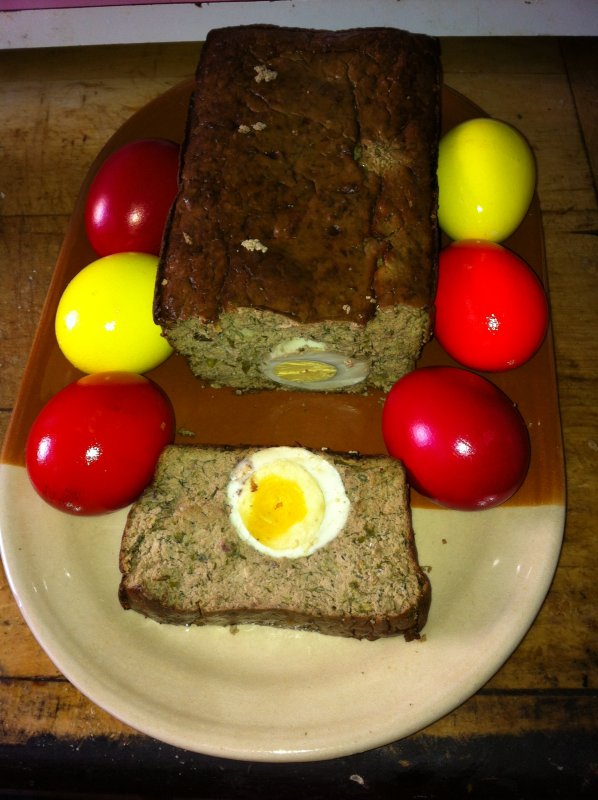
Usually prepared for Easter, the Drob is a savory meatloaf made from lamb organs (especially liver) and lots of fresh green garlic and dill. You mix the seasoned meat and bake it with whole boiled eggs hidden right in the middle.
Recently, many people started preparing it with chicken liver to keep it a bit lighter. I personally prefer that version – which is seen in the image above (made by my wife!)
It is served cold, straight from the fridge, and you can add some mustard if you like the combo.
14. Salata boeuf (Beef salad)
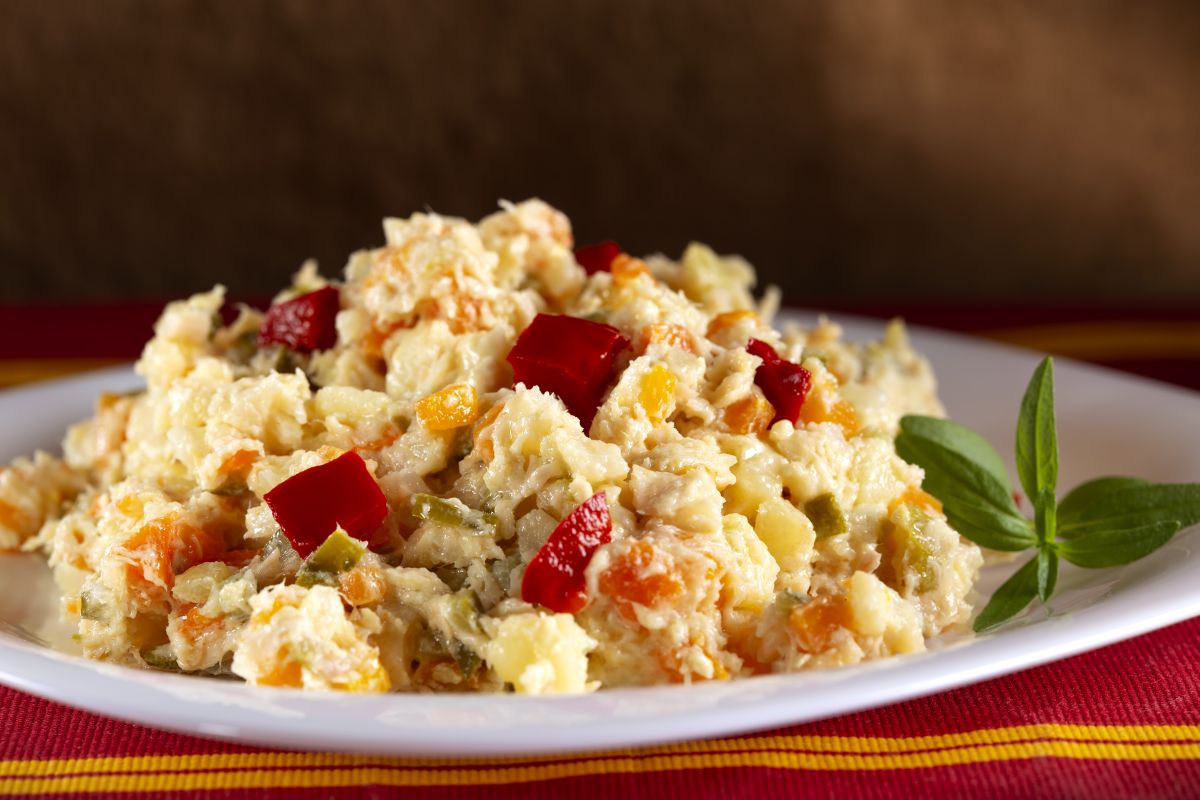
This is a really funny traditional Romanian food: despite the French word for beef in its title, it is actually inspired by the Russian Olivier salad and is usually made with chicken meat (even though the beef version still exists) or without meat at all.
You mix boiled potatoes, carrots, peas, and pickled root vegetables with plenty of mayonnaise. The result is the heavy, creamy salata boeuf (sah-LAH-tah BUFF) – the centerpiece of every holiday table in the country.
15. Coliva
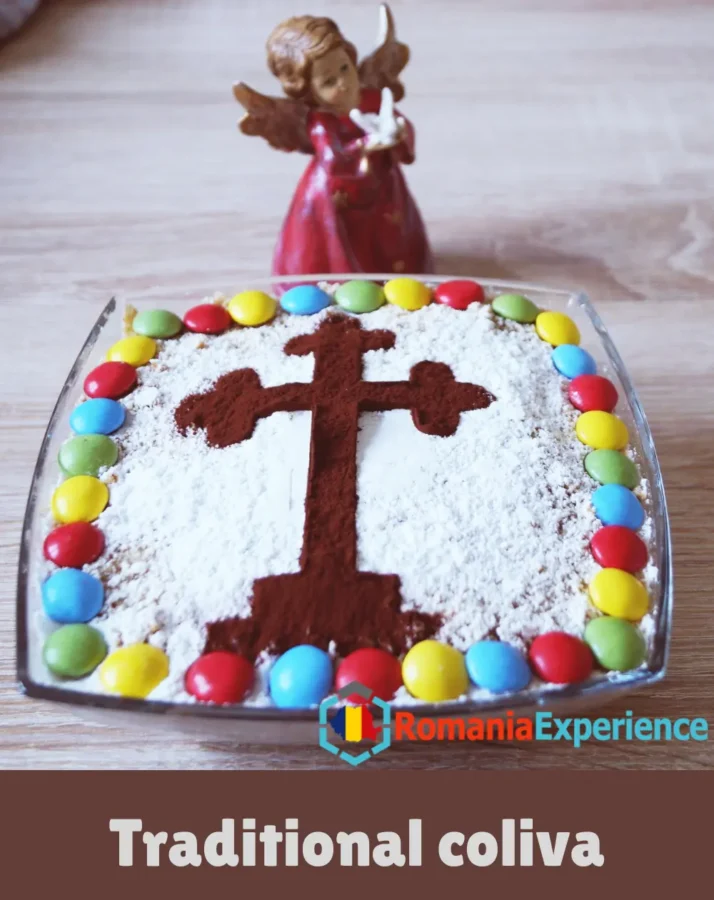
Although this sweet snack was originally nothing but a dessert made from boiled grain seeds mixed with sugar and walnuts, coliva (koh-LEE-vah) is now traditionally served to honor the dead or to hand out after funerals.
Do not let the somber association keep you from tasting it! Some people still prepare them during the holidays and it’s absolutely delicious, despite its simplicity.
16. Zacusca (Vegetable Paste)
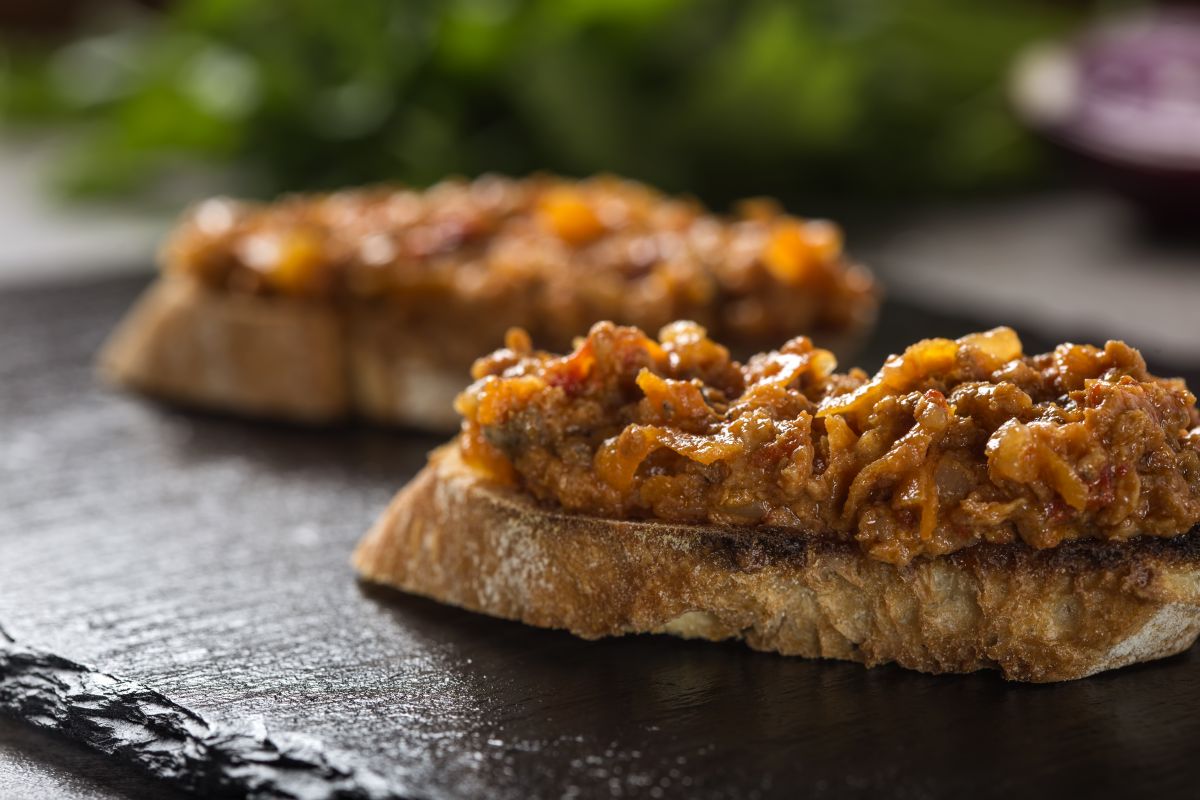
A delightfully tasty paste that I am a huge fan of, the Zacusca (zah-KOOS-kah) is made mostly of eggplants, but there are other varieties with peppers, onions, mushrooms and green tomatoes.
They are all really good and the best part is that most of the ones you can find in supermarkets taste decent too.
The vegetables are baked over an open fire, peeled, and then boiled for hours until they form a rich paste. Families can them in glass jars at the end of autumn to eat cold during the winter. It does not look like much, but it’s absolutely delicious!
17. Slaninuta afumata cu boia (Smoked Bacon with paprika)
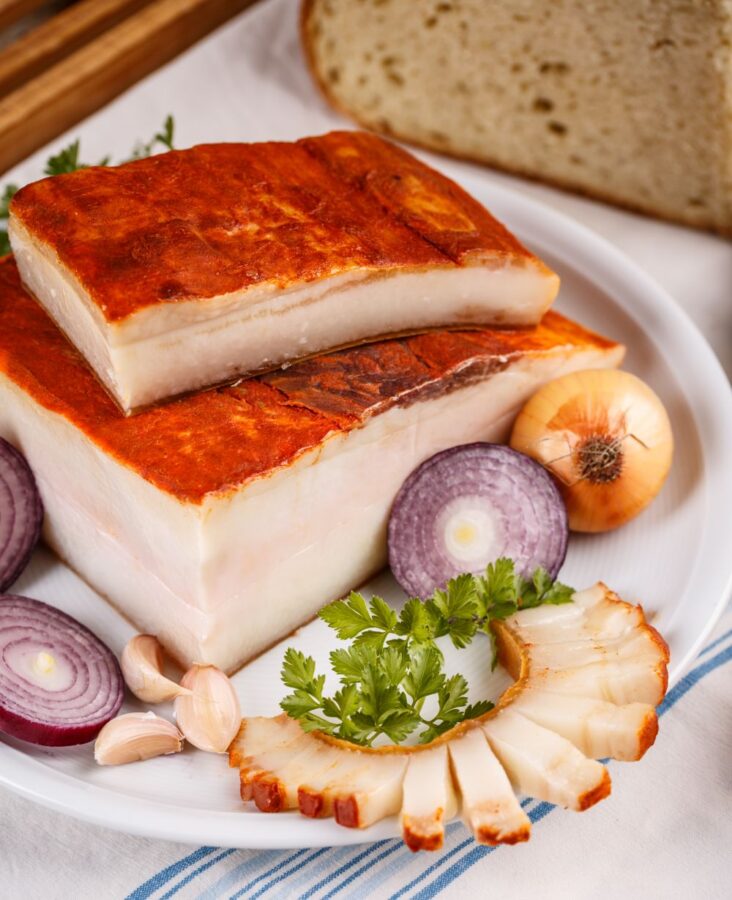
Usually made of fat coming from the pig’s belly and smoked at home, this bacon is served with paprika and red onions with salt.
Add some thick slices of homemade bread to the mix and pour a glass of traditional red wine made in Romania. Or you can stick to our ever-present Tuica. It is a heavy, fatty appetizer meant to sustain you through a cold winter day.
18. Parjoale Moldovenesti (Meatballs from Moldavia)
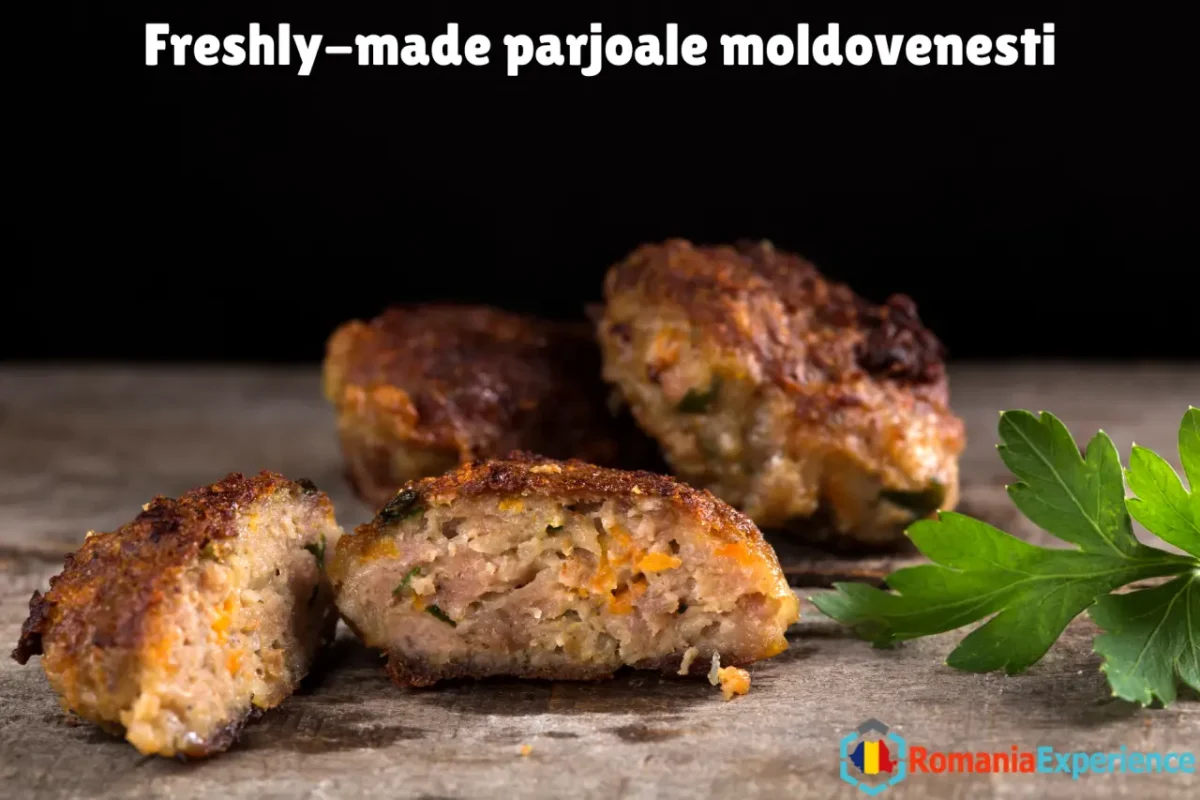
A special type of meatballs originating from the eastern province of Moldavia, these are made of minced pork meat mixed with dry bread crumbs, garlic, various vegetables and spices, then deep-fried in sunflower oil.
Unlike regular meatballs, Parjoale Moldovenesti (pahr-ZHWAH-leh mohl-doh-veh-NESHT) are larger and flatter and absolutely delicious. You can eat them warm with mashed potatoes, but also cold.
19. Carnati de Plescoi (Plescoi sausages)
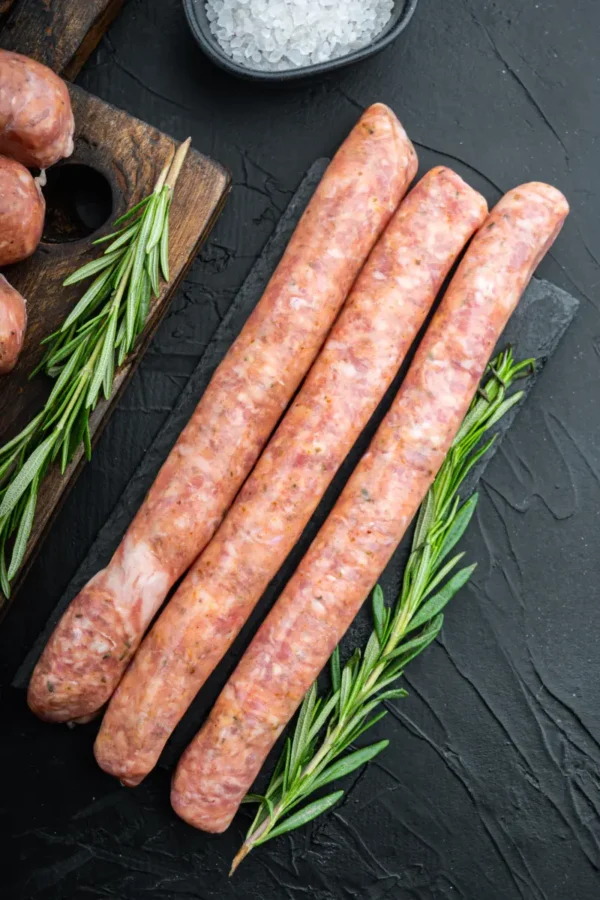
A delicious type of sausage made from mutton spiced with chili peppers and garlic, the Plescoi sausages (kahr-NAHTS deh plesh-KOY) are first dried, then smoked and finally served baked with mustard and white bread.
20. Placinta cu branza dulce si stafide (Fried dough with sweet cheese & raisins)
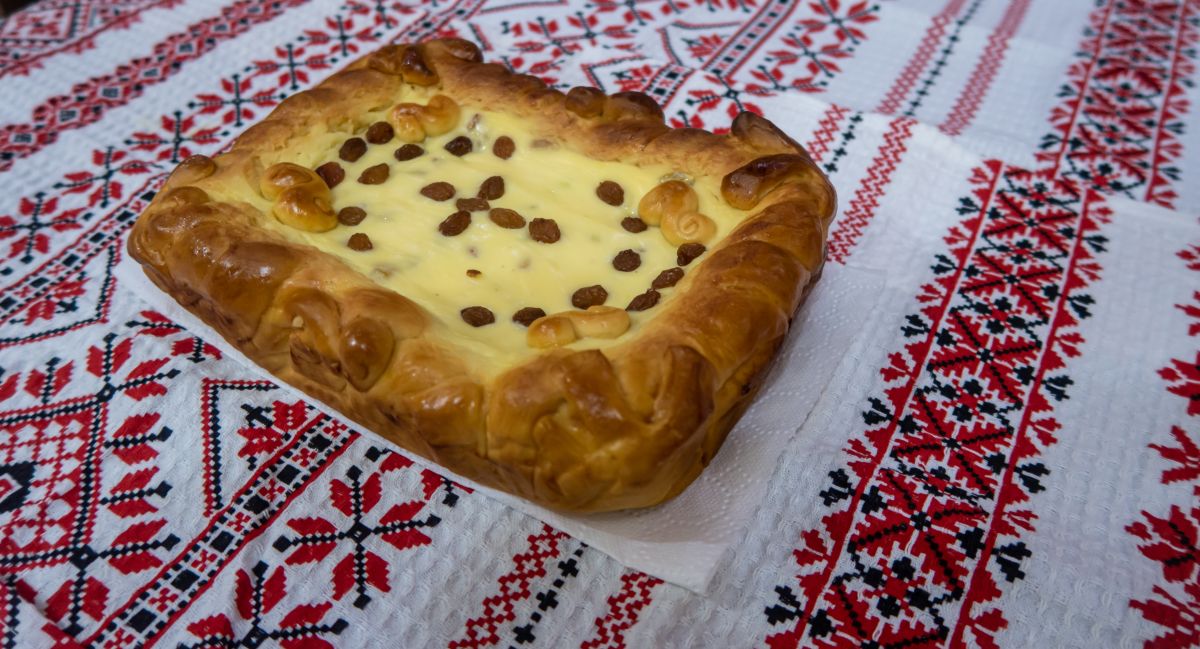
There are many variants of this dish, but I’m sticking here with the traditional one: fried dough pie, filled with sweet cow cheese and raisins. Sprinkle some sugar on it and serve it hot or cold – it’s delicious either way!
It’s very similar to your regular cheesecake, so if you are a fan of that, you’ll love the Romanian version!
21. Piftie / Racitura (Meat aspic)
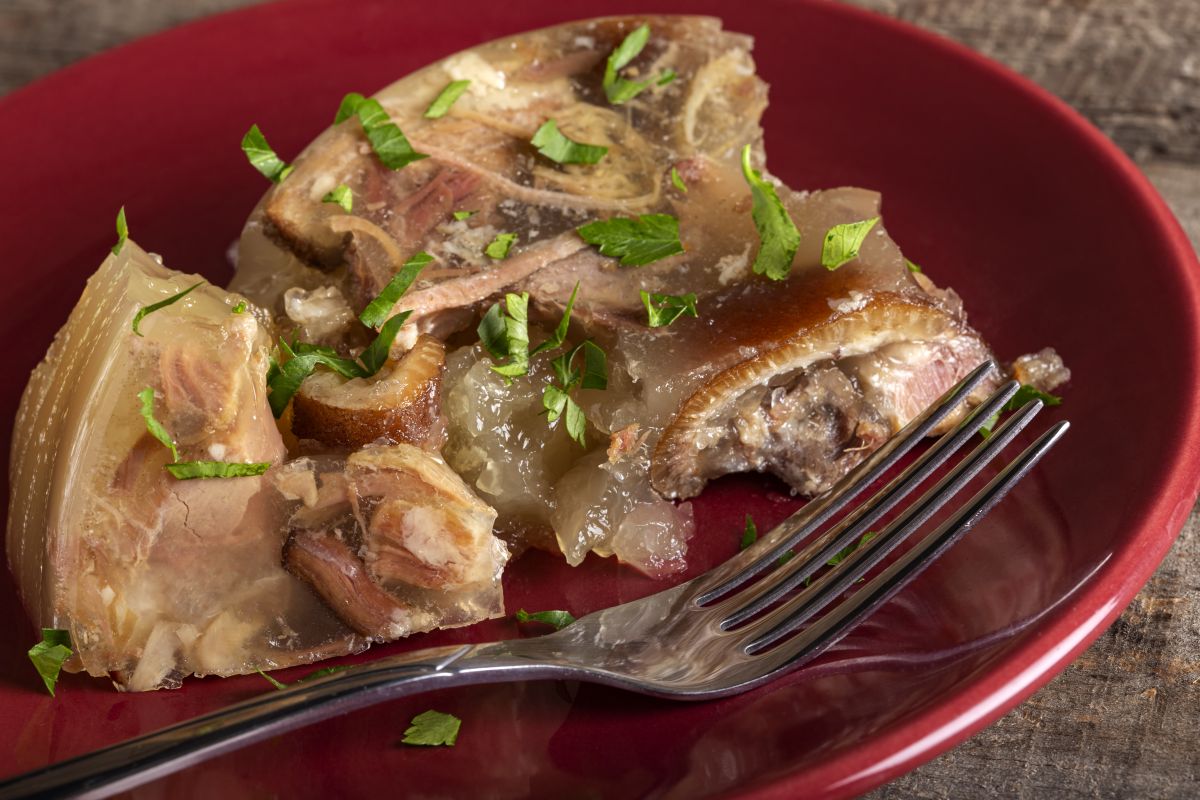
This delicious jelly / aspic is called Racitura (rah-chee-TOO-rah) in the Northern parts of the country and Piftie (pif-TEE-eh) in the rest of Romania.
Traditionally, it’s a bone broth boiled for hours, until most of the water evaporates. In the same broth, various bits of meat are added (usually pork, but you can also have turkey or chicken meat), plus vegetables – usually carrots or even pickles and garlic.
Left to cool, it turns into the delicious jelly you never thought you’d enjoy. Nowadays, though, pork gelatin is added into the boiling water to speed up the process.
22. Salata de vinete
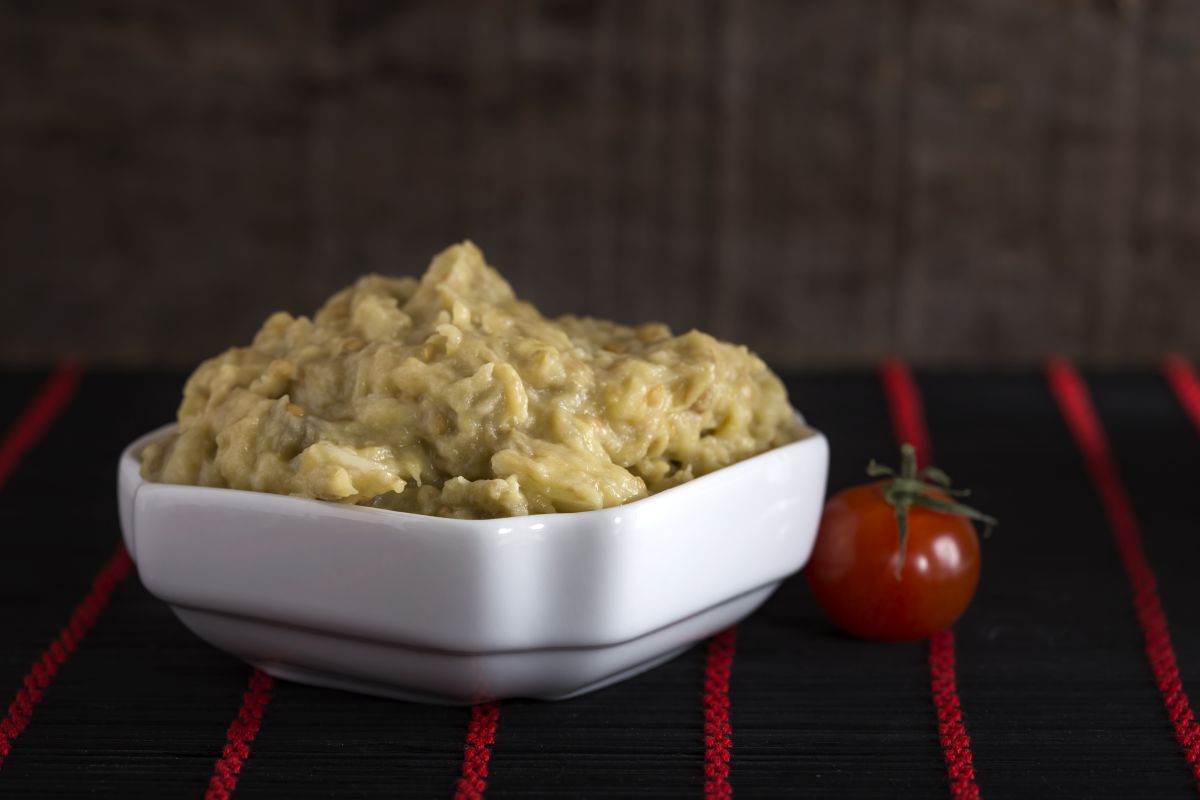
The Romanian version of Baba Ghanoush, this salad is made from oven-baked eggplants that are blended and mixed with some mayonnaise and/or oil, and mixed with either grated onions or garlic.
Simple, but delicious – you eat it as a spread on top of toast (and generally can’t have enough).
23. Ostropel (Chicken Stew)
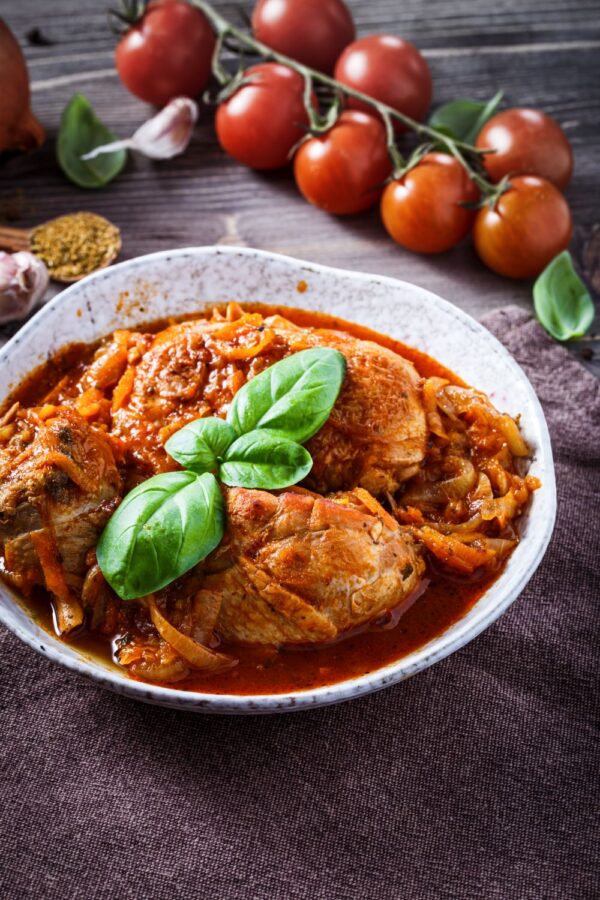
Another very simple Romanian dish, but one that’s absolutely amazing. It is basically a stew with chicken meat boiled in a thick tomato sauce. Usually, garlic is added for extra flavor.
You will eat it with plenty of bread to clean all that sauce – or with mashed potatoes. Yummy!
24. Ciorba de Perisoare (Meatball soup)
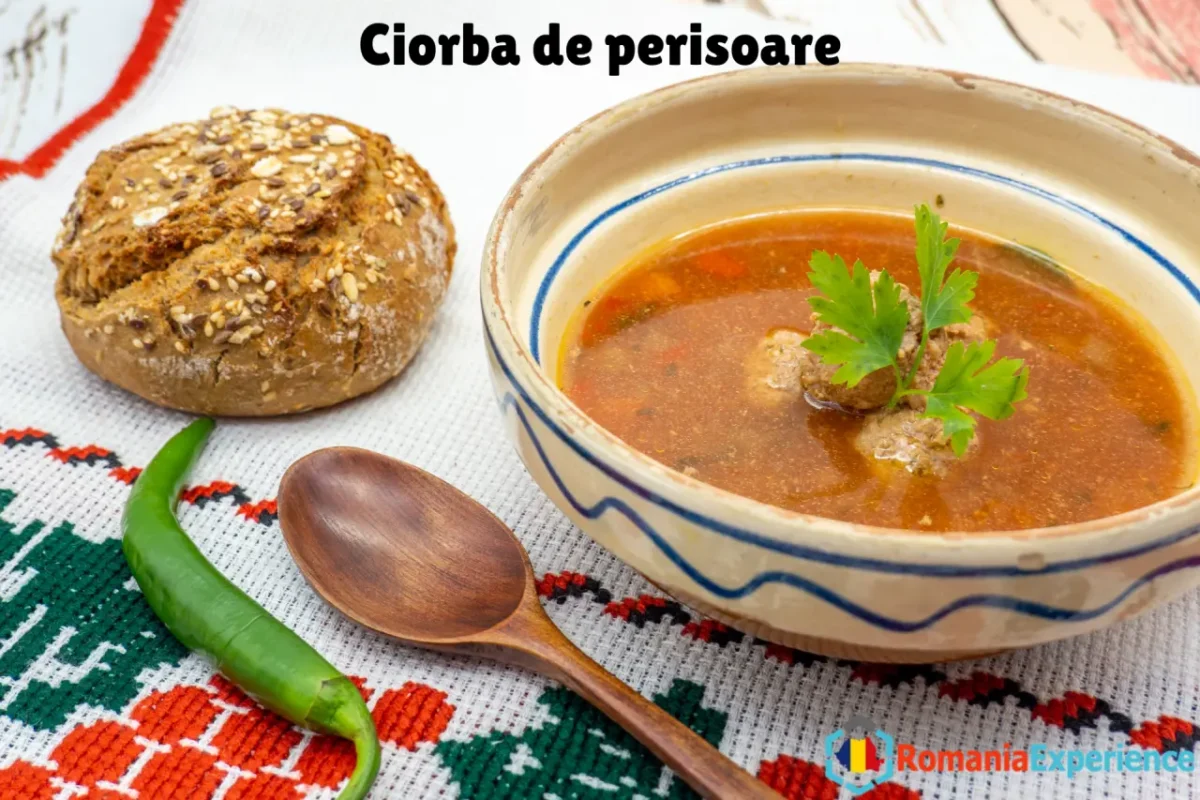
One of my favorite types of “ciorba”, this is a sour soup with boiled meatballs. My mouth is watering as I am writing this. Ha!
It is a classic Romanian sour broth filled with carrots, celery, and onions. The stars of the show are the perisoare, which are small meatballs made from minced pork mixed with rice and herbs.
You usually add some sour cream before eating and it’s amazing! And if you want to pronounce this, here you go: CHOR-bah deh peh-ree-SHWAH-reh.
25. Galuste cu prune (Plum-filled dumplings)
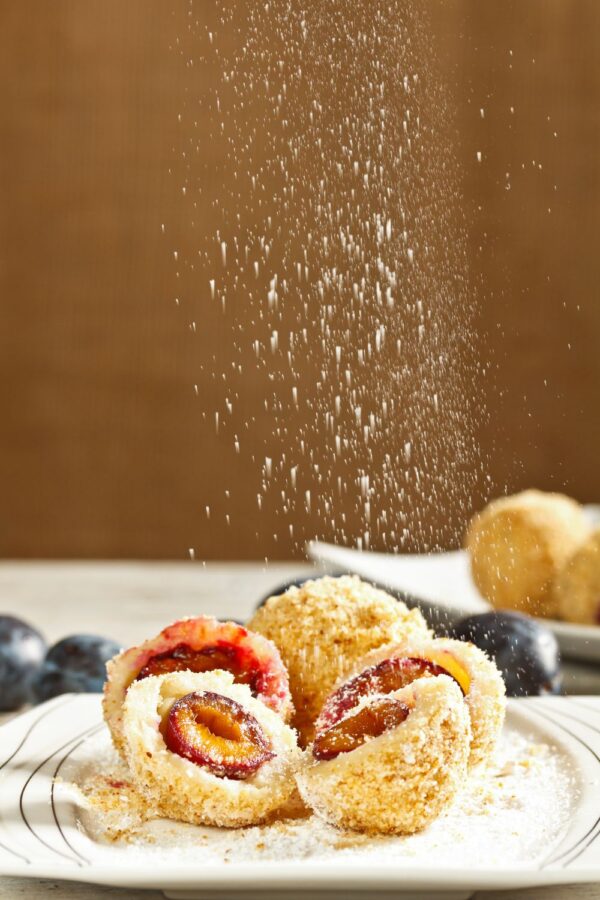
I left these for last because, I have to admit, I’m not a huge fan. But most people who have tried these plum dumplings found them surprisingly delicious.
You get a mashed-potato dough here, sweetened and filled with plums – usually half a plum or an entire one – boiled and covered in sweet breadcrumbs when ready.
You’ll probably either love them (like most do) or hate them (like I do) – but you can’t know until you try.
Wrapping up
OK, I am honestly hungry after writing this. It wasn’t easy to write, but I sure hope that you enjoy it and find at least most of these traditional Romanian foods interesting at least.
These amazing Romanian foods had to be shared with the world. Now all I can hope is that you will be able to try them all out as soon as possible!
Love reading Romania Experience? Support my work on Patreon to help fuel future guides, constant updates, and get ad-free access as a thank you!

I am a journalist and local expert who has been documenting life in Romania since 2013. Based in Constanta (after living in Bucharest and Drobeta Turnu Severin), I provide up-to-date, on-the-ground advice for expats and travelers. My articles are based on real life experiences and plenty of research – from paying Romanian bills to exploring the wild “Rawmania” countryside.
I’m 100% Romanian, my father is from Canada, but both his parents immigrated there from Romania and my mother moved to America from Romania when she was 25 y/o. When I was 3 y/o in 1969 my Bunica (mother’s mother) came to live with us for good. She loved to cook, so I ate most of these dishes growing up, but my favorite was her cheese strudel! She would get the strudel dough stretched out paper thin and it would cover the entire dining room table, it was incredible how she did that and it was beyond delicious! Growing up, while my friends snacked on chips and cookies, I snacked on Jumari and Strudel…and I wouldn’t have it any other way!
Great memories indeed! You really made me hungry now for a cheese strudel 🙂
I eat this food evey Easter. It is sooo good!
The best place on earth to eat and live. We just returned from a short stay in Beclean. My heart remains there!
The food is great, the country side better and people the best.
I am happy you enjoyed it there, Kristen, although I must be honest and admit that I had to Google Beclean as I had never heard of it before 🙂 Looks like a nice town and I am sure that the surrounding area was even better.
ok bro.
A great blog! I wanted to share some foods from two areas of the country. First, the south, Oltenia, (even if not given much credit in the food department), one can also find things in there for people who are not meat enthusiasts for its vegetable-oriented soups and foods. Leek soup is a big thing in there, also orache spinach soup, stinging nettle food, and garden patience* stevia* food. The soups are more sour in there. For meat lovers, besides the things said already, there is pork meat preserved in the jar with lard, over the winter. The good stuff, man. Also – jellied meat/ pig’s trotters with heavy garlic flavor.
The second area is the center of the country, Transylvania . There is something specific in here called green salad soup (with fresh salad, sour cream, eggs and smoked bacon in it, I mean, what can go wrong?) and also noodle soup but the noodles are made from scratch with a special machine. One thing that is awesome is left from the Saxons of Transylvania and it’s a sort of sweet pie called Lichiu / *Hencles made in a wooden oven. Mentioning it because older Romanian women still have some ovens like that and use them for lichiu or for baking enormously round bread, slowly cooked which tastes so good, especially if you spread some oxen sour cream on it. Besides these, on the top of my head it comes, roasted pepper salad with vinegar or garlic, meatballs soup and Ostropel, which is a sort of romanian stew with chicken and thick tomato sauce. Sorry, this got too long. 🙂
You made my mouth water, Xari! It is true that when it comes to soups and stews, Romanians get very creative. We do love our varied soups!
It was also the first time that I had heard about lichiu – sounds delicious and I know the ovens you’re talking about. The bread baked there is the best!
Thanks to our visit, I am so glad we got to sample some of the wonderful Romanian dishes. The pictures still make me drool and l still say #5 with polenta is not on the cards for me. Federico did have it and loved it, but not for me thank you! Everything else l would gobble up. Where is the bean soup in the bread? 🙂 Loved that so much too.
I also hated polenta until recently, but for some reason I really enjoy it now. But yes, it’s not that special for sure! And indeed I forgot about the bean soup in the bread, but at least we have that beans dish with hocks to make up for it 😀
Oh my god you just made me simultaneously craves all these foods! I’m Romanian and man I’m getting homesick now…
I understand how you feel, Carina! Maybe it’s time for a short (or longer) visit back home 🙂
Hello, I really enjoyed the article and have almost all of them and enjoyed them. Ciorba is really my favorite soup! My Romanian husband past in 2018 and I can tell you he would totally agree with you about your top 20 because he definitely loved all of those! Thank you!
Also SALATA DE VINETE
My favourite served with Romanian tomatoes.
We ever tried Papanasi, it was really good. Want to try other food when we come again to Romania.