
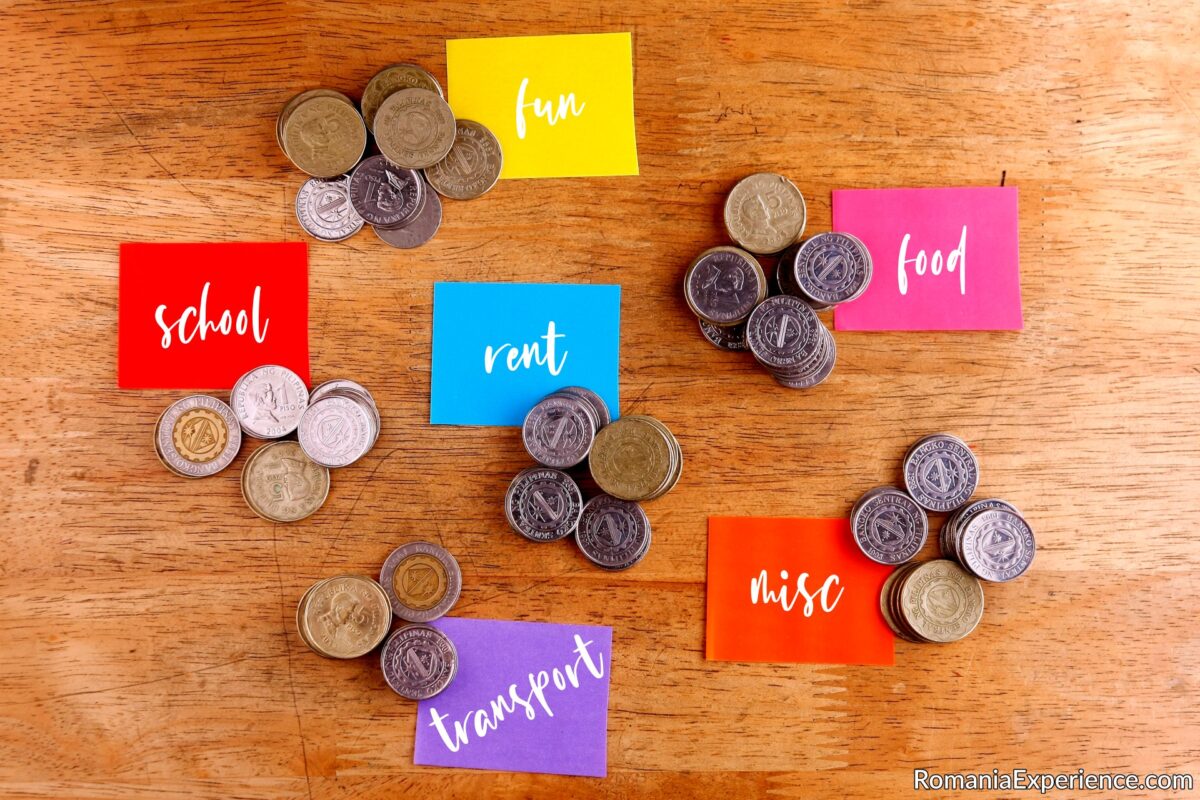
Romania has seen prices going up in these past few years, and as a result, students will unfortunately have to spend more than ever if they want to study here.
Actually, the general truth is that when you study abroad, the financial reality of your new home rarely matches the glossy university brochures.
Despite this, Romania remains an affordable option for international students when compared to other Western countries, while also offering solid educational opportunities and lively cities to be in.
Today, I will help you better prepare for your move and estimate how much money you will need each month. I have broken down REAL budgets based on what other students are spending, and I flagged potential headaches nobody tells you about.
I want this to be the only guide you will ever need to understand the real costs of student life in Romania, helping you make your time here more than just a string of ramen-fueled nights.
I have already shared a more general cost of living in Romania article, where the conclusion is that a family of three can live decently on around €1,800 a month. But students have more benefits and lower costs overall, so they will need less to live a decent life in Romania.
The 2026 TL;DR Average Monthly Budget
Since you might not want to go through the entire article and read all the details (although you should, as you could find some useful golden nuggets there), here is a summary of the average cost of living for students in a major university city like Bucharest, Cluj Napoca or Timisoara.
| Expense Category | Estimated Monthly Cost |
| Rent (Shared Apartment) | €150 – €350 |
| Utilities & Internet | €40 – €100 |
| Food & Groceries | €250 – €300 |
| Public Transport (Monthly Pass) | €7 – €15 |
| Entertainment | €100+ |
| Extras & Personal Care | €60 |
| Total Average Baseline | €607 – €925 |
Note: You might need health insurance, too, depending on your country of origin, which will cost at least €15 more each month.
Living Cost in Romania for International Students: Budget Breakdown

The real budget can vary wildly based on your lifestyle. Usually, there are two types of international students in Romania and their costs will be different:
The Frugal Student: You live in a shared apartment with two-three other people. You cook almost all your meals from scratch at home using basic ingredients from discount supermarkets. You take full advantage of free student transport, and your weekends consist of house parties or free local events.
In your case, living a decent life is possible on as low as ~€600 each month.
The Comfort Student: You rent a private studio close to the university, you eat out a few times a week and maybe buy some coffees now and then. You hit the clubs in the city center on weekends, travel with Ubers and want to “enjoy life” a bit more.
For this lifestyle, expect to spend at least €925 each month – usually a lot more, as entertainment and eating out costs can quickly spiral out of control.
Now let’s go even further and break down the budgets into categories!
1. Rent
Rent will be your single largest expense, unless you manage to score a really cheap room in the Student campus (dorm), called “Camin studentesc” in Romanian.
Here’s what you should expect to pay this year, based on the type of accommodation you choose:
- Dorm room (shared): €75/month (the competition is fierce for these, so very unlikely to get one)
- Shared apartment: Between €150 and €300/month per person, depending how many people share it (sometimes, two-bedroom apartments are shared by up to six students to keep costs low, in which case you will spend even less).
- Studio apartment: €350/month and up, if you want your own place.
Keep in mind that maintenance and utilities (water, gas, internet, mobile plan) are generally NOT included in the rental costs, and these will add anything between €40-€100/month, depending on you lifestyle.
You will also be expected to pay a deposit, usually 1-2 months’ rent, which you will get back at the end of your lease.
Make sure to check out my recommended websites for rentals in Romania, and try to get a place as close to your university as possible in order to reduce transportation costs (and keep things comfortable).
2. Food expenses
Food is where budgets can crash and burn if you’re not careful. If you eat out all the time, you will spend a ton – even if you choose the cheapest options available.
If you manage to cook at home mostly, ideally from basic ingredients, you will spend a lot less. At the very least, you should take advantage of student cafes and daily menu offers in your area and shop at cheap supermarkets like Lidl.
With all this in mind, I recommend budgeting at least €250/month for food, which will allow you to eat a healthy, varied diet, including fruits and vegetables, so not “Ramen each day.”

The good thing, if you decide to share an apartment with other Romanian students, is that they will receive a lot of delicious food from their parents – and it’s customary to share.
3. Transportation costs
If you’re not within walking distance of the University, you will have to go for some of the public transport options available: metro (in Bucharest) or bus/tram lines in Bucharest and other cities.
On average, expect to pay between 7-15 Euros per month for unlimited bus rides, depending on the city. Some even offer free transportation for students.
If you take the train to visit other cities, you will also get discounted prices: learn more about riding trains in Romania.
Read my guide to Bucharest’s public transport here to know what to expect otherwise (tldr: it’s a solid option, especially if the metro).
4. Entertainment costs
I would say that the three categories listed above are covering the basics and in theory you could make it work by only spending money in those three.
However, you will have other costs and since you’re an international student in a foreign country, you will want to party as the locals do, and also enjoy the different events, from the top music festivals in Romania (like Untold, Neversea, or Beach Please) to local plays and concerts.
Fortunately, there are lots of free events for students, as well as many places where you can spend quality time for free, and fellow students will know about them.
But you will still most likely wish to go out for a drink, maybe spend a night or more clubbing, go to the cinema, and so on. And while the sky is the limit here, I’m considering a limited budget and sharing my thoughts below:
- Night out (pub): €10 minimum (3 beers or sodas, no entry fee).
- Night out (club): €20+ (fewer drinks, entry fee possible although girls usually enjoy free entry everywhere).
- Coffee shop (Latte): At least €3.
- Cinema: Around €8 per ticket.
My experience: Back when I was a student in Bucharest, I always took advantage of the old town area where bars handed out free shots to passersby just to lure them in. You can take the drink and move on – they can’t force you to come in.
It’s not the thing that will make you proud, but when money is tight, you can do that too, and I am sure there are plenty of other opportunities.
All in all, I recommend budgeting at least around 100 Euros per month for entertainment (which includes eating out). With this amount, you can have some wild fun without going too crazy.
Keep in mind that it all depends on your style, as you can easily spend 100 Euros (or more) in a single night out!
5. Personal Care, Toiletries, and Extracurricular Expenses
You will also need clothes, toiletries, health-related products, and ideally put some money aside for emergencies. Here are some examples of prices looking at the cheaper options available:
- Basic toiletries: Shower gel/Shampoo (€2 each), 16-pack toilet paper (€4), condoms (€1.75/pack), toothpaste (€2), deodorant (€3).
- Clothes: If you do your shopping in the cheaper stores, you can find T-shirts for as low as €5 a piece and pants for as low as €10 a pair. For brand stuff, expect Western European prices, though.
Shops to know: Pepco, TEDI, Jumbo, Action for all things cheap; DM for personal care products. LG Waikiki, Primark, Sinsay, C&A, and thrift stores for clothes. Also look for Chinese shops, where you can find all sorts of things for really low prices.
A budget starting from 60 Euros per month is mandatory in this category, unless you have very specific needs (e.g. expensive products).
6. Health Insurance and Medical Costs
International students are required to have health insurance, either through the university or private providers. You won’t pay a lot here, and if you are an EU citizen, you will basically get free healthcare. Here’s what to expect:
- EU students: May use the European Health Insurance Card (EHIC), but check what’s covered, as it’s usually just the basics.
- Non-EU students: Must get Romanian student insurance. Expect to pay €15–€30/month for basic coverage.
- Doctor visits: Usually free (or very cheap) at University clinics. Private clinics charge around €50 per visit.
IMPORTANT: Always double-check if your university covers you automatically or if you need to arrange this yourself.
7. The Hidden Costs: Visas, Permits, and Study Materials
This is an area that catches many people off guard because it never shows up in standard budget calculators, because they are usually one-time costs. But you still have to pay for them!
Non-EU students have to pay for visa applications, residence permit renewals, and potentially official document translations. These fees add up over the course of a year.
You also need to factor in university supplies, textbook copies, lab materials, and various other costs associated with your education – some might have to pay more, some less, some nothing.
But setting aside an extra €100 at the beginning of each semester just to cover the paperwork and everything else is a good idea.
Rounding up the monthly budget for international students

Overall, as an international student in Romania, expect to pay around €600 per month for a basic lifestyle, or around €925 for a decent student’s life.
This larger budget gives you a lot more options when it comes to living in a nice shared place. You will eat better food, afford some quality entertainment, buy new clothes every now and then, and have a comfortable life overall.
IMPORTANT! The budget above does not include any University fees, as they vary a lot from free to 10,000 Euros/year. Make sure you have these in mind too when deciding total costs.
Remember: Most Romanian students will probably live on around 500 Euros/month, maybe even less, but they have at least some of the food costs covered by their parents.
Keep in mind that students also get access to lots of free stuff, free events and they have major discounts basically everywhere.
Girls usually get more freebies when it comes to entertainment (usually free entry in clubs and even free drinks), but everything’s evened out pretty much everywhere else.

Can international students get a job in Romania?
If you want to supplement your budget, you can work in Romania if you are an international student here and you have a valid visa (or you’re from another EU country).
But you are only allowed to work part-time jobs and most likely you won’t find anything that’s well paid – think stuff like the HoReCa industry or anything that doesn’t require a lot of skill/experience.
But if you get a part-time job, the base payment can be as low as ~€250/month. But even this amount can help with your monthly expenses.

If you have additional comments or questions, don’t hesitate to let me know and I will gladly answer.
Also, if you are a student in Romania and already know your expenses, it would help a lot if you would share them with the world!

I am a journalist and local expert who has been documenting life in Romania since 2013. Based in Constanta (after living in Bucharest and Drobeta Turnu Severin), I provide up-to-date, on-the-ground advice for expats and travelers. My articles are based on real life experiences and plenty of research – from paying Romanian bills to exploring the wild “Rawmania” countryside.
Wow! amazing how cheap the prices are for foreign students. I always wonder why the U.S. was the holy grail for a lot of foreigners, including me and paying insane amounts of money. I totally cracked up at the vision of delivery drivers with food for the students… :-). I wonder how easy it is to get student visas though? I’m sure the education is just as good quality wise. It would be nice for these kids to come out school without humongous bills.
One of the major things that make the difference is probably the fact that in the US, after accumulating a lot of student debt, you have a chance of getting hired and paid a decent wage and pay those back. Salaries in Romania are still very low, but at least the level of education is decent to say the least.
Regarding the visas for students, they are pretty easy to get: the main thing is that you have to be accepted at an university before applying for a visa, which in turn means that some students might get their first taste of Romania only after they enroll on a course… not ideal, in my opinion, but this is how things are at the moment.
Hey brother can you tell the living expense per month for Muslim boy as an international student studying in Romania?….as we don’t go to clubs etc don’t drink alcohol etc….& also don’t eat from outside very much. By eliminating all costs of these what would be maximum cost of living per month?
For a maximum budget, the sky is the limit 🙂 Even when eating at home exclusively, things can go up really fast depending on what products you choose. But assuming that you would only have to pay for rent (shared), food (exclusively at home) and minimal clothes and entertainment, I would say that the absolute minimum could drop to 400 euros per month.
Hello, very useful article thank you very much. I’m actually looking to study dentistry in either umf iasi or umf cluj. So what can u tell me about the differences between these 2 unis and cities? Since I can’t rlly decide.
I know nothing about the universities, so I can’t help you with that. Regarding the cities, Cluj is considered to be the more modern one – but it’s also more expensive, in some areas being the most expensive in the country (like rent). Iasi is a city with a younger population, with lower cost of living and growing quickly.
One of the most informative blogs ever☺️ In your article you have mentioned that there are courses which range from free to 5000EUR. So if an international student wants to study a course in Romanian language, does he/she have to pay tax?
Thank you for the nice words! As for the fees, it only depends on they university and not the language of the course (although most in English are paid). So even for a course in Romanian language, you might still have to pay if you choose a private university or don’t get into the free spots at a public university. In other words, it really depends from case to case.
Thank you for the kind reply. Many forums including foreign & Romanian students are saying that corruption exists in many university. Is this real phenomenon & do students have to bribe even if they study hard. Anyhow again thank you so much for creating this wonderful site which is helping so many people from all over the world👍👏👏
I agree that corruption still exists (everywhere, not just Universities). However, as long as you study hard they won’t just give you lower grades. Actually, most of the teachers (even if they might accept “gifts” or not) still appreciate a student that’s working hard and doing their best.
Well, I never left a comment on this thread? Let me fix that. One of my favorite YouTube channels is Romaniac which is “curated” by two foreign students who are studying in Romania.
One, a German, is studying to be a doctor and the other, from the U.K., is studying to be a dentist. Both sing the praises of living and studying in Romania. I suppose their experience was a bit unusual in that they did a lot of online class attendance due to the pandemic, but I think their lives have returned to normal and they are now out and about traveling around Romania. I think they said tuition was reasonable but it definitely wasn’t cheap. Both had suffered somewhat from being lazy students during their undergraduate years but later got a passion for medical careers. Pursuing a medical career in their own countries was very difficult due to their poor grades and the very limited number of medical school places available.
I have also watched YouTubes extolling the virtues of studying medicine in Hungary. The program in Hungary was taught in English. I think Romanian doctors are highly regarded in Germany and many have made the move to “greener pastures.” I know the previous Romanian government gave the doctors a hefty raise in salary but they are still far behind their west European counterparts, unlike Romanian parliamentarians who have given themselves some of the highest pay/expense reimbursement in Europe, about 10,000€ per month!
Thanks for fixing the comment situation, Stuart! 🙂 I can imagine that fees for these careers are on the higher end, but I would still expect them to be lower than the rest of Europe.
There are also scholarships that can be earned to cut the costs even further – but again, this depends from university to university (for example, there are certain private high schools that cut the monthly taxes to 0 for students that score 10 at national tests).
Indeed, salaries for doctors have increased quite a bit in Romania (for teachers also, fortunately) but we’re still behind Western countries.
Good day please Can I know how much a student can earn monthly or per hour, working part time in Romania while schooling? Thanks
While the regular “it depends” would work well here, I have to say that things don’t look great for part time workers in Romania at the moment, as the government introduced new laws that make part time contracts less attractive to business owners.
Either way, best options would probably be in HORECA or Call Centers, where you can expect to earn between 100 – 300 Euros per month on a part time contract.
Hello,
I posted this year for my Romanian student visa and I was wondering how long does it take for them to give me an answer (max duration) because its been 3 months now without any reply from the embassy and I’m getting close to the university time limit. I would love some tips to help me maybe faster the process. thank you very much !
I am sorry to hear that you’re going through this. Is it possible to get to them with a follow-up email? Or at least get a confirmation that they have indeed received your application? I would do my best to double check and get in contact with an official.
Hi, C. My friend will go to Romania planning to arrive late this year. As he is from a tropical area what is your advice to survive during the winter especially in Constanta. Thank you, Love all of your article help us get to know the area better
Hello, Ash! Layered clothing and plenty of hot chocolate 🙂 And at least be happy knowing that Constanta has the mildest winter in all of Romania – although for somebody coming from a tropical country, it might still be a bit of a shock. But there’s not much to do than dressing up properly, in my opinion…