
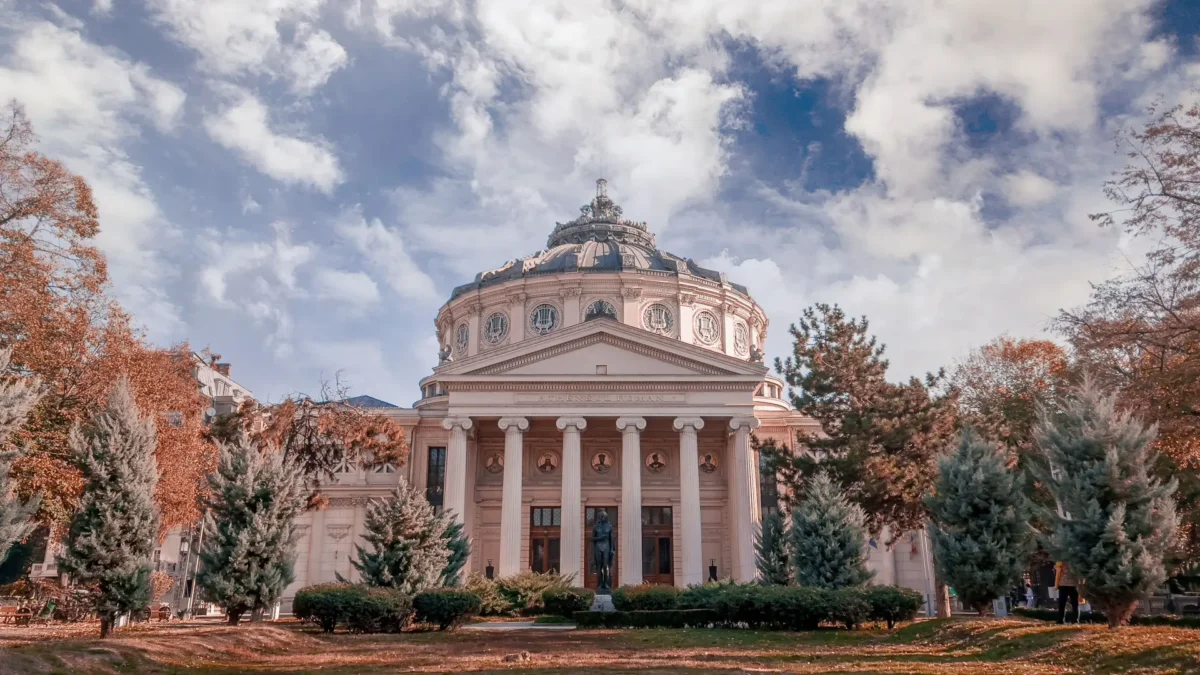
Bucharest is a huge city of contrasts. You’ll find centuries-old buildings rubbing shoulders with communist-era blocks and modern constructions, flashy malls next to leafy parks, and chaotic traffic alongside quiet residential streets with cars parked on every sidewalk.
This mix is what makes Romania’s capital so exciting and interesting, but it’s also something you have to consider when you decide where to stay. And that’s what I am here to help you with today: I will reveal the best areas and districts to live in Bucharest!
I actually lived for several years in Bucharest – and in various areas of the city – my recommendations come not just from research, but from years of living here myself.
Probably the most important tip when it comes to choosing the right location: make sure you’re close to where you have to be each day (e.g., work/university).
If you visit for a shorter period of time, stay close to the attractions – like those in the Old Town area, for example. If you’re there for work, it’s best to choose an area that’s closer to your office.
Bucharest is a very large city, and getting from one place to another can take a lot of time, whether you have a personal car or choose public transport (which is usually faster). Read more about the public transport system in Bucharest to get acquainted with it.
With these in mind, it’s worth noting that some areas are still much better than others, so if you have the freedom of choosing any area you want, here are the best ones.
1. Old Town / Unirii Square
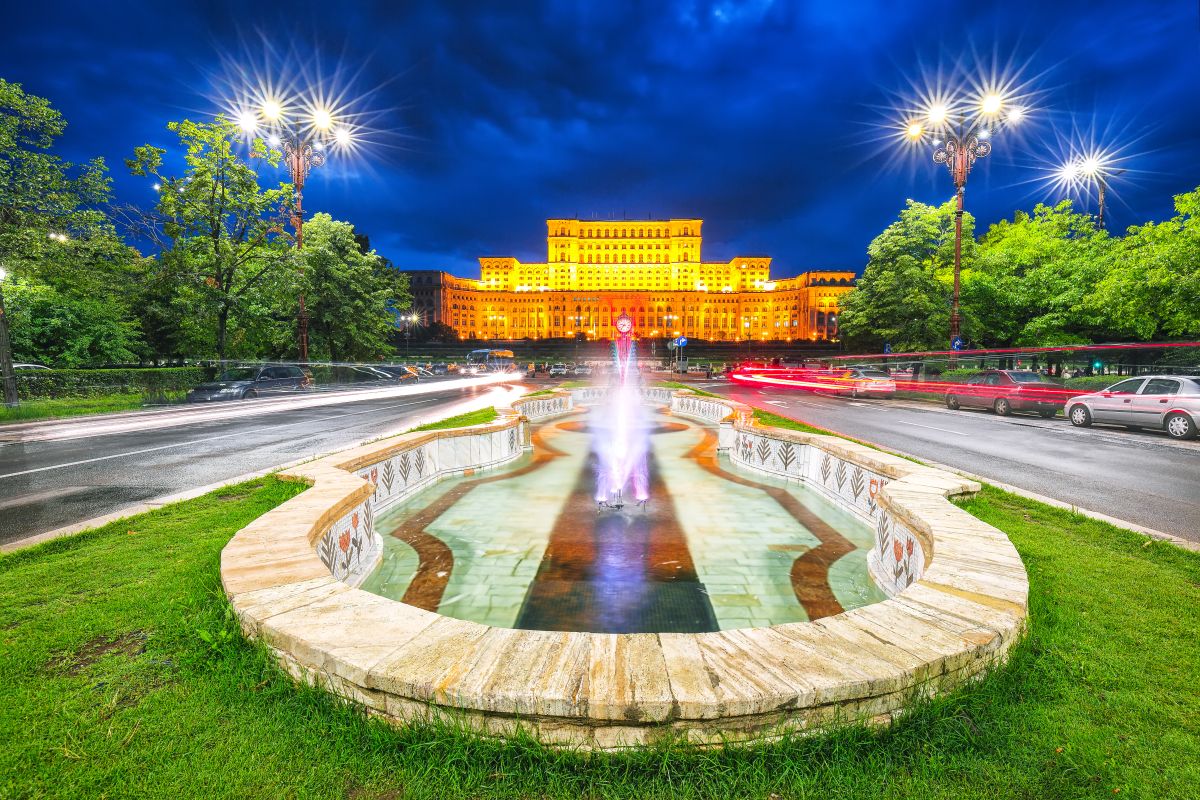
You can rarely go wrong by choosing the central area of any city. In Bucharest’s case, this is definitely the place I would recommend everybody to stay in.
The Old Town/Unirii Square area is found in Sectorul 3 (Bucharest has 6) is the place where you can find great restaurants and pubs, all sorts of shops, most attractions, and nightlife as well.
In terms of accommodation options, you’ve got everything from luxury hotels to budget-friendly ones and hostels. This is clearly the main tourist area, with most of the best hotels, from budget-friendly to luxury.
Click here to check out the best hotels in the area
Even though this is the most tourist-oriented area in the city, prices for food and entertainment are still affordable compared to Western Europe. That’s partly because locals and students also frequent the same spots.
If you’re looking to rent or buy, things change dramatically: here are some of the highest prices in the city. You always have to pay extra to live in a premium area!
IMPORTANT: If you want to rent, make sure your building is not one of the many with a seismic risk. These are marked with a red circle (hence their name – “Bloc cu bulina” in Romania, literally meaning “Building with a dot”) and you should avoid them, even if rental prices are tempting. The risk during an earthquake simply isn’t worth it.
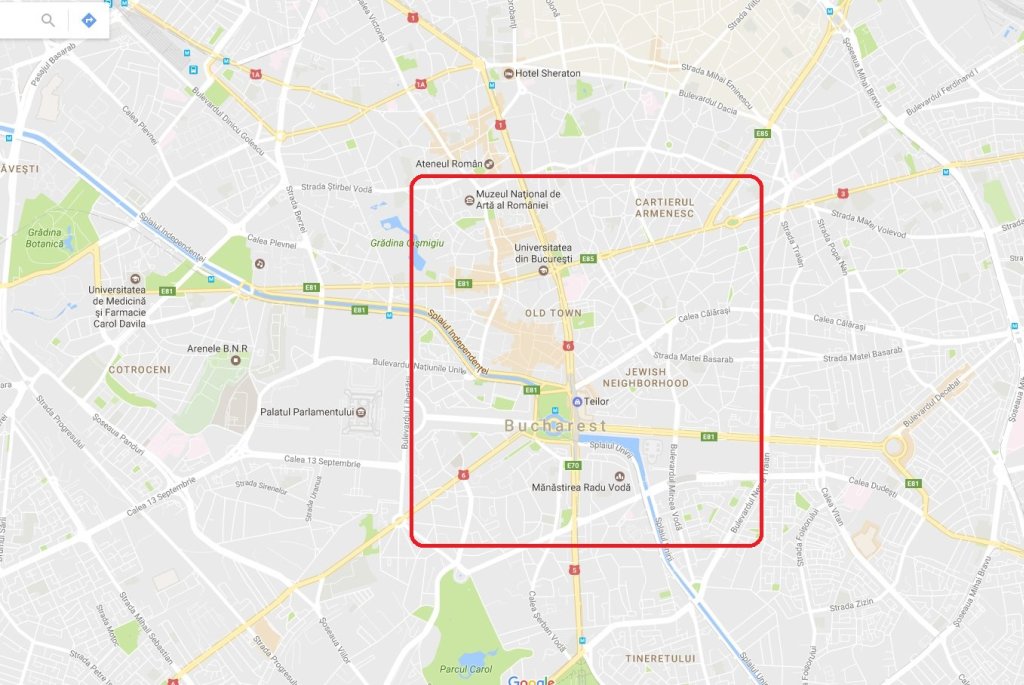
With this in mind, here is a map of the area that I consider to be the best to live in or stay in when in Bucharest, via Google Maps:
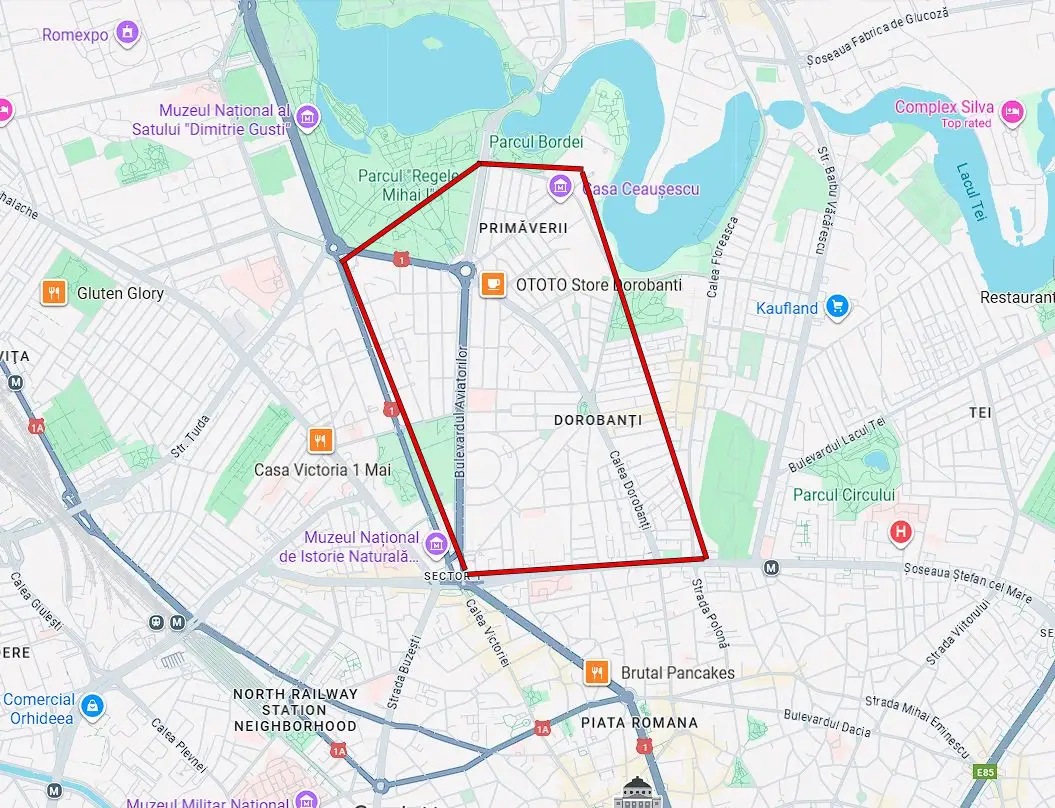
2. Primaverii / Aviatorilor / Dorobanti
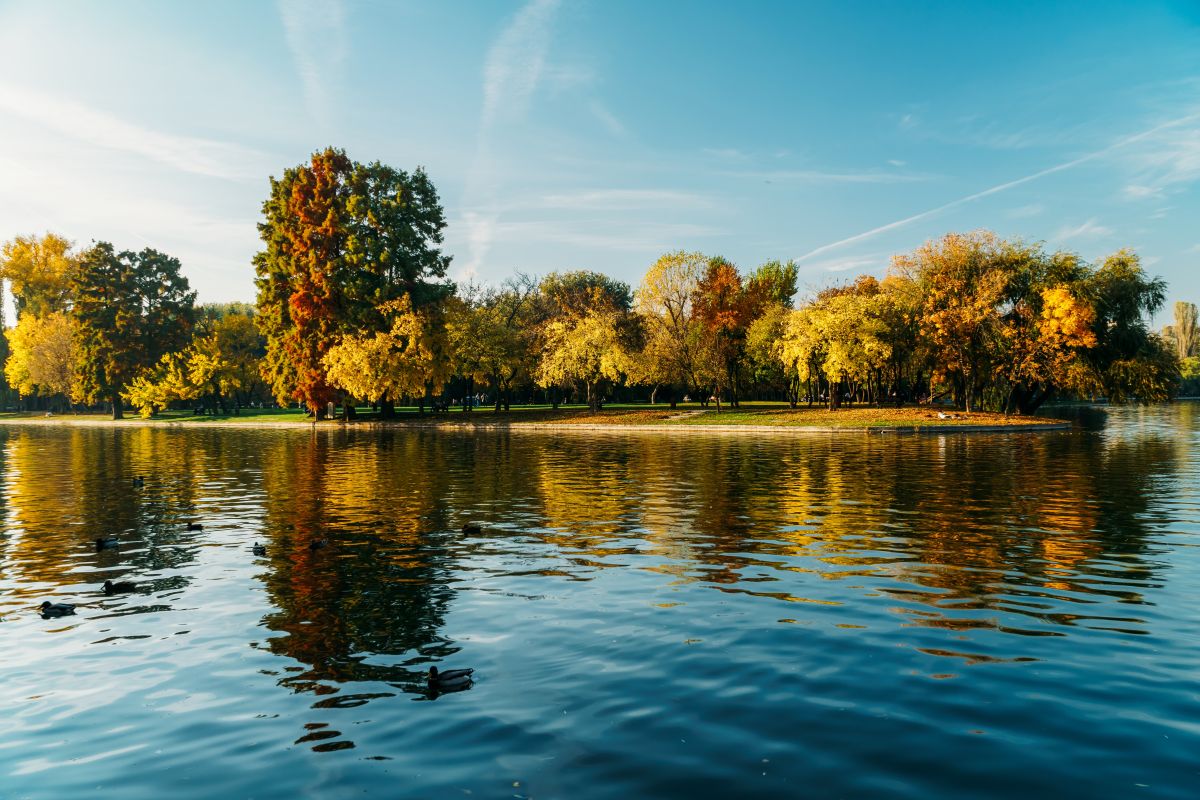
This area is the opposite of the Old Town, located in Sectorul 1. Quiet, green, and residential, this upscale neighborhood is right next to Herastrau Park (now officially called King Michael I Park). Many of Romania’s politicians, businesspeople, and celebrities live here, which also makes it one of the most expensive areas in the city.
There are mostly villas built in the area, but you’re very likely to have one of the previously-mentioned celebrities as neighbors if you live here (though most of the high-profile residents cluster in Primaverii itself. Aviatorilor and Dorobanți are also upscale but slightly more mixed).
Here’s the area on the map:
Other good areas in Bucharest
If you want to keep costs under control or you simply want to move away from the hustle and bustle of the central areas, there are a few other places that we can consider good options to live in, especially if we’re talking about more of a long-term stay.
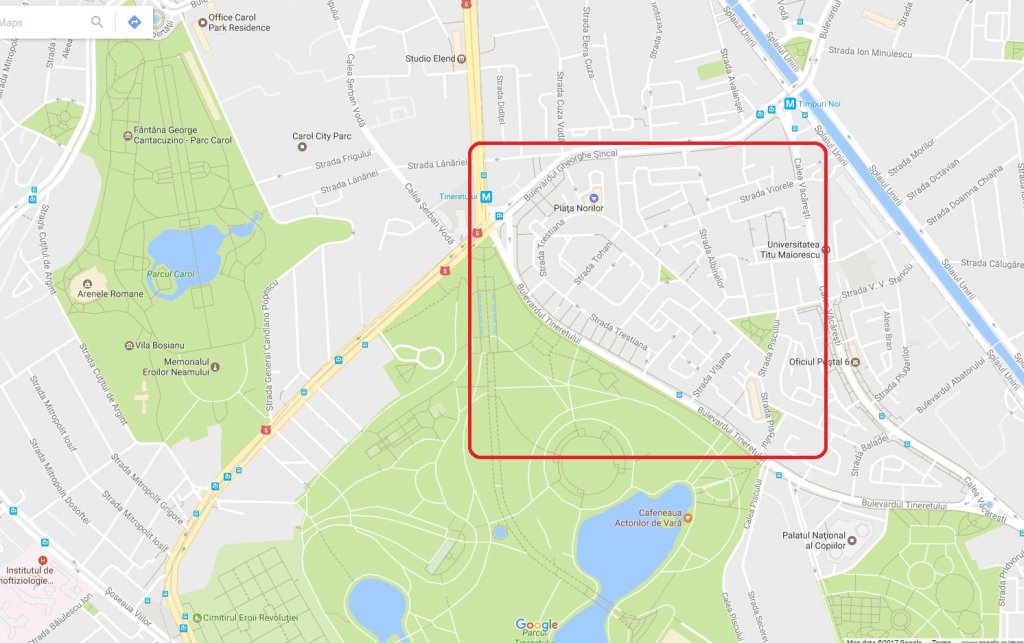
Tineretului
This is a great area, not far away from the city center but very close to two very important things, in my opinion: public transportation and the huge (and pretty amazing) Tineretului park.
The small neighborhood in the 4th District (aka Sectorul 4) is becoming more and more popular every day with more and more stores and restaurants opening regularly. A great option!
Click here to find the best hotels in the Tineretului Area
Here is the small neighborhood on a map:
Dristor / Titan
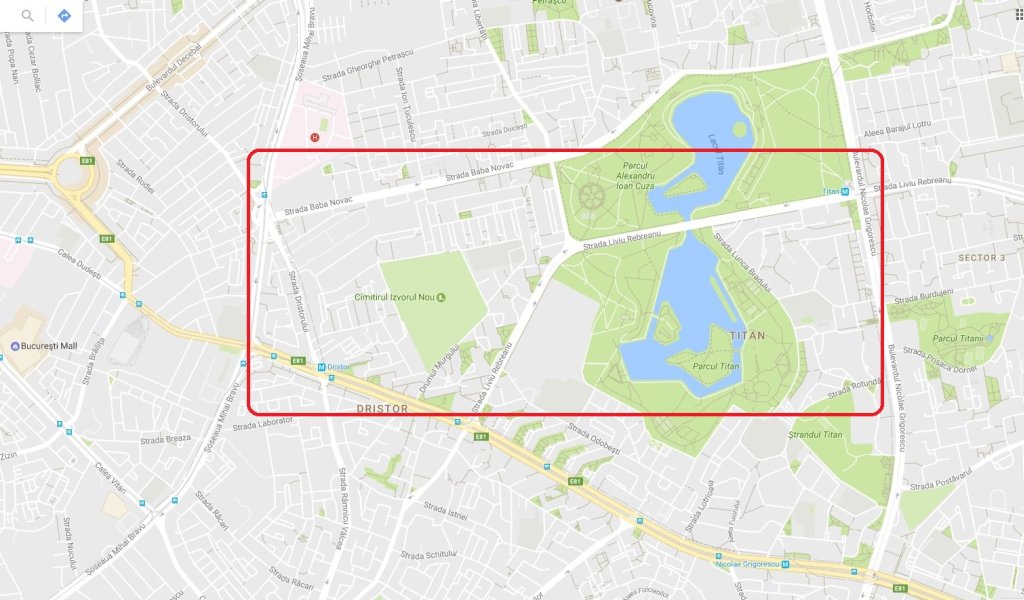
I might be a little bit biased here because most of the time I spent living in Bucharest was in this area, also located in Sectorul 3 (3rd District).
However, I still consider it a great option as it offers many options in terms of public transportation, and there are shopping malls and restaurants within walking distance – including the amazing Park Lake Mall.
Plus, you only have three metro station stops from Dristor to Unirii where the Old Town awaits. And there’s the beautiful Titan Park nearby for some fresh air and enjoying nature – so you have all the options covered here, in my opinion.
Click here to find the best hotels in the area.
And here is a map of the area I consider the best choice for living in Dristor or Titan:
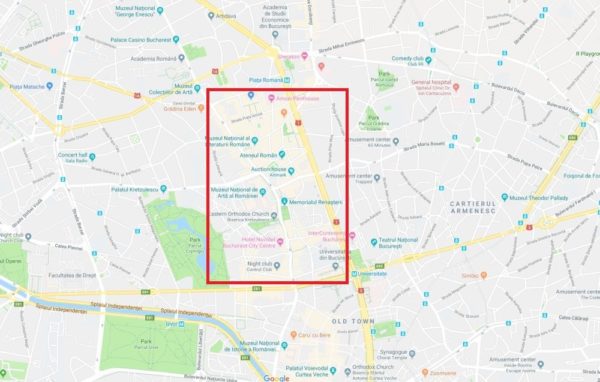
Cismigiu/Universitate/Piata Romana
You’re still in a central location here, but not quite in the Old Town. Prices will therefore be slightly lower (but still pretty high).
This area includes three smaller sub-sections people usually refer to individually (Piata Romana, Universitate and Cismigiu), but since they’re one next to the other, I’m listing them as a whole.
These areas are found at the meeting points of Sectorul 1, 3 and 5.
You’re close to metro stations, parks, tons of restaurants and museums. A beautiful area to live in, although just as crowded as the rest of the city:
New contender: Pipera
The Pipera neighborhood, located in the northern part of Bucharest (technically, in the Voluntari village), has grown tremendously recently and has become a top choice for younger families and younger people in general.
Very modern and nice, it offers plenty of freshly-built apartments and houses and solid public transport connections, despite being away from the central areas.
The biggest downside is traffic: during peak hours, traffic is insane here, as everybody is either trying to leave the area or get back home, using the same few roads that usually get clogged, especially as there is no metro in the area.
Here is the area on the map:
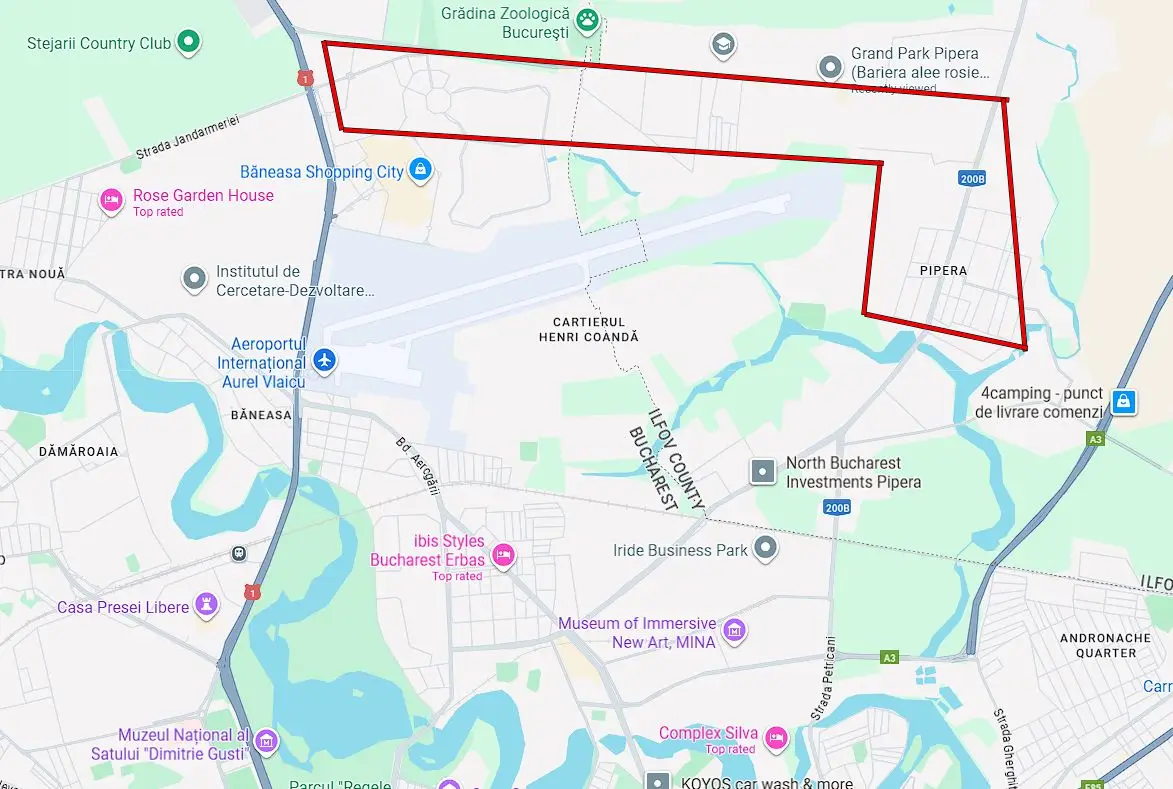
All in all, chances are that, no matter where you will live in Bucharest, you will always have supermarkets, shops, bars and restaurants nearby, as well as parks and schools, even though their quality and quantity differ based on the area you choose.
This is why I believe that the central areas are the best for most expats or travelers, but those who want a more authentic “living in Romania” experience have other options as well.
Hotel recommendations for short term stays
If you want to check out the city first, or you only plan to spend a few days here, I recommend choosing one of my recommended hotels below (I am only listing 3-star hotels below to keep prices under control. For more options, check my articles below the recommendations).
Hotel Liad City Center – My top recommendations for the Old Town area.
Bucur Accommodation – one of the highest rated hotels in the area, this is an amazing choice if you’re looking for a high quality stay.
Hotel Duke Armeneasca – located a bit away from the city center, but still in a good area, the hotel is appreciated by its guest for fair pricing and proximity to Theater and University.
Parliament Square – as the name suggests, this one’s close to one of Bucharest largest attractions (literally): the House of the Parliament.
MyContinental Bucuresti Gara de Nord – Top choice if you want to be next to the Gara de Nord train station. This is the hotel I always book.
Note: If you want to check out more lists, based on the location of the hotels, I have a list of the best ones near the old town area, the best hotels near the airport, and the best ones close to the train station.
Understanding Bucharest’s districts/sectors
The city is divided into six numbered districts (Sectoare). They radiate out from the center like slices of a pie, which means every district has both central and peripheral areas. This is why it’s not very helpful to say “District 3 is better than District 5” or anything similar.
Instead, it’s smarter to think in terms of neighborhoods/areas like I shared above. Some districts contain both prime real estate and less desirable blocks just a few streets apart, so whenever you’re looking for a place to stay, no matter if it’s a rental or a hotel, search by the neighborhood’s name, not the general sector number.
Areas to stay away from
Although most areas and districts in Bucharest can be considered safe, there are some areas in the city that even Romanians looking for a new home try to stay away from: Ferentari and Rahova.
These neighboring districts have a bad reputation, and it’s better to be safe than sorry. While not outright dangerous, most locals still advise avoiding them if possible – especially since there are so many other options available anyway.
In the end, the outskirts of the city can usually be considered areas to stay away from, not necessarily because they are dangerous – since most of them are not – but because of the huge distances to the city center and things of interest.
On the other hand, it’s usually the outskirts of the city where new buildings are being built, offering better options than the small communist apartments you can normally find in the city – as is the case with the growing Pipera, for example.
So if you don’t mind commuting and spending a lot of time on the road (be it in a personal car or public transportation), you will have the chance to live in some really nice, recently built homes or apartments.

Final words
In the end, Bucharest is about trade-offs: central buzz vs. quiet residential life, budget vs. convenience. Once you pick the right base, the city’s mix of history, nightlife, parks, and everything else will do the rest.
Now that you know what the best areas in Bucharest are, why not plan your next move by checking out my article on the top things to see and do in the city?

I am a journalist and local expert who has been documenting life in Romania since 2013. Based in Constanta (after living in Bucharest and Drobeta Turnu Severin), I provide up-to-date, on-the-ground advice for expats and travelers. My articles are based on real life experiences and plenty of research – from paying Romanian bills to exploring the wild “Rawmania” countryside.
Very informative! Thanks a bunch!
Hey Calin;
Parts of the city are indeed attractive.
(Of course, if Ceausescu hadn’t leveled a good part of
the city for his ego-driven projects, it would have been an even
more attractive city, IMHO.)
Parts, as in many cities, are not.
Still, I’d feel safer there, than in any comparable sized city.
No knifings like in London. (WHAT has happened there???)
No broad daylight shootings like in New York City.
No ATM kidnapping as in Buenos Aires.
Still for Chicken Little Teil, the threat of devastating earthquakes is real.
Are there still many buildings with the warning red circle(?) denoting they’re unsafe.
Are new buildings built to strict seismic codes? Have areas with fault lines or high risks been
mapped so people can make informed choices?
Are the subway lines built with seismic risk assessment and mitigation. I’d hate to be riding
underground when a seismic event occurs. Same as being on a bridge. Chicken Little, indeed, looses
a few feathers worrying about such things.;-)
Well, so much for my mewling.;-)
Take care,
~Teil (USA)
After the big earthquake in 1977, the rules for building have been changed in the entire country and everything built afterwards is (or at least should be) safe(r) if a big earthquake hits. This is why most people nowadays are looking to buy in buildings built after 1977.
There are still many buildings with the red dot (which means that they are in danger of collapsing if an earthquake hits) but as far as I know, they have started reinforcing them – the process is really slow though. Most of these buildings are, paradoxically, in the center of the city.
That’s a good questions about the metro lines! Unfortunately, I don’t have the answer for that: I will have to get some research done and find out the truth. I would say that they should be build with high seismic codes – I know that in many countries, the subway lines were built as anti-atomic shelters, so hopefully they had something similar in mind in Bucharest, which would mean that they’re better reinforced. However, the metro lines don’t go that deep and that might not be the case. I’ll do some research to find the truth.
Thanks for this very informative site. This is the first one with realy good and clear information. Which area do you recommendet when the office is in the Calea Tipografilor. We want to rent a flat for2-3 years.
Traffic in that area is horrible at peak hours, so your best bet would be to rent something nearby. The Primaverii area would be a nice one to be in (close to the Aviatorilor metro), but not within a walking distance. The French Quarters is also good and close and you could still walk if you don’t mind doing so for ~25 minutes (through the Herastrau park, though, which is really nice). Chances are that a car ride to work and back from work will take just as much if not more.
You won’t be close to the city center, but with the horrible traffic in the city, you want to be as close to work as possible.
Hi
I might be having a job I the city center around doberanti.
However I would prefer to not be in the city itself.
If you were to rent in the outskirts , but also wanted least amount of traffic hassle. What would be the best options?
It’s hard to determine via Google maps and how they judge times.
I have a dog and would prefer a quiet neighborhood around some nature.
If I said I didn’t want to use more than around 40 minutes in traffic to get to work. And I didn’t want to drive myself but use public transportation.
Any ideas and feedback are welcome:)
It’s difficult, because at peak hours that area – and everything that is considered outskirts of the city – gets really crowded. Your best bet would be to look North due to the proximity to Dorobanti – Cartierul Francez and Aviatiei would be good choices as you might also have a metro station nearby (which would be the fastest).
Another option would be towards Bucurestii Noi – Pajura, but that’s a bit farther away, though you’d still have metro connections. But do have in mind that if your work hours are traditional, you will have very, very high traffic in the entire area.
Hi, TY for the feedback! Much appreciated.
Renting within the city limits gets expensive – and quickly.
Its not the amount that bothers me – but what you get for that amount.
Initially I was looking around Tunari and Otopeni. Would that even make sense? Traffic wise. The hours I can manipulate in some ways. I could if needed avoid peak hours – as long as peak hours arent the whole day:>
I saw a bus line 135 from Tunari to the city center. And google maps says its around 30-40 minutes. However if that is far from the truth – and it is 2 hours – then that is a different situation.
Any thoughts are welcome?
Otopeni would be the better choice in my opinion, as Tunari forces you to go through Pipera which is extremely crowded (but also a good area with lots of modern buildings).
30-40 minutes to the city center is doable outside peak hours, indeed. In theory, buses should have their own line, which would get you from point A to point B much faster, but the reality is different. Still, with regular traffic, it could be done.
It might be even faster if you take the bus to the Aurel Vlaicu (or even Pipera) metro station and then the metro to the city center – especially useful during the peak hours.
Hi – On booking.com for hotels it shows Sector 1, 2, 3, 4 etc…for location – how is one to reference those locations compared to your list above when trying to select a hotel?
Thanks
Ken
Great question, Ken! I will update the article momentarily to mention which sector each of the areas above are in.
Also, a trick I use on Booking is to look at the hotels on the map instead of the list they show you – this way, I am always sure I am right where I want to be (this works well with Bucharest’s sectors, as they all cover both central and peripheric areas).