
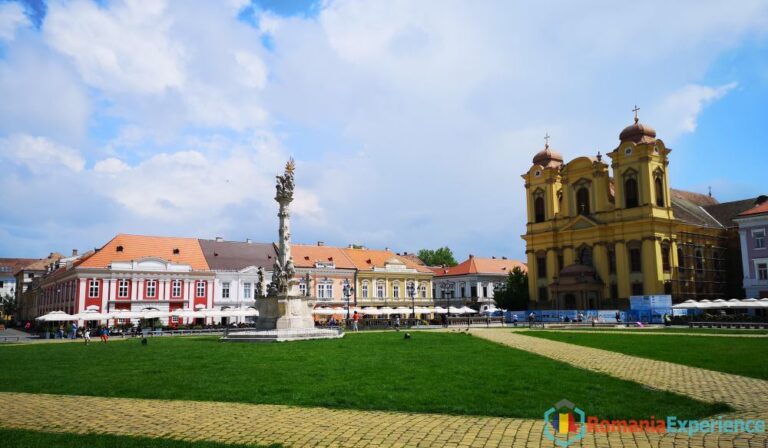
Today, I want to help you decide whether Timisoara, Romania, would be a good city to live in long-term. After all, it was the European City of Culture in 2023, a reward after years of growth and improvement.
It followed a similar path to Sibiu, which ended up on the tourists’ map after being the European Capital of Culture back in 2007.
Back to Timisoara, you probably know that I have a special and somewhat strange relationship with it: initially, after visiting it many, many years ago, I considered it a dark, gloomy and poorly maintained city, so I avoided it.
Things changed after 2020, when I visited once more and saw a completely different city: clean, well-maintained, with plenty of nice green spaces, amazing restaurants (check out the best in Timisoara here) and, overall, an amazing vibe.
Things to know about Timisoara
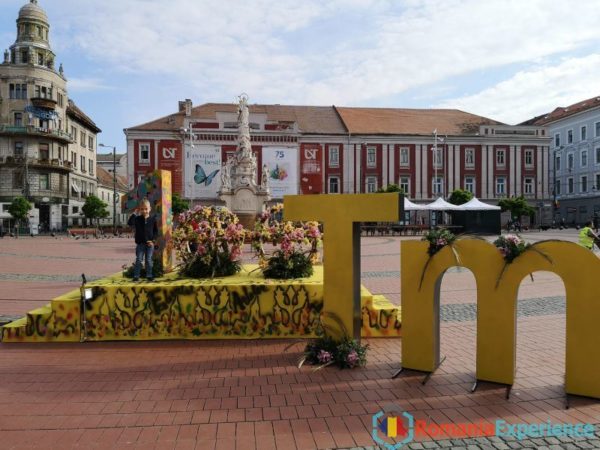
Located in the Banat region, very close to Serbia and Hungary, Timisoara is the third-largest city in Romania with around 300,000 official residents (though the real number is likely higher).
It is an important university hub in the country and a popular destination for both people living in smaller cities and expats.
This is the city where the Revolution against Ceausescu’s communist regime started in December 1989 and it was the first city in Romania to be declared “communist free”.
The buildings in the historical center still have bullet holes from the shots fired during the revolution, and that’s a mighty impressive thing to see – even though it brings some chills up your spine as well.
Timisoara is considered by many a “student’s city” which means that there’s a vibrant night life and younger population, as well as very cheap living, eating and entertainment options in the student areas of the city.
You can check out the best things to do in the Timisoara once you’re done reading this article.
Recently, even the state universities started to have English-only classes, making it even more interesting for foreigners who, until now, were forced to learn Romanian in order to be able to learn in the city.
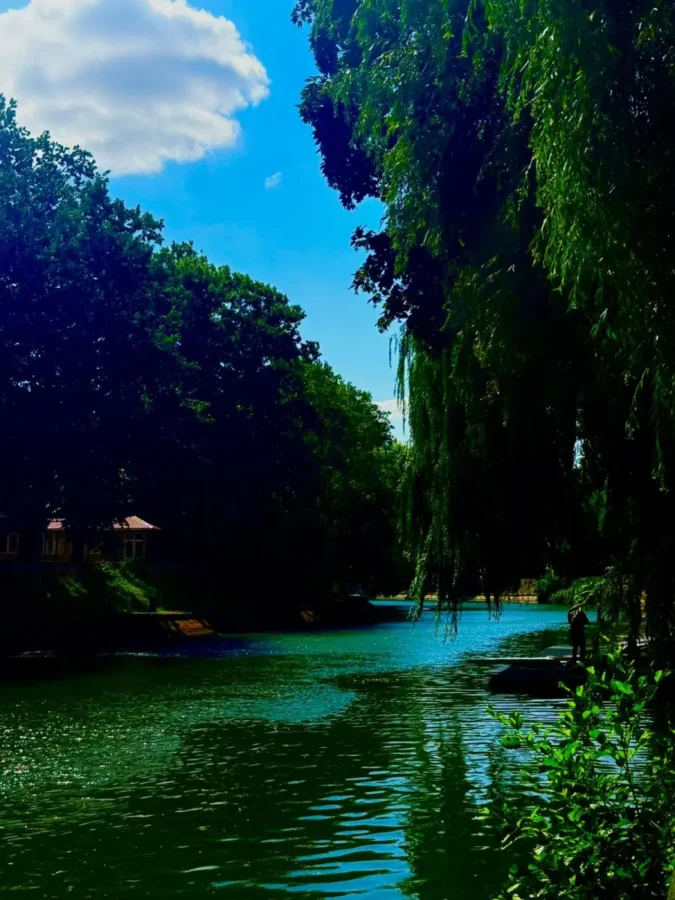
As you can see in the photo above, the Bega river runs through the city, with beautiful (and currently renovated) parks and bike roads built around it.
If you’re nature fan or you love to cycle or jog, there are tons of opportunities on the banks of the Bega river – as well as a huge playground for kids or restaurants and cafes with nice views over the river itself.
Finally, since Timisoara is the home of many startups, as well as various branches of international companies, many of the students decide to remain and live long term in the city once their studies are over, meaning that the population is expanding and the city is growing as a whole.
As a result, the real estate market is very hot right now – as it is in most Romania – with prices increasing a lot, but also with tons of developments, some of which extremely impressive and unique in Romania (but more on that a bit later). Here are the best neighborhoods to live in Timisoara.
Climate & Weather
If you make Timisoara your home, you get four distinct seasons, although recent years have changed their lengths a bit, and made things a bit more unpredictable.
The city offers hot summers that regularly push past 30 degrees Celsius. Winters are relatively mild compared to the rest of the country, although you should still expect cloudy skies, freezing temperatures, and even snow.
Safety & The Expat Community
Romania is an incredibly safe country, and this city is no exception. Walking around at night feels secure, especially in the central areas or the student hubs.
The low crime rate has held for years now, there are rarely violent crimes (shootings or such are practically unheard of) and if you are a solo expat or a retiree looking for peace of mind, you will surely find it here.
Plus, the international community is growing quickly. You will easily find expat networking groups meeting at local cafes, making it simple to socialize and build a friend group shortly after arriving.
Living in Timisoara, Romania
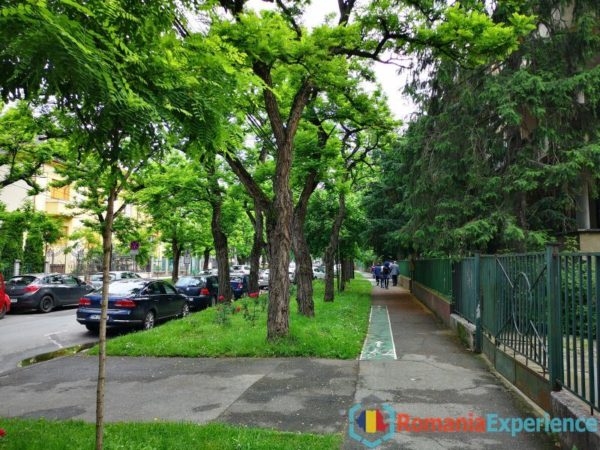
Timisoara is considered one of the best cities to live in Romania, with one of the best standards of living and job offerings, mostly thanks to the number of corporations that have offices in the city.
It’s also probably one of the easiest cities in Romania to get a job in even if you’re not speaking Romanian, so it’s definitely worth checking out at least if it wasn’t on your shortlist already.
Many students actually decide to stay long-term once their studies are over, which keeps the local economy growing.
Also, you can get to Bucharest from Timisoara (and vice versa) in about 1 hour if you take an internal flight (or around 10 hours if you take a scenic train ride). Other important cities are nearby, both from Romania, as well as Serbia and Hungary.
Cost of living in Timisoara
The cost of living in Timisoara is reasonable, especially if you compare it against other similarly-sized cities in Western Europe.
Being a student hub, it offers plenty of opportunities for living well on a budget. I estimate you’ll need around €1,500 each month to live a decent life here – and as little as €1,200 if you’re sharing costs with another person (mainly rent).
Here is a quick breakdown of what you might spend:
| Expense Category | Estimated Monthly Cost (Single Person) |
| Rent (1-Bedroom in a good area) | €450 – €650 |
| Utilities (Electricity, Heating, Water) | €100 – €150 |
| Groceries | €350 – €400 |
| Internet & Mobile Plan | €15 – €25 |
| Dining & Entertainment | €200 – €300 |
| Private Health Insurance | €30 – €60 |
Of course, if you have a higher budget, it’s even better, as Romania as a whole is not as affordable as it used to be several years ago.
Getting Around the City
There are trams and buses running in the city and the public transportation options are decent, even though they’re not always in time and you’ll still have to do some walking to get to specific areas – just like mostly everywhere else in the world.
But at least the ticket prices are really low: 5 lei / €1.00 for 60 minutes (unlimited trips) or 160 lei / €31.40 for unlimited travel for one month. You can check out the updated public transportation prices on the STPT website.
If you’re driving in Timisoara, you will be pleased to know that traffic is not as crazy as it is in Bucharest, but you’re still in Romania so expect some reckless driving, a lot of honking and pushing the limits of the cars to the maximum.
Timisoara also has a major international airport with plenty of budget flights to Western Europe and beyond (but also local flights). This means you can use it as a cheap home base for exploring Europe.
Also, a newly-build highway can get you to Budapest in just 3-4 hours, or any of the nearby SPA cities like Mako or Szeged.
You can also get to Serbia, and there is even a dedicated bike track stretching all the way to the Serbian border for cycling enthusiasts.
Healthcare Quality
The public hospital system is decent here, but it can seem underfunded in certain areas. However, the private healthcare sector is excellent and very affordable compared to Western Europe.
Large clinics like Regina Maria or MedLife offer modern facilities with English-speaking doctors for a small monthly premium.
Visas & Residency
There are a few options if you want to move here as a non-EU citizen, from the Digital Nomad Visa (a bit pricey, as it requires around €5,600 Euros per month to qualify) to various other Visa types – check out the requirements in my previous article.
Romania doesn’t offer a retiree Visa at the moment, so you have to either choose the DN option above or get creative with the other types.
EU citizens, on the other hand, have it much easier and only need to register their residency after three months.
Conclusion and personal thoughts
Whenever I visit a new place, I always ask myself: “Would I like to live here?”
For a long time, my answer regarding Timisoara was a big, resounding NO. But today, my answer is an absolute yes.
I really love how much it has grown, how alive it feels, how beautiful it is. Knowing that ongoing construction and renovation projects will make the city look even better in the future gives me a lot of confidence, too and even though it’s not perfect, no city is.
Timisoara is also less chaotic than Bucharest, but still a very large city to offer most of the goodies that Romania’s capital can offer.
Despite this, it also seems to be very walkable – at least in its central areas and surrounding zones, which is always a bonus in my books: who wants to waste their life in cars, getting from point A to point B?
To know exactly where to stay, check out my previous article sharing the best areas to live in Timisoara.
The people living here are usually a bit more laid back and calmer and the fact that you can easily get to two different countries – Serbia and Hungary – is a bonus.
So, if you are considering Timisoara as a potential home for the future, but you still have doubts, I would say go for it. It’s better than it ever was, and most likely you will absolutely love the city!

I am a journalist and local expert who has been documenting life in Romania since 2013. Based in Constanta (after living in Bucharest and Drobeta Turnu Severin), I provide up-to-date, on-the-ground advice for expats and travelers. My articles are based on real life experiences and plenty of research – from paying Romanian bills to exploring the wild “Rawmania” countryside.
Calin:
It’s definitely very appealing by your description and pictures. (It’s hard to believe you weren’t a fan of the city not so long ago–or that it was ever dirty and in poor condition. It looks, now, like something out of a fairy tale film.)
What exactly does a city have to do to become the “European Capital of Culture”? It certainly seems to have all the pluses as Bucharest, without its minuses.
Could this be a city where you’ll move to afford Son Romanian (Eric) more opportunities? What is Wife Romanian’s view of “Timis”?
Thanks so much for sharing this great entry on Timisoara!
~Teil (USA)
Hello Teil. It is indeed amazing what a bit of attention can do to a city’s overall appeal. I haven’t visited much of the areas outside the city center, but at least that area’s great and definitely offers a lot to anybody who would live there.
Regarding the requirements to become the European Capital of culture, I really don’t know how this goes. I believe they choose a country (or more) and each has to submit a few cities – there were more applicants from Romania, including Bucharest, but Timisoara won. I really don’t know on what criteria though 🙂
We have considered Timisoara since most of our friends have already moved there, but I still have a few doubts we could live there. We’ll see…
What a pretty city! It sounds like the “Bologna” of Romania. It looks pretty colorful and l’m sure being a college town, the cost of living is reasonable. I think it would be cool to see real bullet holes left in the city. I hope the city keeps improving, it looks lie it’s worth it. What a big plus to have Budapest really close by too :-). That alone makes me like it even more.
Yes, indeed! And it’s also close to Belgrade, which is also a really nice city… plus other smaller cities in each neighboring country, Arad is close by. It is indeed nicely located and will hopefully keep improving.
Hi Calin,
I agree completely with what Teil and Kemkem have said. The pictures and your descriptions really make the city look enticing. Lots of wonderful attributes too, like bike-friendly, trams, cheap housing due to students, close & convenient proximity to Budapest by car or the rest of Europe by air. The deal-breaker for me is not being in the mountains of Transylvania, which I just sense will hold a special magic for me. So, Sibiu, having been the European Capital of Culture in 2007, will serve as a nice alternative. That said, thanks for a well done article! JC
I am doing my best to cover all the possible destinations, so that everybody has a few to choose from and even though I’m really slow at covering them… I’ll get there 🙂 Sibiu has indeed become a very popular destination and is a city that looks really good and has a lot to offer, so for somebody who also appreciate the mountains, it will surely be a good choice!
I was in Timisoara in May for a couple of days visiting relatives. I enjoyed it. I found it quite different than Bucharest.
Happy to hear that you enjoyed it, it has indeed changed for the better recently.
I think Romania is wonderful. But it is different from better developed areas. Hard to put words to what that difference would look and feel like. It may not be for everybody. Creature comforts are not as easily available as they are in a major U.S. city. Bathrooms on the road are an adventure all their own.
It is sad in that we want Romania to be as successful as any other country. (tp in every bathroom) Romania is hungry for change and that desire can be used and taken advantage of. Wonder if Romania gets good deals from big business that sees advantage in Romania? Farming industry wants to compete? Do you want pesticides and fertilizers in order to do that? How about growth hormones on animals? So eager to get ahead is it all worth it?
It is cool yet worrisome to see all the change taking place. Hope Romania does not sacrifice to much in order to “fit in. The big city lights are alluring and it is hard to understand why and how you may want to avoid them. I grew up small town and glad i did. Grass is not always greener on the other side.
Nice way of putting it, Otto. Change and improvements come at a price.
Hello, have been so enjoying your various posts. Especially pleased to see you write about Timișoara on the very day I celebrated my recent birthday there (attending ‘My Fair Lady’) at the Opera House! It would be helpful to know more about the risk of earthquakes there and any other potential, natural disasters (like flooding)? I felt the recent Lasi aftershock at 2 am in Brașov so perhaps you could expand this topic, eventually, to include the best small cities in Romania with little to no natural risks?
I am happy to hear that you had a great birthday celebration in Timisoara! Regarding earthquakes, the city should be considered generally safe – it’s far away from the Vrancea hot zone, but apart from that it’s difficult to say. Natural disasters can strike even in the most unexpected placed if nature wants to prove a point, but Timisoara should be considered safe from flooding as well, even though the Bega river runs right through it.
As an broad aside: how would you characterize the lifestyle difference between Timisoara vs. Craiova vs. Cluj vs. Oradea? I am an American looking for a decent, affordable quality of life, eventually, in retirement. I really enjoy your posts. Especially to hear about mid tier cities I’ve never heard of.
It’s difficult to say and that would be an entire article (or more). Cluj and Timisoara are larger cities, should be considered more active with more opportunities in all areas. Craiova, although big, is a bit behind in my opinion even though recent renovations created a beautiful central area, quite charming! Unfortunately, I have to do some research about Oradea as I don’t know much about it but I expect life there to be similar to that in Cluj or Timisoare, maybe slightly cheaper.
Timisoara seemed the most “appealing” city with access to Serbia and Hungary. Cluj was the “best” city experience with a bit too car traffic for me. Oradea looks like a small gem with decent access to Hungary. Perhaps the medical school there would mean better medical care? Not sure.
It’s true, the fact that Timisoara is just a stone’s throw away from Hungary and Serbia is a big bonus for the travel-minded. Arad, Oradea and Cluj are also good choices, although I personally didn’t like Arad after spending a couple of days there. However, many people would say that the Western side of Romania is the best to live in.
I was in Timisoara again in December of 2018 and noticed the airport has many signs in English as well as Romanian now which made navigating easier. My wife has many relatives in this city and she is from this region herself. I find the people and food and even language is somewhat different from Bucharest (from a foreigners perspective).
Yes, everything has changed and was made better. The train station (since we use the train more often) was a complete mess every time we visited – there were NO restaurants or even kiosks to buy food or something for the train rides several years ago… but now we had a lot of options there as well. Welcome change!
I think part of the maturing process is seeing places and things with a different eye. I like that you’re honest enough to say that you have seen a different side. I do hope to visit this lovely city one day in the near future. I like the fact that they have the option of visiting nearby places too. Gosh..my list is as long as my arm 🙂 .
This is the reason why I think that most places out there deserve a second change. The world is changing and especially in places that are still developing – like many cities in Romania nowadays, things could improve on a yearly basis.
Timisoara is indeed nice and you can connect it with Belgrade, for example: a few days here, a few days there… and the list gets shorter :))
This is the demo, post some pictures also from Sagului, Girocului neighborhood, you didn’t mention the gypsies, traffic, pollution. The only beautiful thing in Timisoara are the city center that you mention and the Iulius Mall…the rest is garbage, nothing to do nothing to see..
Well, I wrote about the places that I visited. I also walked around the Bega river’s bank and it was nice, and also spent some time in the train station area and considered it safe even though indeed not as picturesque.
I think that all cities, anywhere in the world, have parts where things aren’t as good as others and for an expat or a tourist, it will probably (hopefully) be the center of the city that they’ll stick to. Iulius Town also sounds interesting, but I didn’t get the chance to actually visit yet.
I am not trying to downplay the pollution – which is a real problem throughout Romania – or the traffic though
Timisoara is the most beautiful city in the world i know i was born there. And lived there.