

Manele music is still one of Romania’s most popular genres, mixing traditional Roma music with modern pop, dance and hip hop elements, including influences from Turkish, Arabic music, Reggaeton and basically anything that’s catchy and popular.
With catchy tunes, Romanian manele usually feature a fast-paced rhythm and synthesizers, with lyrics generally related to heartbreak and love, but also partying and high status.
This genre is an extremely controversial one here in Romania, one that took the country by storm in the late 90’s and early 2000s, and one that is still very popular today, although it sounds completely different from what it did in its early years.
Still, it remains one of the country’s most popular types of music – if not THE most popular – with its artists getting millions of streams on all streaming platforms. And this despite the fact that mainstream radio stations or most television channels never stream them.
Today, we’ll get a bit more in-depth with this genre, learn everything about Romania’s manele music and even listen to some hits – both old and new. Let’s begin!
What is “manele music”?

The genre has origins in traditional party music, called mahala music (or “lautareasca” music – the original manele) which started in the late 18th century.
Usually played live by Roma musicians with a live band, the old manele had Turkish influences and was considered Oriental Music. This type of music was usually played at parties and in bars, as well as weddings.
They have slowly evolved (or at least changed), being influenced by other Balcan genres, as well as traditional Greek and Turkish music with pop influences and lately, Latino/Reggaeton beats. In other words, a strange mixture – but one that usually sounds good and has a great rhythm.
Being so incredibly catchy and making you wish to dance even if you don’t normally do so was one of the main reasons why they became such a mainstream success.
The lyrics are repetitive and extremely simple, usually adopting themes that resonate well with their core listeners.
The songs vary from heartbroken/love tunes to lyrics praising the “value” of the singer/listener, as well as their achievements and ton of enemies they have (which is apparently a good thing).
Other songs are just “brag music” or music made for people to dance, with no real message.
The Golden Age of Romanian Manele Music
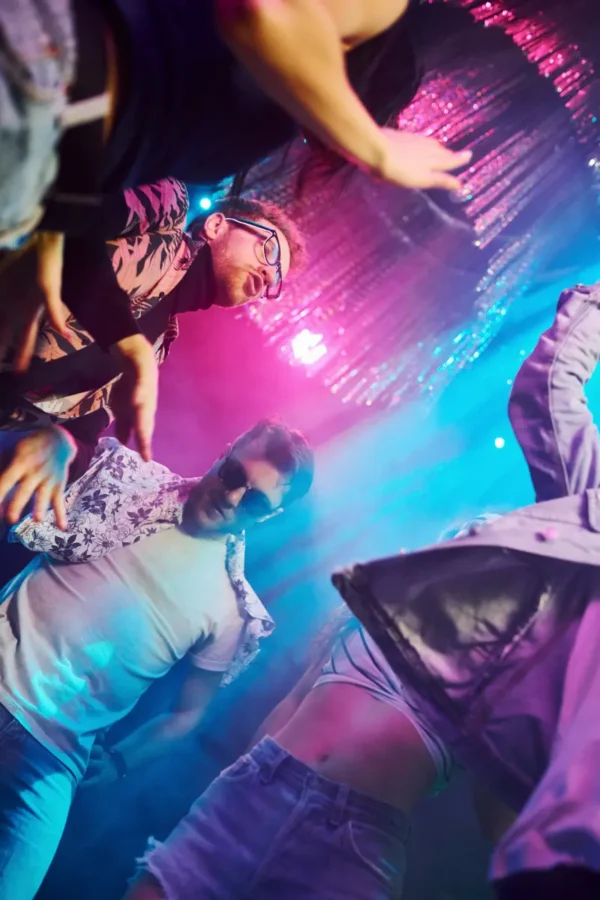
The late 1990s and early 2000s were the genre’s Golden Age with artists like Adrian Copilu Minune, Nicolae Guță, and Vali Vijelie taking the country by storm and writing history.
They sold millions of cassette tapes and CDs at local street markets, they were everywhere on TV, radio, events… this was when manele was officially put on the map.
A perfect example is the classic song “Of Viata Mea” by Costi Ioniță and Adrian Copilul Minune. I think that only few of the younger listeners today would find its older rhythm appealing, but the lyrics were spot on for a generation struggling with a difficult post-communist life.
The singers wail about their heavy hearts and endless crying, connecting with everyday people navigating economic hardship.
The chorus is something like: “ooooooooooooh, my life, oh, my heart, oh, I can’t stop crying, I am very unhappy”.
Also note the huge crowds! This is how big they were (and still are). Maybe even bigger.
The Cultural Divide and The Great Broadcast Ban
The rapid rise of manele brought a huge wave of opposition from upper-class citizens and intellectuals.
Most critics pointed out that the lyrical content is filled with grammatical errors and promotes superficial values, like fast cars, money, and all-night drinking and partying.
The lyrics themselves are extremely childish, but not suitable for children, as many are vulgar.
This cultural clash led to the genre being banned from mainstream radio and TV stations. Authorities even prohibited drivers from playing manele in public transportation vehicles.
You will still not hear them in most mainstream restaurants throughout the country today.
Despite all these, with their repetitive elements, generally good rhythm and the promotion of values that lower-class people consider extremely important (women, money, status, and all-night partying), as well as hitting the soft spots with their love songs, the Romanian manele have become extremely popular and still are huge in Romania.
Many Romanians still believe that you can’t have a real party without manele music – so weddings, birthdays and other similar events “must” have manele performers invited or at least some manele music played.
(Of course, this is just a generalization. We had no manele music at our wedding here in Romania, nor at our child’s Christening party and nobody died of boredom. There are many people like us who never listen to manele and can still have a great time without them.)
The Modern Era: Trap-Manele and Gen Z Takeover
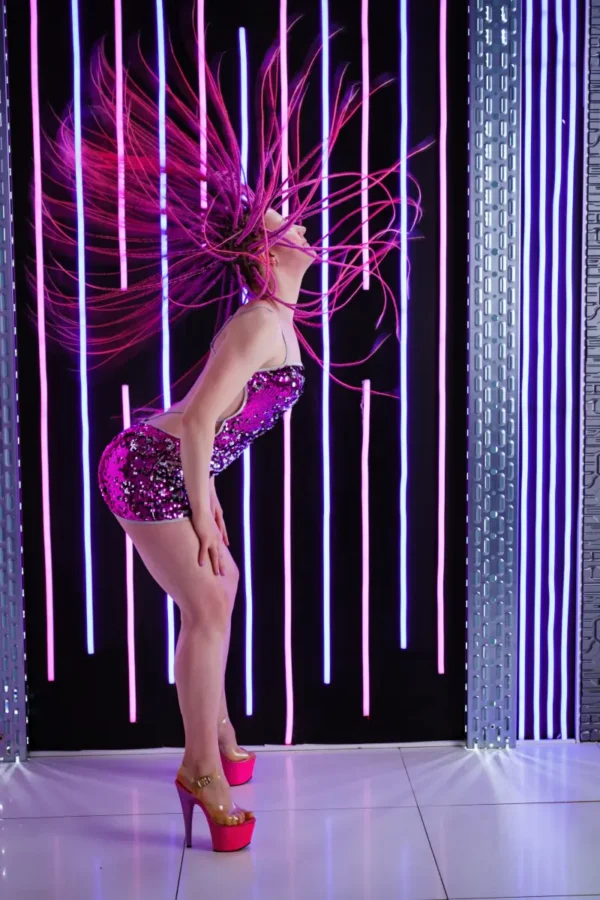
Surprisingly (or not), today’s manele music is thriving and doing better than ever, even with the younger audience who now listen to a mixture of trap-manele (new-gen hip hop mixed with manele music).
It was a natural combination, as the Romanian trap music itself steered well away from the classic hip hop roots and moved – at least lyrics-wise – towards manele.
If several years ago manele singers relied mostly on their amazing vocal talents, nowadays it’s more about physical appearance, designer clothing, and high-end aesthetics.
Look at any recent video from Tzanca Uraganu, one of the more popular artists of the moment. You will see a very catchy rhythm, repetitive tunes, incredibly fit artists, and high-budget cinematic production. This is the exact recipe for success today.
The genre has completely bypassed the traditional television and radio bans. It has broken into mainstream youth culture through massive live events.
At the massive Beach, Please! Festival, trap-manele fusions were heavily featured on the main stages, drawing tens of thousands of fans, resulting in the more traditional kind rising in popularity as well.
Listen to some Romanian Manele Here
After all this talk, you’re probably curious to hear what this controversial genre sounds like.
Of course, unless you speak Romanian, you won’t really understand what they’re all about and how wrong, sand or cringy some of these lyrics are, but you’ll probably enjoy the rhythm. Who knows? Maybe you won’t!
Either way, it’s time to do some listening! Below, I will share with you a few manele songs from when the genre started to hit the mainstream media to more recent days when they have changed quite a bit.
We’ll start with a guy whose name can be translated as “The Fantastik Romeo, the king of love-making.” His main thing wass to copy famous beats and music, then turn them into manele.
In this case, we’re talking about a song whose original title I can’t remember, but we’ve had manelized versions of Rihanna’s Man Down, the classic Informer from Snow and many, many more. In most of these cases, the lyrics themselves are hilarious – sometimes unintentional.
The song we’re listening below is called “The professor” and is filled with sexual innuendos which are not as subtle as the author probably thinks they are.
Some of the lyrics go like this: “Let’s go to Morena, let’s go to Morena, she always fixes my engine, always fixes my antenna. Let’s go to Morena! Let’s go to Morena! Go down, you Morena, so we can see your trunk.”
Ah, the brilliance, the poetry, the metaphors!
Now moving to more recent manele songs, we can notice some attempts at improvement and updating to more modern times.
But it’s obvious that in most cases it’s not the lyrics that matter, but the rhythm which is, I must admit, catchy.
And since I don’t really listen to this type of music and I am not familiar with who’s popular these days and who’s not, I went over on YouTube to search for modern, popular, manele songs. And they did not disappoint!
However, they no longer like allowing others to embed them, so you will have to go to Youtube directly to visit today’s hits like Lele – Peter Parker – Balkanic Version or Jamaica.
Here is another example, from a few years ago, this time with Tzanca Uraganu (Tzanca The Hurricane), which appears to be one of the most popular artists of the moment:
As I was saying: very catchy rhythm, repetitive tunes and nice ladies dancing in the background. The recipe for success nowadays.
Conclusion
So that is what manele is all about. I do not listen to this music myself because I understand the lyrics, but it’s clear that they have an audience – a huge one.
They are generally backwards thinking, superficial to say the least and sometimes even pathetic. But the rhythm is catchy, I’ll give them that!
After all, I have to admit that I enjoy the rhythm of Reggaeton music although I don’t understand Spanish and I do believe that it’s something very similar to manele.
Do you consider this kind of fusion music enjoyable? Could you see yourself dancing to a fast-paced Tzanca Uraganu track on your next trip to Bucharest?

I am a journalist and local expert who has been documenting life in Romania since 2013. Based in Constanta (after living in Bucharest and Drobeta Turnu Severin), I provide up-to-date, on-the-ground advice for expats and travelers. My articles are based on real life experiences and plenty of research – from paying Romanian bills to exploring the wild “Rawmania” countryside.
Well Calin, I like the Florin Salam one. The others not so much. (It’s probably because I am such an old f*rt;-) Can Toddler Romanian dance to Mr. Juve? You ought to dress him up as Mr. Juve, and post a picture. Is the Manele popular in surrounding countries? Can you do a story on some other Romanian music genres, too? Any music from the 1940s to the 1960s? It would be interesting to get an idea of popular Romanian TV and movies, too;-) ~Teil
Hello Teil,
I will sure to a future article on better music here in Romania. Regarding Toddler Romanian, I think that he would really like to dance on some manele music, but we’re actually not listening to this kind of music back home and we really hope he won’t be a fan when he grows up :))
The manele music are not popular in any other countries in the form they have in Romania – although the influences are great and similar genres are popular all the way to Spanish countries and South America (the Reggaeton music).
Interesting stuff, C! Not for me, I’m sure, but I’m super conservative when it comes to musical lyrics, books and TV too. Even so, I just love hearing about all of the different happenings in Romania. 🙂
It’s good to hear that! We are not fans either, so it’s good to see that they are not catchy worldwide.
Hi Calin
I’m with Teil on this one. Maybe I’m a bit old fashioned. I like songs that have meaning, not repetitive lyrics that are vulgar and that denigrate. Like Teil, I would be interested in the evolution of Romanian music through the decades.
Shawn
I guess you got a real experience with manele music during your stay in Romania. I’ll be working on some of our nicer music, clearly!
I think your pretty wrong, Manele is getting more popular over europe, the genre has evolved greatly, if you look at the spread of reggaton from south america to the the shores of europe many US and European artist using the reggaton backing tracks for there own music , I think manele’s biggest hold back is the Romanian language its self, to be accepted it needs to have more English songs , if you look at your next door neighbours Bulgaria , a very similar genre of folk music exists (Chagla) and the popularity of the Bulgarian artists is a lot greater outside of the Balkans , due to their English cover songs and house /garage remixes. Its only a matter of time until Manele artists tap in to the euro market. The quality and production qualities have evolved Ten fold in the last few year. I think Main stream music producers and labels should be very afraid, and a good thing too ! I would love to hear Denisa or Florin Salam in English.
I agree, from South Asian background living in UK. I absolutely adore this music so much. My wife is Polish and she also loves it. We play it all the time even though we don’t understand the lyrics.
Manele and its performers if they ever learn about world markets and international audiences can make an absolute fortune selling this. Jadore, Guta, Denisa, Salam, Minune and many more. I listen more to this music than my own. The Roma gypsy culture was always famous for being magically creative especially with music for over thousand years. This is why they are naturally so great at performing, this is their thing.
I can’t really enjoy this as l have really slow internet ( visiting the family), but l am sure l wouldn’t like this sort of music..lol..when did l get old ? Even though l have never liked vulgar music.. 🙂
I thought that at least the rhythm of this music would be appealing, it seems that I was wrong 🙂 I am not sad about that, though.
Lol! Don’t be happy yet 🙂 . I have not heard it, l have no patience for slow loading things and it seems this internet plan is designed to suck my minutes on the card. It must be loading at like 14.2 per sec (remember that? )Will,have to listen when l am back in Malaga. I just might love it..hah hah!!!!
I skype with several Romanians and they always have manele music playing….but the closest to what I’ve been hearing through them is the first example. I correctly identified the Greek and Turkish influence and it is the older type that I really like….not the newer corrupted versions influenced by rap and other trashy current pop genres.
I grew up listening to manele music. lol it might not be played regularly anymore but people still enjoy it and I live in America so the people here have no idea what manele is.
They’re not missing on much now, right? :))
Thanks for the page. Totally intruiging, so much so that I purchased a copy of Speranta Radulescu and other’s book on the subject. I notice that you didn’t make much of the mafioso connections. Maybe that would spice up this page some more. Great choice of example clips!
I am glad you liked it, Neil. The music does sound good and is catchy, that is a fact.
Well the lyrics may be obscured in the translation or what may be slang for them
Also there first language is Romanian if they learn English as a second language their sentence construction may not be as good English is one of the hardest languages to learn
Hey,
I came across Radio 1 Manuel by pure chance as I was looking for something different to add to my Roku streamer. The tunes are very catchy and I felt totally attached to some of the them even if I don’t understand any words. Reading your article explained a lot; I have always been very fond of popular music, the expressions of the poor and deprived but yet able to have musical creations. One of my favourites is Doinita Fluturu Tomis Jr – Intro Seara o tiganca.
Thanks for sharing your thoughts and for the recommendation. I will check it out right away as it’s the first time I hear about the song or the artist 🙂