
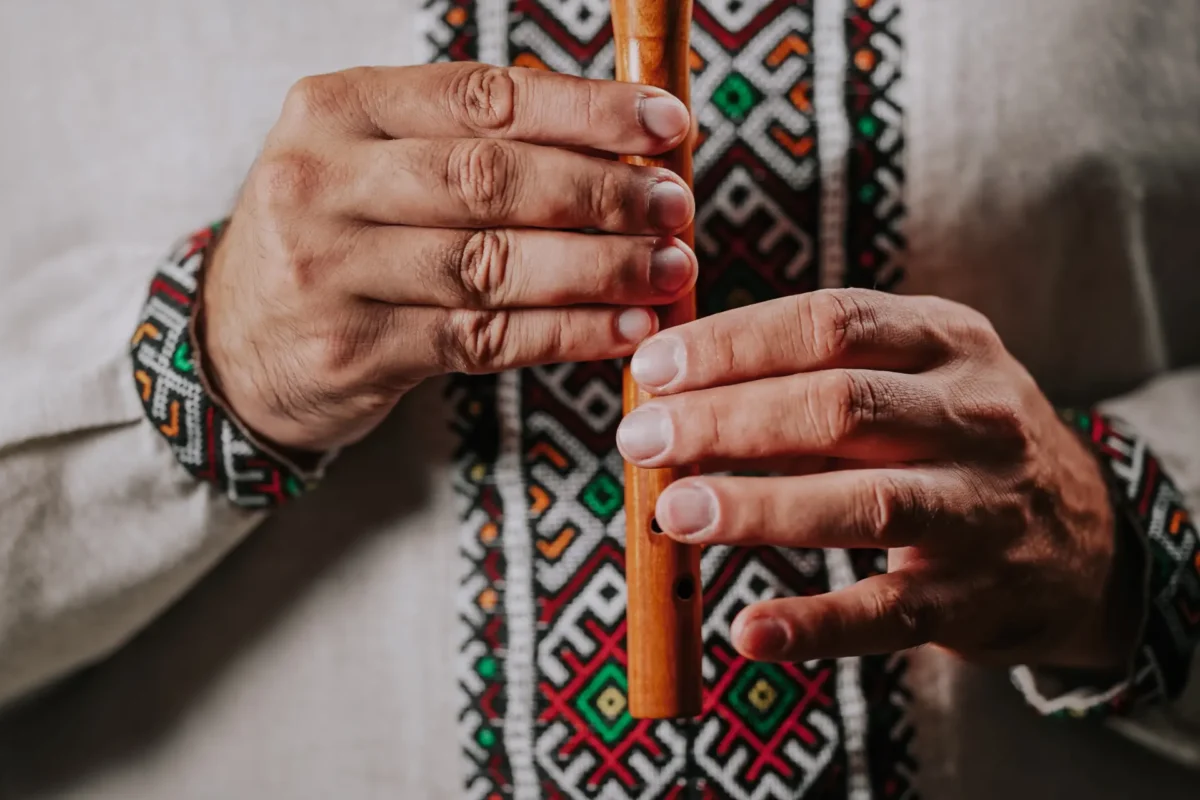
A while ago, I wrote about Romanian manele music and promised to come back with something more interesting and more authentic when it comes to Romanian music.
And I think nothing is more authentic than traditional Romanian music, which has echoed through the mountains and valleys for centuries.
An interesting fact is that Romania also has the “folk genre,” which is different from what English speakers consider “folk”.
Folk as a genre became popular in the late 1970s, being quite unique to Romania and being more similar to the soft rock that was popular back then. It relies heavily on poetry and acoustic guitars and sounds absolutely nothing like the ancient peasant songs.
The traditional Romanian music with roots stretching back centuries is called “muzică populară”. We are going to cover both styles so you get a complete acoustic map of the country. Beautiful music, I might add!
Traditional Romanian Music: Geographical Diversity and Instruments
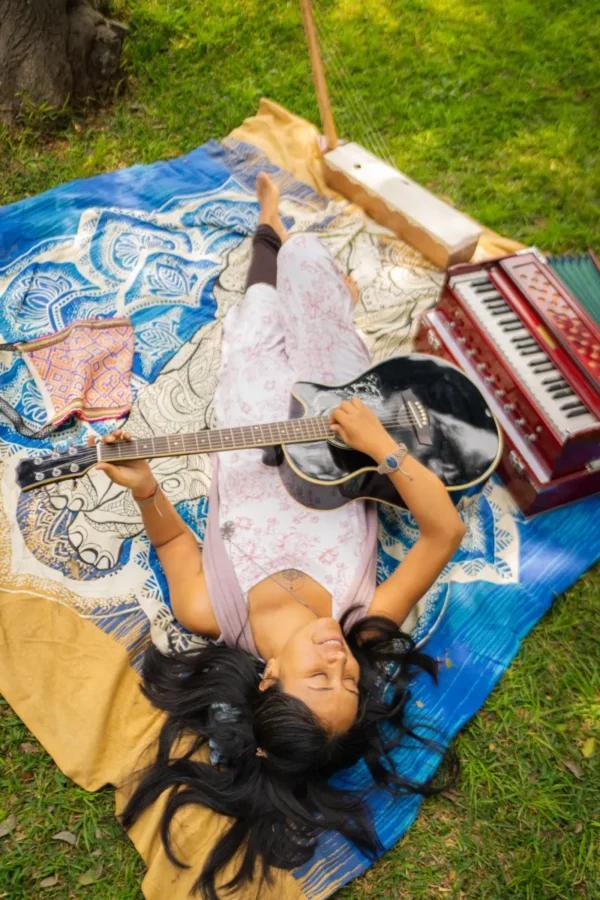
I have to admit that I am not the biggest fan of the old “muzică populară” and to me, most of those songs sound pretty much the same. However, for the trained ear it will sound different based on the geographical area the music is coming from.
For example, in Oltenia and Muntenia we have the famous taraf music with songs that are faster-paced and more enjoyable, in my opinion (although still very repetitive). Instruments like the violin, fiddle and cimbalom are usually heard here.
In other regions, mostly Transylvania and Banat, the tempo is slower and the songs are longer, with a new instrument as the main focus – the taragot. But all in all, they sound mostly the same, in my opinion, to be honest, and are way too repetitive (at least when it comes to the instrumental part).
However, there are many people who would love to argue and prove me wrong (and they would probably be right).
Still, the genre itself is still very popular, and almost all major celebrations (from weddings to Christening parties to local fairs) have some “muzică populară.” The people usually love listening to this kind of music and especially dancing to it.
The Hora: Dancing in a Circle on Muzica Populara
The traditional Romanian dance is called “hora” which is a type of dance in which people create a circle, hold hands and repeat the same synchronized steps until the song is over.
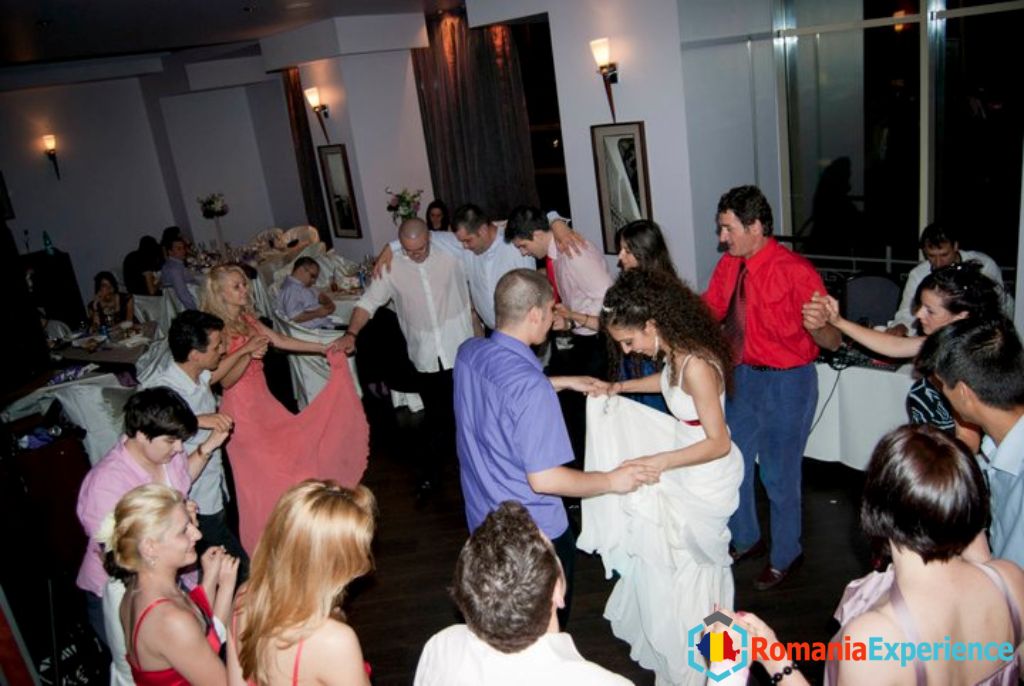
Usually, at weddings, all sorts of parties and even in the sea, whenever traditional Romanian music starts playing, people rush into the hora and dance it for 7 minutes to 10 decades (yes, some of these songs are that long!).
This makes sense, because traditions have to be kept alive as long as they are not harmful to others.
And there are some amazing examples of great music that you can listen to (and/or watch others dance). It’s quite the show, so prepare for an amazing trip to Romanian folk music below.
The Romanian “Folk” Phenomenon
I mentioned earlier that we also have a newer set of traditional music called “folk music”. I would go as far as saying that if muzică populară represents the ancient peasant soul of the village, muzică folk is the voice of the intellectual youth from the 1970s and 1980s.
This music was born during the communist regime when censorship was high and everything was controlled by the state, including the music.
But these artists managed to squeeze through the system, mainly through a cultural movement called Cenaclul Flacara, often using metaphors and other elements to criticize the system.
The result was a completely unique subgenre that remains incredibly popular today.
The sound relies heavily on acoustic guitars, harmonicas, and deep vocal delivery. If you hike up the mountains, for example, almost every campfire eventually turns into a singalong featuring these classic tracks.
Legendary artists like Tudor Gheorhe, Mircea Vintila, Nicu Alifantis, Mircea Baniciu and many more are still performing today, although unfortunately the younger generations don’t focus on this genre as much as they should.
Which is a pity, in my opinion, as that music really went to your soul! This music asks you to feel the emotion in the vocals. The artists sing about love, nature, and the rapid passage of time.
Even if you do not understand a single word of Romanian, the raw acoustic arrangements make this genre accessible. It serves as the perfect bridge between ancient traditional sounds and modern musical preferences.
Listen to some traditional Romanian music
I think that explaining what music is and what it sounds like is not a good idea. So, I will share some videos of the best that the genre has to offer, in my opinion.
Most of the songs that I am sharing below are extremely popular, but just a part of what traditional music here in Romania is all about.
1. Calusarii
We’re going to start with the Calusarii, which is actually the name of the dance and not the music they’re dancing one. But it’s a real show to watch.
Calusarii is one of the fastest dances in Europe and probably one of the most difficult to master – so you won’t see people at parties attempting it (unless they are pros).
Like many traditional Romanian dances, it’s characterized by the shouts of those dancing it and intricate choreography.
This is pretty amazing, right? Great vibe, great mood, amazing energy. I absolutely love this and I hope you do too.
2. Ciocarlia by Gheorghe Zamfir
We’ll continue with Ciocarlia (The Lark) – one of my favorites. It is usually sang by the most skilled pan-pipes players and if you give it a minute or two, you will see why.
A really happy and alert traditional Romanian song performed by Gheorghe Zamfir, considered Romania’s greatest pan-pipes player – and one of the best in the world.
3. Ciuleandra
Now let’s move to my all time favorite traditional Romanian music singer, Maria Tanase.
She was the Marylin Monroe of our times – great talent, beautiful, a party animal, died young – and she left behind some amazing songs.
We’ll start with Ciuleandra – a song that starts slow and goes faster and faster and has a dedicated dance as well. You can scroll through it to see what I mean if you don’t feel like listening to it entirely.
If you want to check out the dance, which I strongly recommend, check out the amazing choreography below:
4. Doina din Maramures
We’re moving to another song by Maria tanase, Doina din Maramures (the word “doina” doesn’t have a translation in any other language being unique to Romania, but we can say that it means “sad song” – it’s enough to listen to it and you will know that the translation is true):
I am not sure if it’s the fact that I also understand the words or it’s just the music itself – but the truth is that listening to the song above gives me the goose bumps.
5. Cine iubeste si lasa
And finally, my all time favorite song of hers – Cine iubeste si lasa (The one who loves you but leaves/dumps you).
It really gives me the chills every time I listen to it. If you got this far, it doesn’t matter if you listened to the other songs or not, this one is a must:
6. Marine, la nunta ta
We should end this on a lighter, happier note, though, so I give you Tudor Gheorghe, who is one of the most appreciated folk singers in Romania.
This happy song can be translated as “Marine (Romanian name), at your wedding…”
7. Au innebunit salcamii
And one of his most famous songs, a real work of art – and by far one of my favorites.
Listen to it – it’s such a happy and nice song. (The title can be translated as “The Acacia trees went crazy” and it’s about the joy of spring)
8. Fir-ai tu sa fii de murg
We’re continuing with another amazing song and also one of my favorites. You can clearly hear below the classic rhythm that you will usually hear in most regular traditional Romanian songs (plus the cimbalom):
9. Vara la Tara
Rounding up the list with “Vara la Tara” by Mircea Baniciu. One of my favorite folk songs, it talks in a humorous way about living in a village. And still, after all these years, this song nails the reality!
Wrapping up
Just like every nation out there, we have tons of great traditional songs, but the ones above made it on my list and I hope you enjoy them.
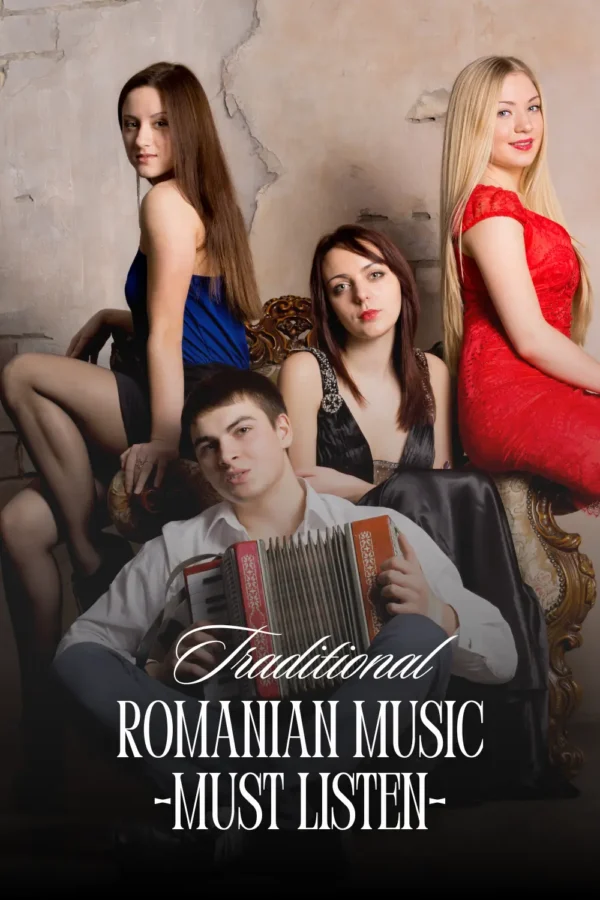
I sure did even though it’s safe to say that there is much, much more to traditional Romanian music than this. But it’s a good intro to it – if you want to learn more, you can surely do some digging and listening on Youtube.
I don’t know if they lose some of their amazingness because you don’t understand the words, but hopefully they don’t. If you have other favorite Romanian folk tracks, don’t hesitate to let us all know by commenting below.
If you’re interested in more modern Romanian music and events, take a look at my list of the best Romanian music festivals here.

I am a journalist and local expert who has been documenting life in Romania since 2013. Based in Constanta (after living in Bucharest and Drobeta Turnu Severin), I provide up-to-date, on-the-ground advice for expats and travelers. My articles are based on real life experiences and plenty of research – from paying Romanian bills to exploring the wild “Rawmania” countryside.
Hi Calin: So, was that you dancing Calusarii second from the right? My knees just ached watching those talented dancers. (Maybe they had some sort of padding for their knees?) What were they shouting? (I’d be shouting, “Get me the liniment for my aching knees!!!)
Maria Tanase had a very haunting voice. I would liken her to France’s, Piaf, or to America’s, Billie Holiday. It’s a shame a lot of the greats burned the candle at both ends, and died before their time:-(
Tudor made want to get up and do a little jig;-) He certainly is a happy fella;-) Is that a balalaika he is holding? What is the instrument called which looks like a xylophone?
I liked the last piece, especially, as it had the full orchestra and choir, too;-)
Thank you for sharing!
~Teil (USA)
Hello Teil, I am gald you enjoyed the music in this article! I was injured when they filmed the Calusarii video, so I’m not there, haha. And they are shouting the lyrics, which are probably really basic (but I don’t understand what they say).
The instrument that Tudor Gheorghe is holding is actually called a Cobza, and the xylophone looking thing is called a tambal. They are both traditional Romanian instruments, but rarely used nowadays when fewer and fewer people know how to play them.
I second Teil in saying Ms. Tanase reminds you of Edith Piaf. Great voice. I love the Lark music, but really enjoyed the last video with Tudor. His voice is fantastic. Thanks for sharing it. I will email you soon.. 🙂
I am glad you enjoyed it! Now that you both mentioned it, it is indeed a comparison that others made and I found out that Maria Tanase is called by some “Romania’s Edith Piaf”
Now THAT is music!!! Beautiful stuff, C!! I loved Tudor Gheorghe too. What a voice!!! Thanks for sharing. 🙂
I am glad you enjoyed that, Laurie! I am always glad when I hear that people living in other countries like the sound of Romanian music 🙂
Calin: I went and looked up some other Romanian artists–your article inspired me;-)
I found I really like Aurelian Andreescu and his songs, such as “Dorul,” “Copacul,” “Oameni,” etc. He had a very great voice.
Toni Iordache and Ion Miu–incredible ţambal players. I found I really enjoyed hearing the ţambal.
Of course, Georghe Zamfir is the great pan flute player, and his music is hauntingly beautiful.
Being over 50;-(), I prefer music of the 1960s and classic music by Enescu, Porumbescu and other great Romanian composers–basically more “easy listening” music. ~Teil (USA)
Yes, we do have some nice artists in the country. I wasn’t very familiar with Ion Miu, but he is indeed extremely skilled and the tambal sounds amazing! I am glad that this article inspired you to look into Romanian music and you found some great examples here. Since you are planning to retire here some day, you have to know what kind of music to prepare for 🙂
Is it still possible to hear this true folk music live?
Yes, fortunately, there are still plenty of pubs throughout the country where this music can sometimes be heard live, as well as folk festivals and events.