
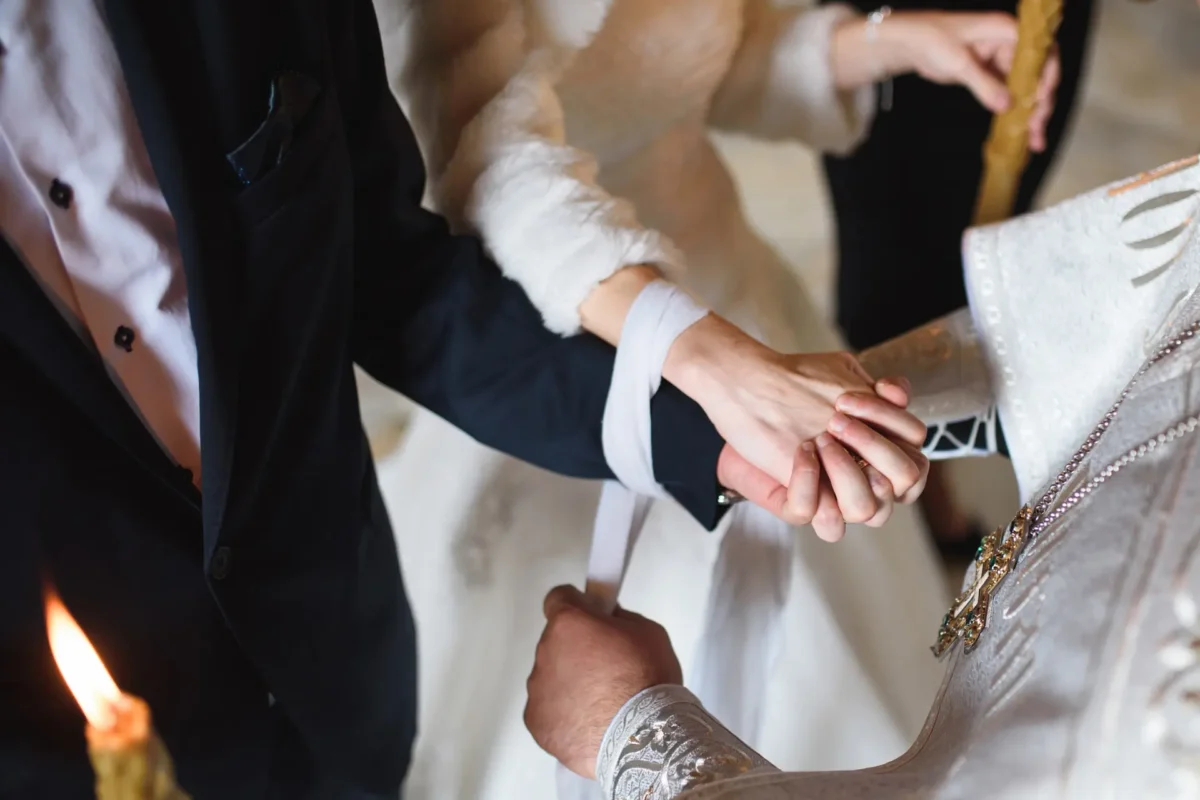
Romanian weddings are usually real marathons of heavy but tasty food, endless dancing, and centuries-old customs that will test your physical stamina at the very least.
Being one of the most important events in one’s life, the wedding usually requires a lot of planning and can cause a lot of confusion for guests, especially those who are not regulars at these events.
You never really know how wild, touching, and completely over the top a Romanian wedding can be until you’ve been to one. I’ve been to plenty – both my wedding and as a guest – and today I’m here to tell you everything about weddings in Romania, from customs to quirks, to what you should wear and what gifts to bring. And a lot more!
As you will see, it’s not as complicated as it might seem at first, as as many traditions have been updated to modern times, so you should feel comfortable and entertained throughout the day and night.
Before we get into this, I must say that the second most important party after the wedding is the baby’s Christening. I wrote about it in-depth, too – check that article, too, since it will usually follow up soon after the wedding.
Now let’s get into the weddings in Romania and see what the traditions are, what to expect and more.
Note: The photos shared throughout this article are from my own wedding in 2011. I am sharing them as personal archives to show you authentic moments. I want to keep these memories alive to give you a genuine look at what happens behind the scenes, as well as in the spotlight.
What to Expect from a Romanian wedding
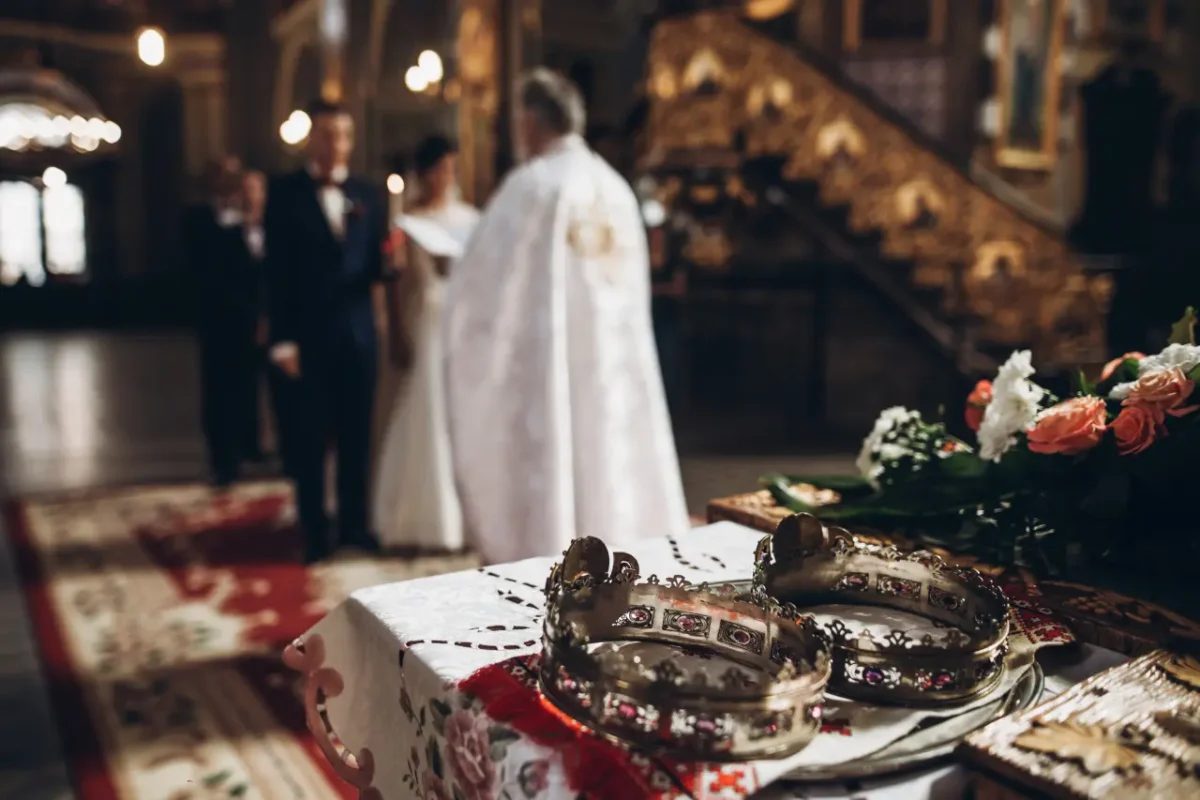
If you’ve never been to a wedding in Romania, expect to be amazed and surprised at the same time.
Be ready for a marathon of eating delicious Romanian foods, plenty of drinking, dancing, and a schedule that can stretch from a church ceremony in the morning to the early morning of the following day.
The kind of wedding you attend might differ based on region or family, but generally, there are two main flavors:
1. Traditional Romanian wedding
These are most common in villages or smaller towns, where people stick closely to old customs. They usually respect old traditions to the core and don’t embrace many modern elements.
Expect home-cooked meals (sometimes for hundreds of guests!), lots of homemade wine and tuica (the infamous plum brandy), and a local band playing traditional Romanian until the morning, with people dancing hora (Romanian traditional dance) constantly.
The fun part? The dress code will probably be ignored by at least one guest who might pop up in his favorite sportswear. It happens!
2. Modern Romanian wedding
Most city weddings (and even some in villages and smaller towns) mix tradition with a modern vibe. This is most likely the type of wedding you’ll attend as a foreigner.
Expect a more laid-back atmosphere, a DJ or live modern band, lots of entertaining, unique moments during the night (dances, games, guest performances), and an overall modern, fun night.
In concept, both traditional and modern weddings follow the same route, but the approach is different, and expectations from guests are different too. And everything will usually start with…
Starea Civila (Civil Ceremony)
This is the legal (and, honestly, least fun) part, often done in the morning or even days before the church wedding and the follow-up party.
It’s short, formal, and usually attended by just family and close friends. Bring flowers for the bride – nothing more is expected at this point.
Normally, the bride won’t wear her dress for this occasion, but this could also vary. The dress code is not very strict, but you’re still expected to bring some elegant clothes.
If you receive an invitation to a wedding, you’re not necessarily expected to be there (unless you’re a very close friend or family member), but nobody will mind if you do show up.
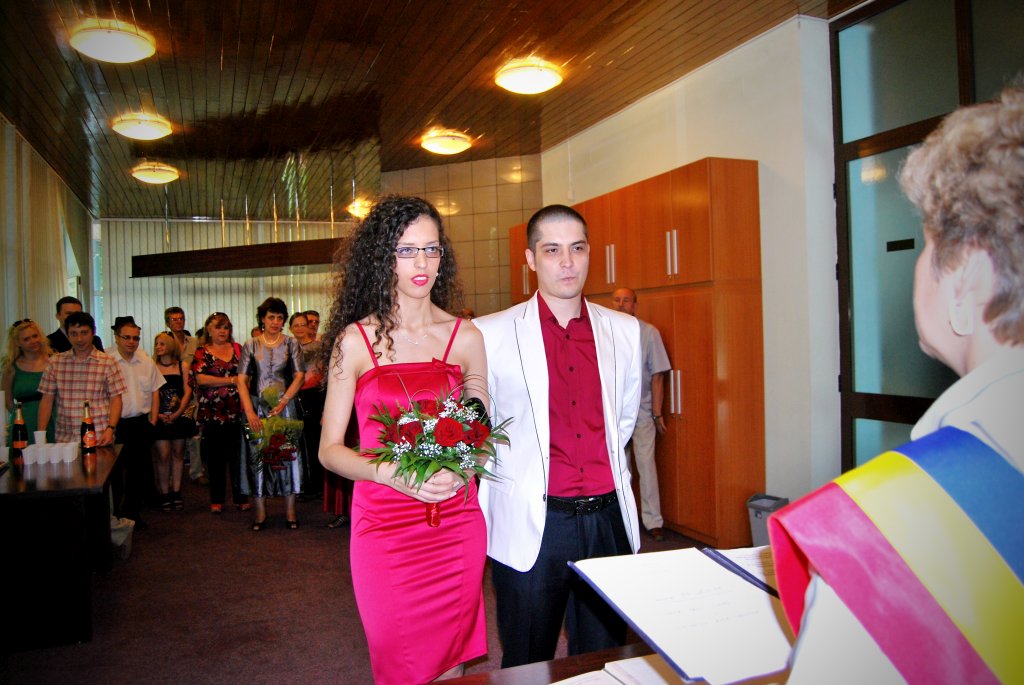
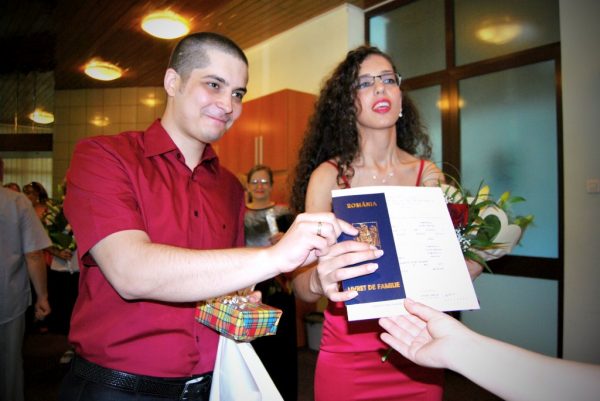
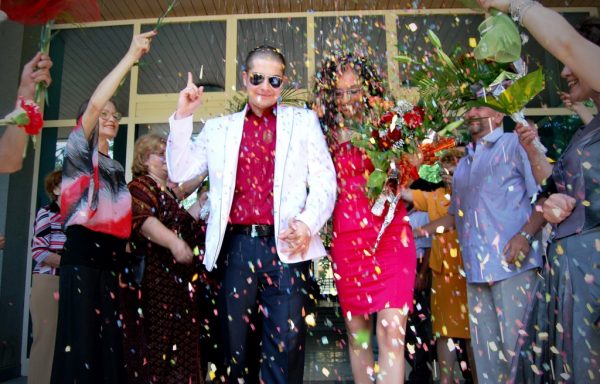
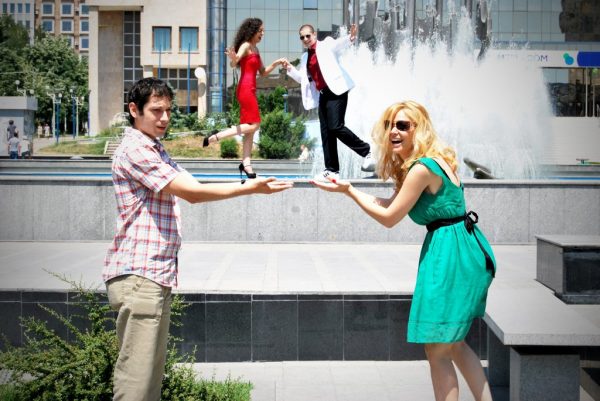
After the Starea Civila, photos are taken with the guests and, depending on the time of the day the ceremony took place, everybody goes either straight to the church ceremony, or they meet at the church a few hours later (it’s usually the latter, allowing the bride to change clothes and get into her beautiful wedding dress).
Church ceremony
If the first ceremony has already taken place on a different day, things will start here, usually on a Saturday around noon.
Again, just like with the previous type of ceremony, you’re not necessarily expected to be present (unless you’re a close friend), but here it’s appreciated if you do show up.
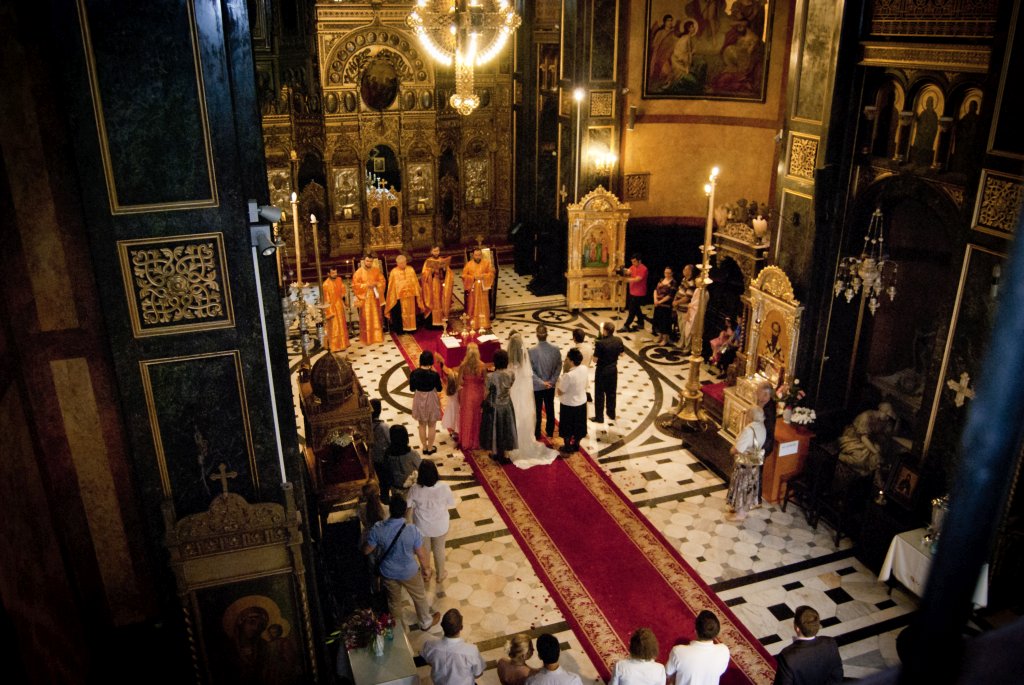
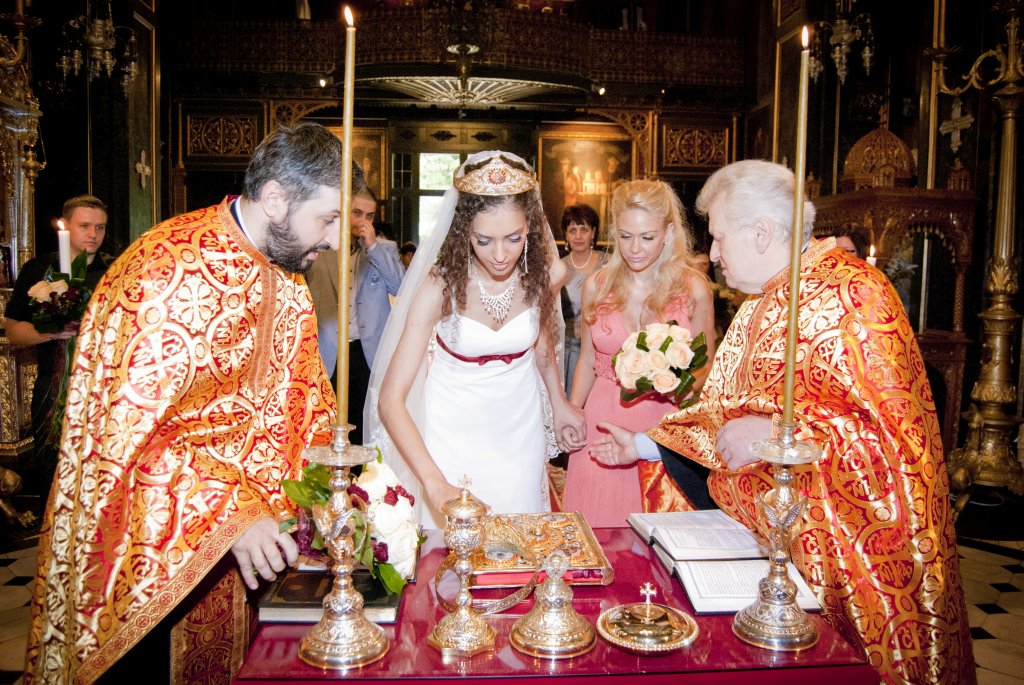
The Orthodox wedding ceremony is traditional and can last from 40 minutes to over two hours. Standing is required too (no chairs, usually!).
In larger cities, the priests understood the fact that nobody wants to spend that much time listening to them, and nobody does it anyway. For example, I personally tried to listen to everything from start to finish and couldn’t make it because it was way too boring. And it was my own wedding!
I can only imagine that all the guests were in their own world as well. Because of this, many priests now hurry things as much as they can, but it’s still a long time you’ll have to spend standing up.
It is and feels special – Here are some photos from our ceremony, to know what to expect:
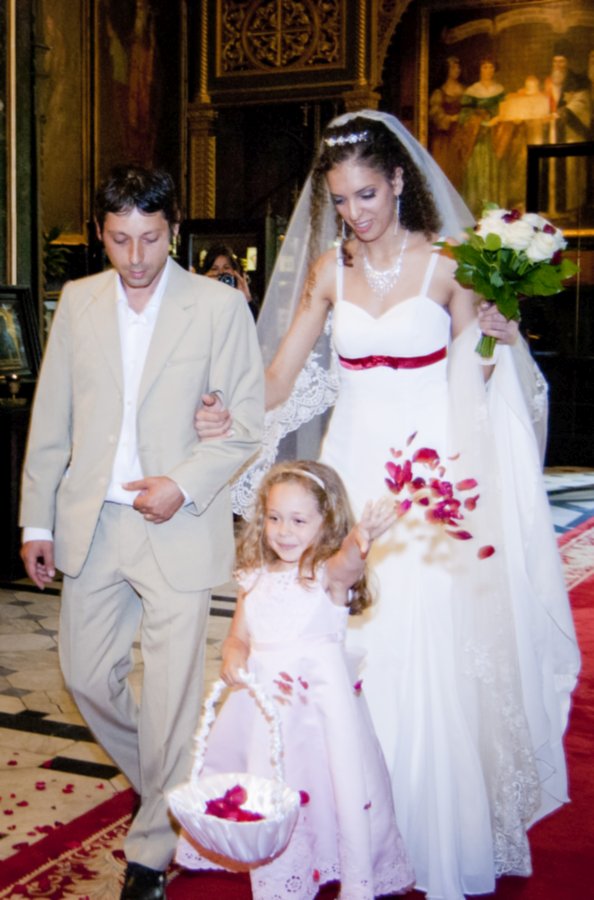
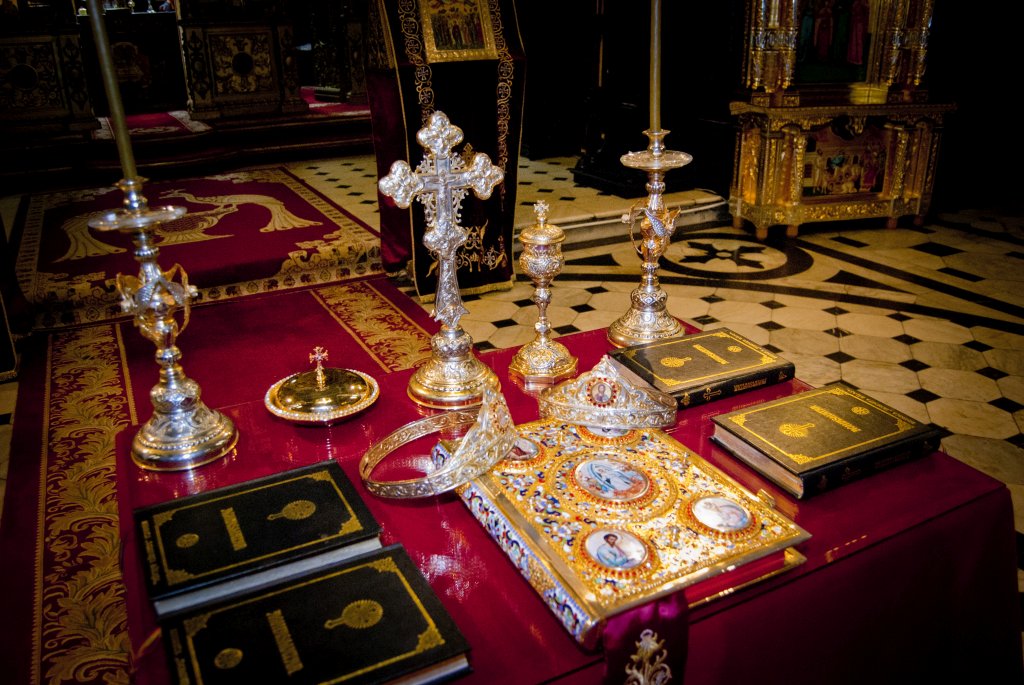
If you enjoy this, you might also want to read about more Romanian traditions here.
The Wedding Party and the Multi-Course Feast
In the evening, the party begins! This is usually considered the main event, and it starts at around 8 PM, but guests will trickle in slowly by 10 PM when the full crowd is present and the “real” party begins.
To prevent this “trickling in” that results in a very slow part of the party, many try to have the Church ceremony as late as possible so that they go straight to the restaurant afterwards, but it’s usually at least a few hours in between for a short rest.
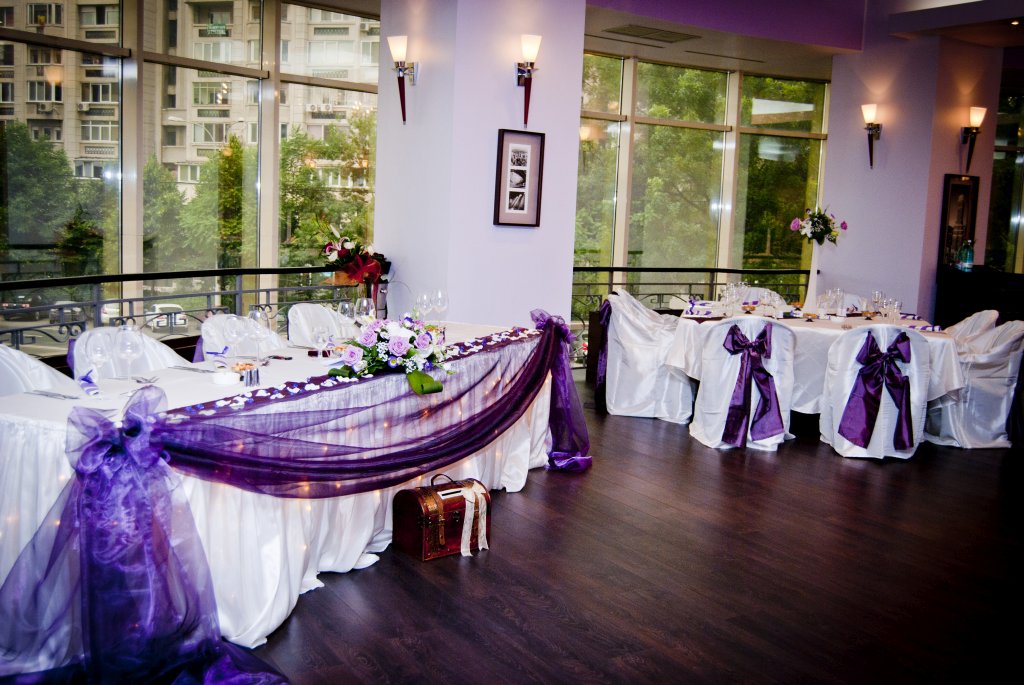
You should come hungry to the party and pace yourself because Romanian weddings feature at least a four-course feast that spans the entire night. Here’s how it usually goes:
First, you get the aperitiv, which is a massive plate of cold cuts, cheeses, vegetables, and traditional spreads.
A few hours later, the fish course arrives (usually intended to be something light). Then, around 1:00 AM, out come the legendary sarmale (stuffed cabbage rolls) served hot with polenta, sour cream, and hot peppers.
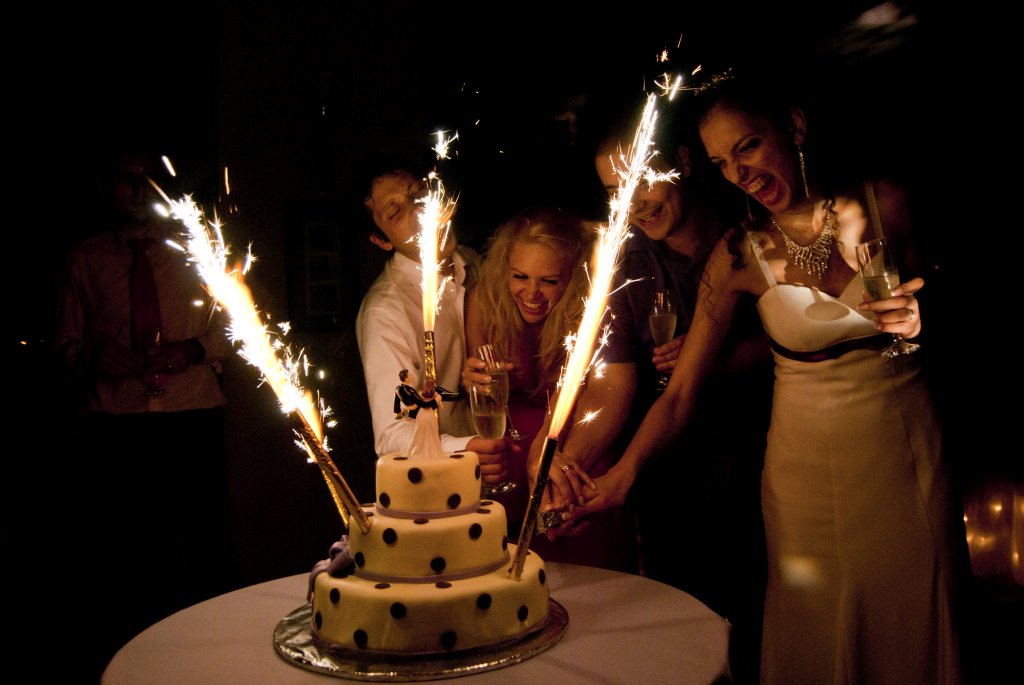
Finally, just when you think you cannot eat another bite, the mixed grill (friptura) lands on your table. Finally, the wedding cake rounds up the party.
There are long pauses for dancing and traditions between each course, lasting around 1.5 hours each, so you will never feel rushed to finish your plate.
You’re usually expected to stay at least until the wedding cake is brought in (usually at around 4 AM). The party will continue, but it’s the moment when you won’t offend anyone if you leave. If you do leave before the cake is brought in, it’s considered rude or a sign that you didn’t enjoy the party.
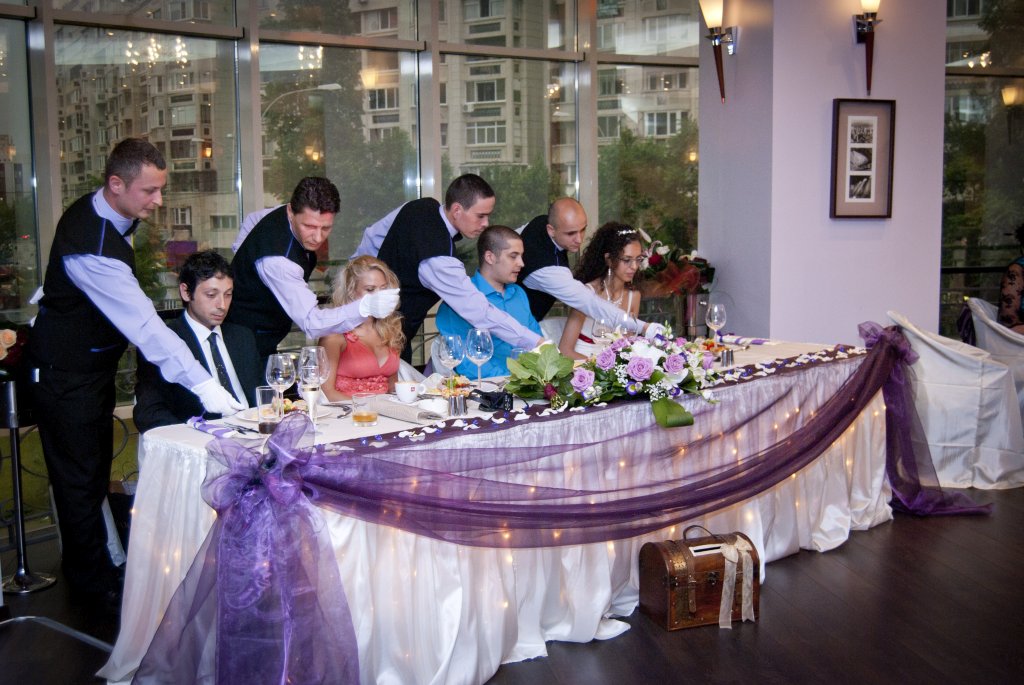
For those who don’t drink alcohol or eat certain foods, let the couple know ahead of time – most venues will try to accommodate different dietary needs if given notice, but don’t expect a huge range of options unless you’re at a more modern or urban wedding.
Wedding Traditions and Unique Customs in Romania
I am listing below all the wedding traditions in Romania that I can think of, as well as some of the things you should expect during this important event. As I said, they might differ slightly from region to region, but most are always present.
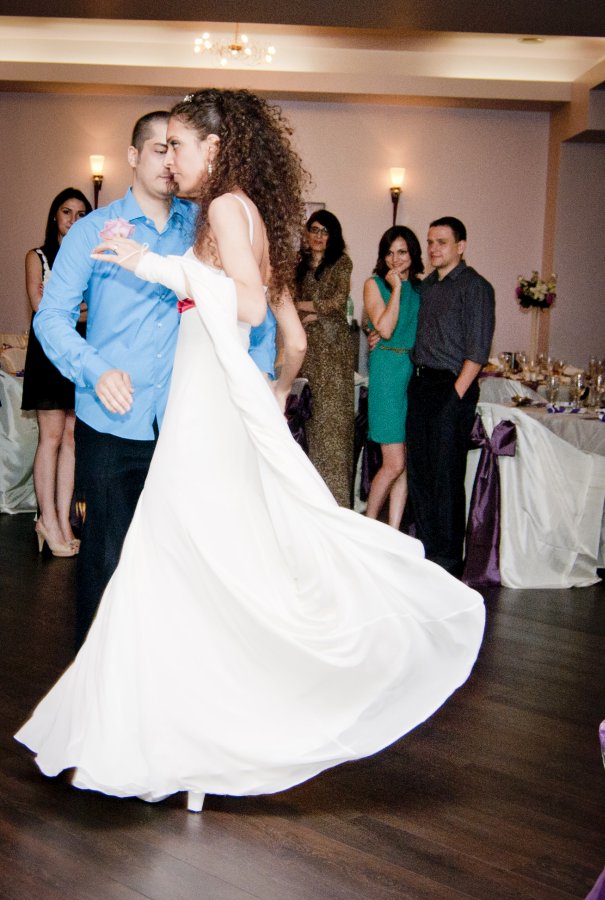
1. The first dance
This is what officially marks the start of the wedding. Just like in other countries, the groom and bride show off their dancing skills, to be joined by others as soon as their song ends.
2. Live Bands, DJs, and the “Hora”
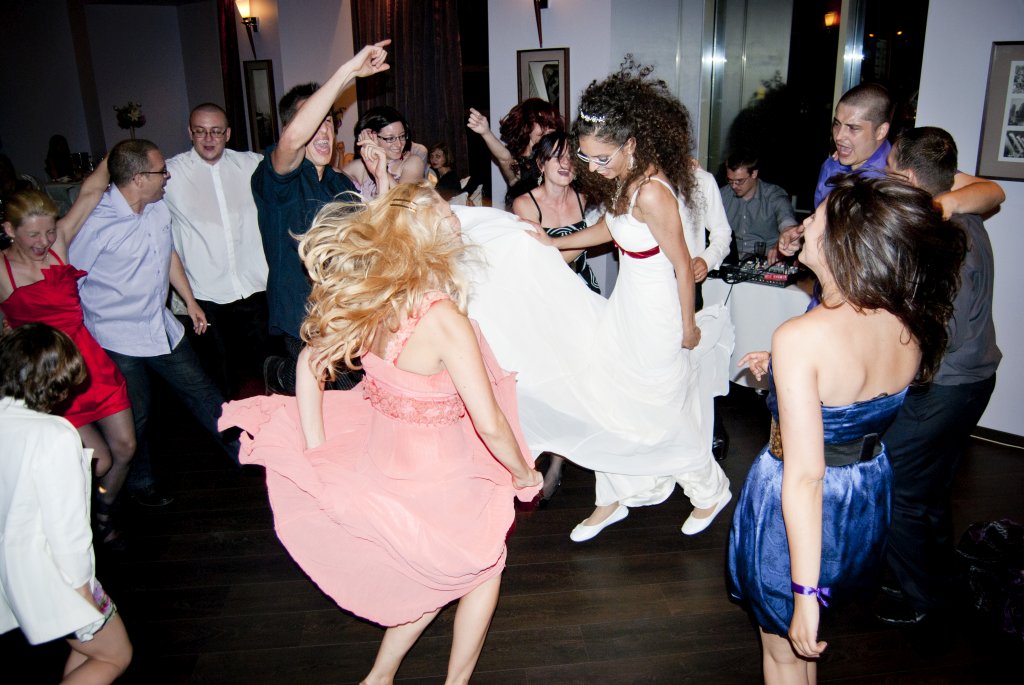
You can expect to have a live band or multiple live bands, including a lot of traditional music or a more modern approach – a DJ.
Personally, I believe that the latter is better when it comes to the fun potential – but expect to hear traditional music even if there’s a DJ present, because for some reason people at weddings really like the “hora” (our traditional dance where everybody endlessly dances in a circle, and you’re expected to join at least once.).
Yes, I’m not a fan of that. Ha!
3. Kidnapping of the Bride (totally safe Romanian wedding tradition)
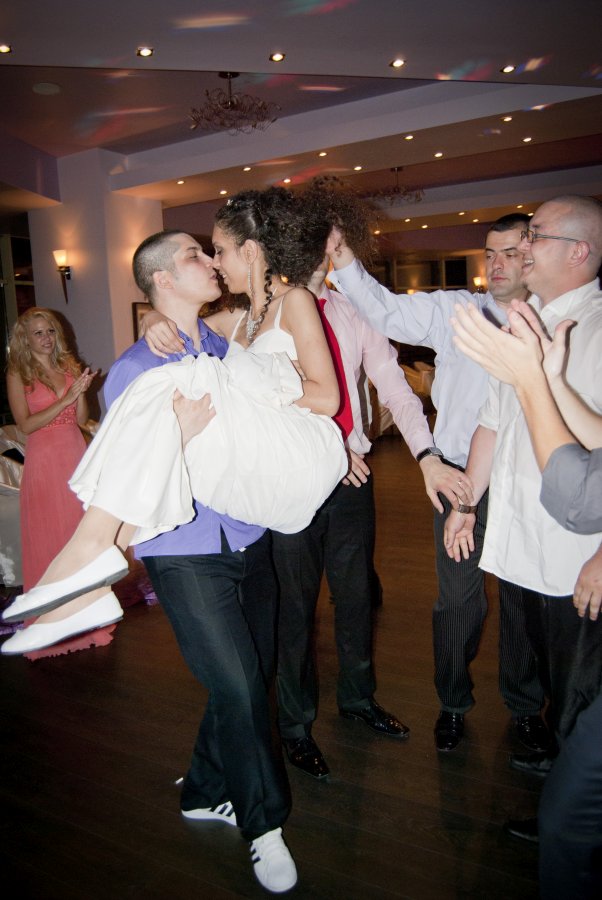
A favorite moment, and one of the biggest events during the wedding party: close friends “kidnap” the bride and take her somewhere nearby – usually a club or pub – to party a bit.
When the groom finds out, usually after somebody yells in the microphone, “S-a furat mireasa” (The bride was stolen), he and sometimes the godfather must perform a silly task or offer a “ransom” to get her back.
These pranks get creative – at my wedding, I had to sing a song, while our godfather had to hand over a bottle of whiskey. He played a prank on the kidnappers and filled it with apple juice instead and everybody had fun.
So pranks like this can be expected and the entire event is usually a lot of fun, as I said.
4. The ritual of becoming a married woman
It’s a traditional, special event centered around the bride trading her veil for a scarf, symbolizing her new status. There’s a little playacting as she pretends to refuse it at first, but eventually she accepts.
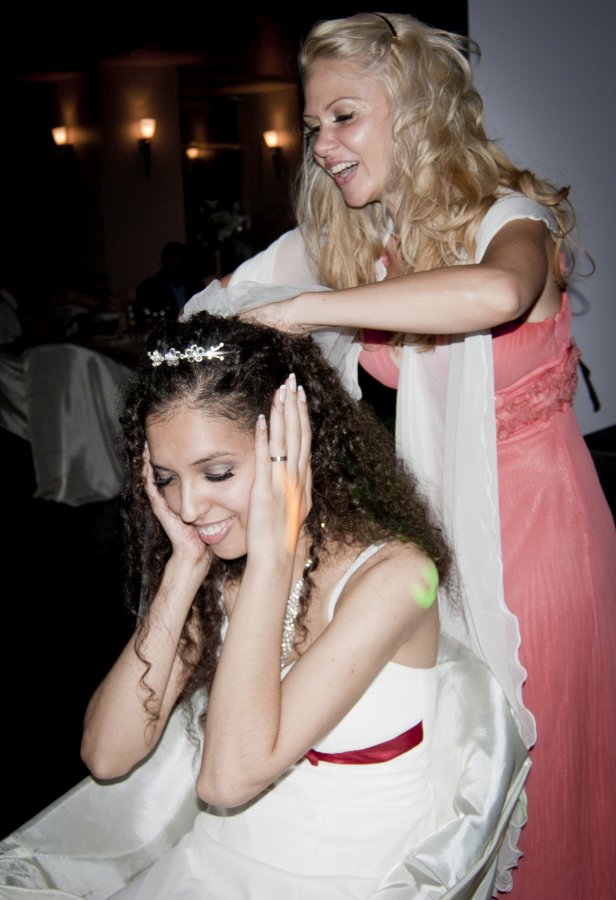
The tradition remained from the times when married women were actually expected to wear the scarf daily (called “Batic” in Romanian). This is no longer done, but the wedding tradition remains.
5. Shaving the groom
Sometimes, the groom is shaved by the best man or godfather – nowadays more of a symbolic gesture than an actual shaving. This can also be done at home if the wedding is very traditional and begins at the groom’s home.
We skipped this, for example, but it’s still a relatively common tradition.
6. Bouquet Toss
Just like elsewhere, single women gather to catch the bride’s bouquet, hoping to be next in line for marriage.
Things can get pretty competitive when it comes to who catches the bouquet.
7. Garter Toss
The groom has his own “bouquet” to throw for the single men to catch. It’s the garter, which sometimes is removed by the groom with his teeth only, and the single guy who catches it is considered the next one to marry.
Usually, the single lady who caught the bouquet and the single guy who caught the garter will share a dance (and are said to become the next couple to marry).
There are plenty of superstitions that will make their way into weddings, and I wrote about some of the funniest here.
8. Special Performances & Surprises
It’s getting more and more common nowadays to see hired dancers or entertainers appear to get everyone on their feet, or keep the crowd entertained. After all, it’s along party!
9. The Role of the Godparents (Nasi)
Romanian weddings have a unique twist: the godparents, called “nasi,” are extremely important parts of the wedding ceremony and the newly-founded family.
They’re a married couple who act as spiritual sponsors for the bride and groom. The nasi guide the couple through the ceremonies, sign key documents, lead certain traditions (like the ritual of becoming a married woman), and usually support with organizing the event by spending/gifting more money than any other wedding-goer.
They sit with the newlyweds at the table during the party, and are considered honored guests, being involved with the wedding before it starts – and after it ends, remaining part of the family.
What to wear to a Romanian wedding
Let’s get one obvious thing out of the way first: if it’s a themed party, you will be told about the dress code well in advance, so you have time to prepare accordingly. Themed parties are not popular in Romania, although they’re becoming more and more common.
If you have a special role (godparent, best man, maid of honor, bridesmaid), expect to coordinate outfits, usually American-style, with bridesmaids in matching dresses (although the matching dresses might have traditional Romanian models, which are beautiful in my opinion).
Although this was not the tradition, now most weddings follow an American style wedding style with multiple bridesmaids and best men (until now, it was just one for each side).
For guests, things are a bit easier, as there’s a bit more freedom in terms of what to wear:
- Men: Suit, with or without tie; the jacket can usually come off after the first few dances.
- Women: Elegant night dress or pantsuit, but don’t upstage the bride (and never wear white, as that’s considered the bride’s color). But apart from this, anything goes as long as it’s elegant.
- Kids: While there’s no particular dress code, they’re also expected to wear something dressy, but comfortable.
- You can wear black (most guests – especially men will) and more neutral colors. While not technically “forbidden,” going there wearing you multicolor Hawaii shirt might raise some eyebrows.
What Gift to Bring to a Romanian Wedding
This is the big question everybody asks. And at most weddings, you’re expected to bring an envelope with cash as a gift.
On very rare occasions, physical gifts are considered appropriate – such as household items. But usually, you are expected to bring an envelope with cash.
If you want to bring a household item, make sure to discuss it in advance with the couple and agree upon an item they actually need. But in 99% of the cases, you’re expected to bring the envelope.
Actually, envelopes are usually provided at the party, and there’s a special box where guests place their signed envelopes (you can also add a short message for the newlyweds, too). This special box is usually by the couple’s table. You can also hand it directly to the bride or groom.
This usually happens after the cake is served (which is, as I said before, a sign that the party can be officially considered over), just before you’re about to leave.
If the wedding is split into two events: Starea Civila first, then on a different day the Church and Party itself, you should bring flowers and a small gift (or no gift at all) to the Starea Civila and deliver the envelope at the party. But remember the flowers!
How much money should you give?
Close friends, family, or special guests at the wedding (like the godparents, the bridesmaids, and so on) are expected to give more than the regular guests.
The amount usually varies based on the city the wedding takes place in, the venue, and what expenses the newlyweds had.
The unwritten rule is that your gift must at least cover your share of the cost of the entire event. And, of course, you will never know exactly what the costs are, but know that in most decent venues today, the food and open bar alone costs start at 100 Euros per guest. And there are plenty of other expenses that add up.
Here are some guidelines in terms of how much you’re expected to give nowadays:
- As a single, regular guest, 200 Euros (or 1,000 RON) should be enough for most modern weddings. If you can afford more, it will be appreciated.
- If you’re a close friend or distant relative, the amount you’re expected to give is closer to 300 Euros and above.
- Godparents and close relative (the parents, usually) are expected to give the most – starting at 1,000 Euros, but up to 2,500 – 3,000 Euros and even more, especially in the case of the Godparents.
If you know other people at the wedding, don’t hesitate to ask them how much they’re offering.
This question, which might sound like something you should never ask, is actually very common at weddings, helping people decide what the appropriate amount to give is.
What if you can’t afford the gift? You should decline the wedding invitation well in advance (at least a few weeks before the party). If the couple insists that you come, even if you can’t give them anything – and they’re honest about it, not just being polite – go and be part of their special day!
We had a few friends who were in a tough place back when we had our wedding, but we insisted on them coming. We weren’t upset that they couldn’t bring anything – we knew that would be the case.
But they were close friends and having them celebrate with us this special event mattered more. So if you’re in a similar situation, it’s best to go too.
Love reading Romania Experience? Support my work on Patreon to help fuel future guides, constant updates, and get ad-free access as a thank you!
Essential Romanian Phrases for Wedding Guests
It’s good to know a few common phrases guests say to the newlyweds, if you want to go the extra mile and impress them. Here is what you should know:
Felicitări! (say: feh-lee-chee-TUH-ree)- Congratulations! (This goes if you can’t find the courage to try the one below)
Casă de piatră! (say: KAH-suh deh pee-AH-truh) – (Literally “house of stone,” meaning “may your marriage be strong.” This is what you normally wish the newlyweds)
Noroc! (say: noh-ROHK) – Cheers! (Usually, when toasting/drinking with fellow wedding-goers).
If you want to learn even more, check out my article teaching you how to say various greetings in Romanian.
Wrapping up
So there you have it: everything you need to know to enjoy (and survive) a Romanian wedding, straight from someone who’s been through it all. Hopefully, you now have a much clearer picture of the entire event.
If you still have questions or comments to make, don’t hesitate to share your thoughts down below. Or continue reading about the Romanian culture here.

I am a journalist and local expert who has been documenting life in Romania since 2013. Based in Constanta (after living in Bucharest and Drobeta Turnu Severin), I provide up-to-date, on-the-ground advice for expats and travelers. My articles are based on real life experiences and plenty of research – from paying Romanian bills to exploring the wild “Rawmania” countryside.
Oh how lovely to see your wedding pictures 🙂 . The Mrs. looked beautiful. The whole affair is similar to ours, only the day before is the engagement and the next day the church wedding and party. Money is usually the gift too since we don’t really have department stores. In lieu of cash, it is very common for household items to gifted (for example you might give a set of 100 plastic cups that have the image of the bride and groom and wedding date along with the name of the giver). These are then handed out as gifts to the attendees as a keepsake. It’s funny that the church service used to run long just like ours did years ago. I remember my oldest sister’s service was 3.5 hours! Now, most churches will give you a max of 1 hour thank goodness and even that is too long in my book. Thanks for sharing this C. Love it! 🙂
For me, it was lesson learned at the wedding: I was so busy with everything, trying to make sure that everybody is pleased and everything works smoothly that I didn’t really manage to fully enjoyed it. That’s why I had a different approach at the Christening of our baby and I felt way better. Either way, it was fun in the end and just the good memories remain.
Awww Calin: This is quite an article! Happy times for you, indeed. You and “Wife Romanian” were/are quite an attractive couple! Very colorful photos–thanks for sharing those! (Was the marriage held in Bucharest? Looking at the pictures, that’s what I’m guessing.)
Do most couples live together (try it out;-) before actually making it official?
Also, can you just do the Starea Civila , and not the “church” part?
Here in the USA, some couples just elope and get married by a justice of the peace, (or an Elvis impersonator;-) foregoing all the “pomp and circumstance” and $’s of a church or formal wedding.
What about same-sex marriages (not for me–just curious;-)?
Are there “pre-nups” in cases where either the man or woman makes so much money, as to not want to be on the hook for big alimony or payouts at the dissolution of the marriage (divorce). Of course, this begs the question: is it a big deal to divorce? Do Romanians frown on divorce? (I ask because almost everyone in my family has been divorced–at least once. Me, I am a confirmed bachelor–I’ve seen what a toll divorce can take on all parties–especially the children.) This is why I believe in taking a “test drive” before actually signing the “contract” of marriage–that is before making it an official, lawful marriage.
What would you estimate the total cost is for the couple actually getting married? Are there companies which will cater the wedding, provide videotape (or whatever video service) photographs, honeymoon services, etc.? (Where did you and the “Mrs.” honeymoon?)
Thanks again for sharing your personal wedding experience,
~Teil (you-know-where)
Thanks for the compliments, Teil. We’re even better looking now that I managed to lose a bit over 10 kilos since the wedding 🙂
The Starea Civila was held in my city, Drobeta Turnu Severing, while the church and party in Bucharest. In order to be officially married, you only need to do the Starea Civila, so you can do that and skip the church and/or party.
Regarding the living together, it depends – some do, some don’t but I guess that most people do live together before getting married. Same-sex marriages are not allowed in the country and I never heard about pre-nup things happening here.
I don’t really know much about the divorce process either, but I guess it’s as complicated or simple as the couple wants it to be.
The costs of the wedding will vary greatly depending on the choices made by the couple and especially the number of guests. The biggest expense is normally the food & drinks part, so the more people you have, the more it costs. However, it rarely is an expense on the family because of the gift money, which basically covers the costs and usually even leaves the newlyweds with some extra money as well. All restaurants only require a down payment, with the rest of the money being paid after the wedding – because this is how things work here 🙂 However, the numbers are not anywhere near the tens of thousands of dollars spent in the US.
You can more or less automate the entire process, but it’s not as complicated as I saw it is in the US, so the number of people involved is very low. We did all the planning by ourselves. The honeymoon was in nearby Turkey, but we loved it.
A bid over a decade ago my wife and I accompanied my daughter, her husband, and little boy to Brasov, Romania for the wedding of his younger brother. It was delightful, on the first Saturday in June, a busy time for weddings. The civil ceremony was brief and we gathered in the nearby park for a drink while the papers were prepared. Then we had a break and then on to the church, where again there were a series of weddings, so the ceremony was as brief as possible. Later that afternoon the party began, much as you describe. My son-in-law took a room at the adjacent hotel or motel so his son could sleep when he got tired. I also took a nap late in the festivities, being brought back for the finale. All in all it was a delightful experience for me and my wife. Look forward to at least a few visits back as I struggle to learn a bit of Romanian. The phonetics are my stumbling block, as I am fluent in Spanish,
French, and Catalan and passable in Italian as well as studying Latin. Thanks for a delightful account. Many happy years.
Thank you! I am happy you enjoyed your Romanian wedding. They are indeed fun.
Hi Calin,
Wow, what a beautiful ceremony! I am just getting around to checking out everything on your site here, and came across this article. How nice of you to share the pictures and experiences of your own wedding, and it sure looked like a joyous occasion. I can’t help but notice what a good looking couple you two make also. I would need to brush up to feel comfortable attending a wedding in any country, even the U.S., as it’s been over twenty years since I last attended a wedding. I had to think about it for a few minutes to recollect…lol…. but thanks again for sharing the beautiful pictures and helpful info too…I like the part about lot’s of alcohol!..take care. JC
Thanks, JC! I initially added the photos just to make reading easier for those interested in finding more about how weddings go, I didn’t think that they would steal the show. But to be honest, I am happy they did 🙂 It was indeed really nice and I am happy to see that others see it like that as well.
Thank you for the detailed information. What lovely pictures. Could I ask if it is considered rude for guests to wear white to a Romanian wedding as it is in the UK? Thanks
Yes, it would be considered rude if ladies wore white at a wedding, as it is indeed considered to be the color “reserved” for the bride. Men might get away with it, though.
Hi, wondering what gift can I give to my groom. I don’t want to ask his family. I am afraid that they will not like it or to will be so offended. I don’t know kind of so afraid to ask to them.. They are from Bistrita place.
It’s not common for to-be brides to offer gifts to their future husbands. If you do want to do it though (nothing wrong with that), I would choose something that will last decades, so that you both have a nice memory from this event.
Thanks for this hilarious article! My cousin just married a Romanian American woman (we’re from New York) and my Anglo American family members were so shocked by a lot it this! After the appetizer we’re used to a salad and dinner, and then dancing. But after the app the dancing went on for 2 hours and we were so hungry! 😀
Haha, yes, I know the feeling – happens to Romanians too 🙂 Too bad you didn’t read this before the wedding… but at least you’re ready for future ones 🙂
Thanks. Very helpful.