

For a while, living in Romania on a shoestring budget was doable. But those times are, unfortunately, long gone and nowadays it’s practically impossible to live here on a €500 per month budget. Today, the cheap Eastern European dream is officially dead.
I initially wrote this article in 2014 and kept updating it over the years. However, sometime around 2023-2024, the low amount in the title was no longer doable. Romania is far from the affordable paradise it used to be.
The truth is that I will most likely have to update my article about living on €1,000 per month in Romania to say that it’s no longer possible. We aren’t quite there yet, but we will be sooner rather than later…
Let’s see, though, how things stand today and why a budget of €500 per month in Romania is no longer a valid option, even for the most frugal of you.
(Note: I’ll stick to Euros throughout this article, but for my American readers, keep in mind that €1 is around $1.10 USD right now).
The cost of living skyrocketed in Romania
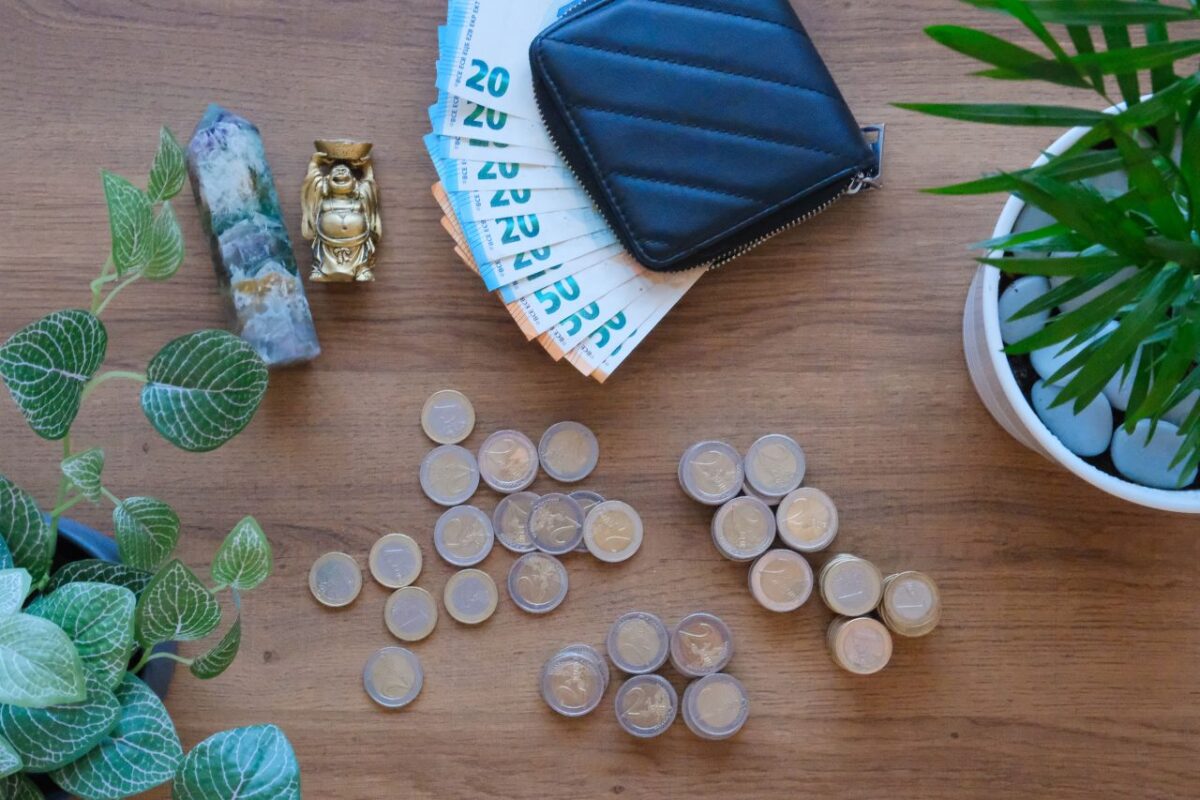
In 2022, as well as 2023, Romania saw a double-digit inflation rate (13,8% and 10,40% respectively – you can check the data on the Romanian Institute of Statistics).
While things seemed to cool down slightly in 2024, that relief was short-lived and Romania remained one of the countries with the highest inflation in the European Union.
Due to recent tax hikes and fiscal consolidation measures at the end of 2025, Romania’s inflation spiked back up to 9.6% in January 2026, after remaining high throughout 2025.
At the same time, the Euro to Romanian Leu, as well as the USD to Romanian Leu rates didn’t change enough to cover the increased costs. Back in 2022, the rate hovered around 4.93 lei for €1. Today, the same rate is sitting at around 5.10 lei for an Euro, so well under the massive inflation of the past years.
In other words, even if you rely on foreign currency, your €500 purchased a lot more years ago than it does today.
In my family’s case, we managed to keep costs growing slower than inflation and even managed to go under €1,500 per month in the first months of 2026, but this was because of very frugal choices we had to make. You can read more about our monthly living expenses in Romania (which is also updated on a yearly basis).
However, for our family of three, I believe that we hit the absolute minimum you can live on and still have a decent life, but not without challenges. The most important factor for you to consider? We don’t pay rent. That alone would add at least €500 more in costs each month.
What Does €500 Still Buy You in 2026?
I recently read the article sharing a list of countries where you can live on $500 per month and Romania wasn’t, as expected, on the list. However, I think that even in other places in the world, it’s difficult to live a decent life on such a low budget.
Salaries in Romania have grown tremendously over the past few years, especially the minimum salary (check out Romania’s wages here). Today, the take-home minimum monthly salary is around €530 per month.
And I doubt any foreigner would be able to live on that alone. If you have to pay rent, it’s already not enough. You simply wouldn’t have enough money even for the bare necessities.
Even in the cheapest, most economically depressed towns, the average rent for a basic space is now around €200 to €250. If you want to live in a larger city like Bucharest or Cluj-Napoca, an average studio is easily pushing €350 to €400 or more.
Then, we have to talk about winter utilities, which will break such a low budget without concern. Your winter heating bills can easily wipe out €100 or more.
So if you are starting with a baseline of €500, paying €250 for a bottom-tier apartment and €100 for utilities leaves you with €150 for food, medical costs, clothes, internet, a phone plan, and various other expenses – both related to your permits, and unexpected expenses. That is way too low!
Basic survival-style food alone will cost you at least €200 a month right now. The math simply does not work. You would literally freeze or starve trying to make this work without outside help.
A More Realistic Budget for Frugal Expats
What’s the lowest monthly budget I recommend for living a decent life here? Starting this year, it’s €1,000. Depending on your spending habits, you can live a decent life and have fun. Not live like a king, but do OK.
Yes, there are some Romanians who live on €500 per month or even less (since we’re a family of three, we can say that our per-person cost is just that).
BUT this includes sharing costs, and in our case at least, not paying rent or mortgage.
Keep in mind that where you choose to settle dictates everything. A €1,000 budget goes much further small city like Drobeta-Turnu Severin or Resita than it does in a larger one like Cluj-Napoca. I just wrote an article about living in a small city vs a large one – check it out for all the pros and cons of each.
IMPORTANT: If you only have €500 available each month and you’re living in the US or any similarly expensive country, the same budget will definitely offer more in Romania (or other cheap countries). You just have to adjust your expectations and understand that “budget living” is no longer defined by a €500 price tag.
I recommend checking out various calculations I have made (including for students, which will be able to spend less each month):
- Students’ cost of living in Romania
- The REAL Cost of Living in Constanta (larger cities are more expensive)
Wrapping up
All in all, Romania remains a solid option for living on a budget, but “on a budget” simply became a lot more than before.
The worst part is that I don’t see the cost of living decreasing in the future, nor do I see the increases slowing down much. Unless something completely unexpected happens, Romania will continue to get more expensive each year.
So even the €1,000/month I recommend today might no longer be enough in 5 years (or even sooner).
What do you think though? Is Romania becoming less and less affordable, or do you think it’s still possible to make ends meet even on a lower budget, like €500/month?

I am a journalist and local expert who has been documenting life in Romania since 2013. Based in Constanta (after living in Bucharest and Drobeta Turnu Severin), I provide up-to-date, on-the-ground advice for expats and travelers. My articles are based on real life experiences and plenty of research – from paying Romanian bills to exploring the wild “Rawmania” countryside.
Wow! That sounds like such a tight situation money wise. My feeling is that if you move to Romania for the low cost of living, your life should at least be as good as what you left or even better. If you have to scrape to get by, eating bones, soup etc..then it’s not worth it. I see bloggers saying you can live on $500 a month in Thailand too, but when l see what they basically have to give up, you wonder if it’s worth it in the long run. Better to get all your ducks in a row..and then go.. 🙂
I know I was reading a few years ago about living in Thailand for such a low budget – and they made it look like you were going to live well on that. But some research and even me talking with some people from there proved that it was not entirely true. When people say that you can live on a small amount of money and live well, they don’t really consider that most would actually find their “living well” unacceptable (like houses with no bathroom, sharing a room with 100 people and so on).
We are native Romanians leaving in North America for 30 years now and coming back to Romania more often in the last 10 years. How cheap is to live in Romania has to be measured starting from one’s expectations and acceptable standard of living.
In absolute terms, housing, food, travel within this country is cheaper than in the rest of Western Europe and North America. But a family of 4 on a $500.00 a month would be somewhere at the poverty line life style here. Sure, in the Western World they will not survive on the same $500.00, but they’ll be eligible for government welfare and all kind of help, allowance for kids clothes, free medical care, great free libraries, and probably more.
The life is frustrating in both situations, but we will not recommend Romania if all your budget is $500.00.
We’ll definitely recommend it if : your budget is higher, starting at 1000.00 Euros and have opportunities to work , grow and eventually make more money. Schools and colleges are good and you can give your children a good education, so chances for a professional job, career.
Our circumstances are not typical, so not interesting, but we know in accurate details both, the beauty, the attractions here and the many still negative aspects of this country.
Some professionals, entrepreneurs and retirees with foreign pensions and currency are making a very comfortable living in Romania, enjoyable and affording even savings. Statistics are right, Romania is among the cheapest places in Europe, but you still need some decent budget. Tourism to Romania increased many folds, with British, Spanish, Italians, Russians, Polish, Americans, Germans finding vacations satisfying, nice and cheaper.
There are also many foreigners living here. We appreciate that Calin’s budget, of almost 1200Euros is absolutely mandatory for a couple with one young kid. On the same money, a couple, without kids will have an easier life.
Exactly, they are having it thrown at them pretty badly. Although food-wise they don’t do so bad, the lack of saved money or the fact that they don’t really afford entertainment and other items makes the situation worse.
I was looking into retiring to super expensive Germany and found 29 sq meter apartments for as little as 166 Euros per month (heat included but not electricity) in a nice small resort town (has “Bad” in the name, which means Baths). It has a live theater and of course many therapeutic bath facilities. Yes, it is a bit out of the way in the former East Germany, right on the border with the Czech Republic, but it has been completely renovated since reunification. My point is that one can live cheaply in just about any country if one tries hard enough. Obviously, that’s harder for a family of four, but Michelle is right, the German welfare state would probably jump in with lots of benefits.
That is true! If you spend some time doing your research, you can find great deals anywhere.
I was just thinking that perhaps it might work if there is no housing involved like these people you profiled. If you can grow your veggies etc, it definitely helps too. Foreigners, however, (non Europeans) must show sufficient funds to sustain themselves and l’m pretty sure it’s at least triple that for a family. I still wouldn’t like to live on the edge like that even though l realize some have no choice. I consider myself fortunate.
I 100% agree. I think that three times as much is a good starting point. But for a family and especially if additional costs are involved, even that amount will be right at the limit.
It’s a good article…I am an American who has been living in Romania for 2 & 1/2 years. One aspect of costs I have noticed is that Americans like myself are used to things that Romanians view as luxurious… a 55-square-meter apartment, for example, is common here but in America (which is under 600 square feet) is a very small apartment..I also have Romanian friends who have never seen an automatic dishwasher until they visited me, while it’s standard even in low-income places in the States…..and underground off-street assigned parking is standard in most American places…So my point is- if you give most Romanians $1,500 a month and tell them to live off it here most will be very content..While most Americans here would probably be miserable on that amount even if they could live somewhat better than in the States…Another point mentioned in other comments is that social programs kick in back home at that low of an income and take some financial pressure off..
Inflation marches on. It slows but never stops. Yes, $1,000 a month is probably the minimum for living in Romania. It was fun to read the old comments under the article too. The apartment for 166€ in Germany I mentioned isn’t listed anymore. The cheapest apartment in the same town is 240€ a month.
German apartments usually have nothing and you have to buy appliances, kitchen cabinets, light fixtures, curtains, and furniture (if you don’t have these from your old apartment). It was nostalgic to read my ruminations during the Covid epidemic. Life in the USA has almost become impossible. While there is assistance for some low income citizens, it is frightening to see all the YouTubers living in their cars.
So-called mobile home parks, considered the cheapest living option in the USA, are now being bought up by investment firms, and rents are being doubled. The mobile homes are not really mobile and very expensive to uproot and move. Many retirees live in these parks and cannot afford their medications and food anymore. The poor in America are targeted with payday loans at outrageous interest rates.
They have to pay high banking fees if they can’t maintain high balances or bounce a check. If they seek higher education, they are saddled with student loans they can never pay off. Most can qualify for Medicaid but many states are making cuts there too. The “frontier mentality” that prevails in the USA prevents its citizens from demanding more services from their government.
Almost 45% increase in 9 years… at first, I thought “the rental prices didn’t go up much” when I saw the numbers, but the percentages tell a different story.
There are surely other places where it’s more and more difficult for regular people to make ends meet and I believe that the “car living” trend and mobile home park living will slowly spread all over the world.
Yes, life goes on and prices go up. I just came back from a trip to the USA. The only thing cheap were the bus and train fares. A slice of toast with an avocado spread on it cost me $12. I found myself getting a nice container of Cajun rice and beans for $10 every morning and splitting it into breakfast and lunch portions! Many places did not accept cash and I had to “tap” my debit card, something I have never done in Japan. That made it very hard to stay on budget. I follow some American expats in Panama on YouTube and they complain things have gotten expensive there. A new hot retirement spot especially for Americans is Albania but mainly for its one year no-questions-asked visa. Romania is still my favorite though!
Yes, prices are going crazy everywhere. But it’s good that restaurants still serve humongous portions, and you can split them.
Fortunately, Romania has also improved a lot, together with the growing prices. But yes, I started hearing more and more about Albania lately (Georgia also has a year-long visa option), but I think pretty soon people will run out of truly affordable destinations…
I don’t care where you are living, if you grew up in America you are going to wish you have at least a few thousand dollars a month coming in…We are used to things that are considered luxuries here that even poor people in America have.. like an automatic dish washer or clothes dryer…not to mention if an emergency back home happens- we are going to need a substantial rainy day fund for travel and other expenses…A quick trip to the states can easily set you back several thousands of dollars…If you are trying to survive on $1,000 a month here- that will essentially sabotage your budget for several years….
I did however visit Transistria last week….politics aside… even in Tiraspol $1,000 a month would really go far…So that region is still cheap even compared to the rest of Moldova..
That is true, Jeff. No emergency fund anywhere in the world is a big risk. I am sure there are even more things that can be considered a must in the US (or other parts of the world), but we don’t have them here in Romania, and those will probably come at a premium too.
But I still believe that if somebody only has $1,000 (or Euros) each month, that will give them better comfort than it would in the US or other more expensive parts of the world.
True for the most part…but in the USA having an income that low would qualify you for public housing taking 1/3 of your income…not to mention hundreds of dollars in food stamps, health care and lot of other govermnet programs for the poor…