
If you’re wondering if Romania is bike-friendly or not, I have some bad news for you. While cities like Amsterdam, Copenhagen, and Vienna often top the “bike-friendly” charts, those in Romania are nowhere to be seen.
So… why is that? And can you realistically use a bike for commuting, leisure, or travel here in Romania, or is it more of a nightmare than a pleasure? This is what I will help you better understand in today’s article. As you will see, it’s not all doom and gloom.
Is Romania Bike Friendly? [The Short Answer]
If you don’t care about all the details, you should know that Romania is not yet a bike-friendly country, including the big cities, where the infrastructure is poor and drivers are careless. Things are improving slowly, with more lanes and EU-funded projects in the works, so cycling here is definitely possible, but is usually challenging.
In villages and less crowded cities, cycling can be surprisingly safe – and you will see many people riding bikes. However, the safety here comes from the non-existent traffic, not the infrastructure. Still, another good reason to start an idyllic life in a Romanian village.
Of course, living in a village in Romania is not ideal for most people because of other reasons I have talked about already, but it’s good to know that if you do get into a village or plan a biking trip to see some villages, you shouldn’t have any trouble cycling there.
In some places, the local dogs might give you additional incentives to pedal faster… but that should be the biggest fear you should have there.
Quick Facts About Cycling in Romania
Here are some of the important things you should know when biking in the country – things you have control of:
1. Helmets: Not legally required for adults, but recommended. Children under 16 must wear them. (Double check to be sure, as laws can always change!)
2. Reflective vests: Mandatory at night and outside city limits.
3. Sidewalks: Bikes can only use them if there’s a marked lane (don’t expect to find many yet). Otherwise, cyclists must use the road.
4. Traffic rules: Cyclists follow the same rules as cars (stop signs, lights, signaling). They can cross streets at marked pedestrian crossings, but only if they walk by the bike, not ride it.
5. Trains: Bikes are allowed on many Romanian trains, but you usually need to buy a bike ticket. The price depends on the distance traveled, ranging from around €1.5 for distances up to 60km and ~€5 for distances over 500km.
Cycling in Villages and Small Towns
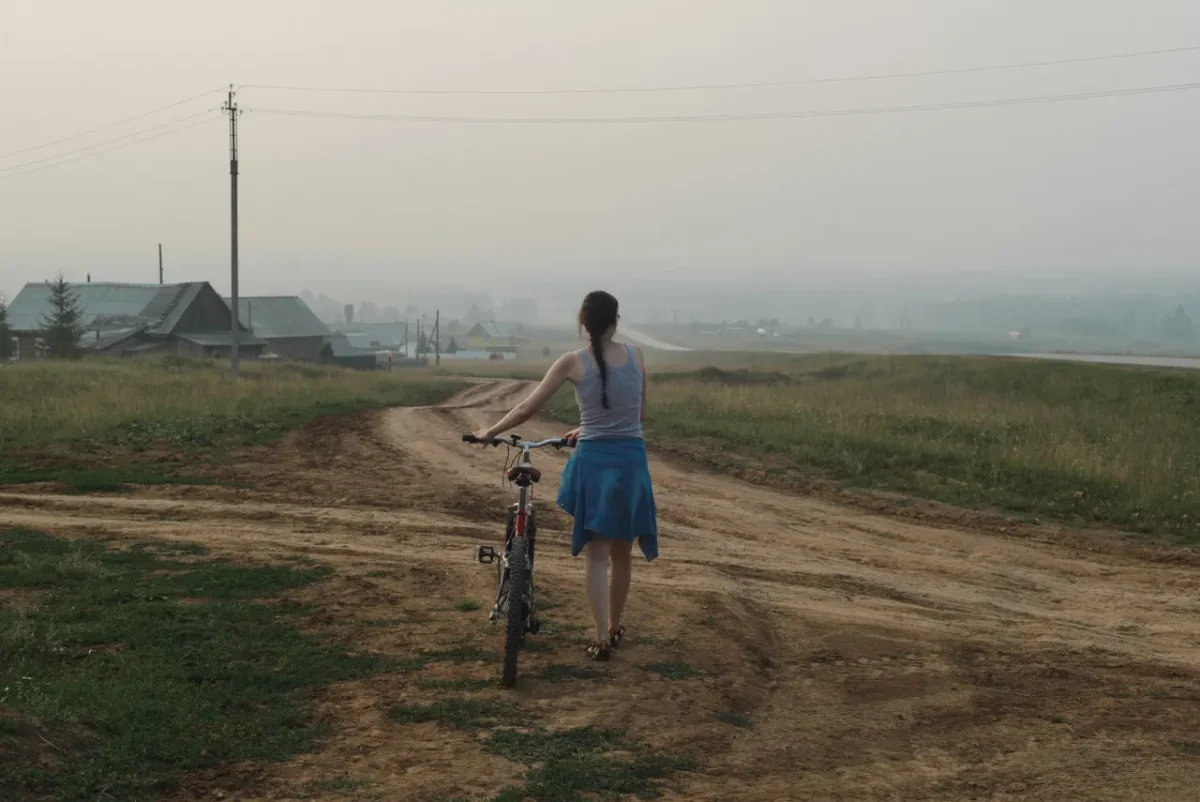
As mentioned in my short answer above, you’ll see many people using bicycles as their primary means of transportation in both villages and smaller towns. Distances are short, fuel is expensive, and cycling is also healthy. As a result, in most villages, bikes compete with walking as the main way of getting around.
This feels safer because, even though there are rarely special bike lanes and roads are narrow, there are so few cars that you won’t have any problems riding your bikes.
The only exception to the rule is villages (or parts of villages) where a national traffic road crosses through – these are almost always packed. But just some villages have this problem.
Keep in mind that many rural areas still have dirt roads that turn into mud after rain or snowmelt. Fortunately, since Romania joined the EU, many roads have been paved, and the situation keeps improving year by year.
Another problem might come from stray dogs. While most are harmless, some might chase cyclists, giving you extra motivation to pedal faster.
Rural & Leisure Cycling
If you’re planning a bike-riding trip through Romania, even though leisure cycling is not a big thing here, there are a few routes fit for such an occasion, being as bike friendly as possible (at least by Romanian standards).
Here are the routes you should check out:
- EuroVelo 6: The famous long-distance cycling route passes through Romania along the Danube. Great for adventurous touring cyclists (although pretty dangerous, as it’s on high-traffic roads, usually without bike lanes).
- Danube Delta: Peaceful and scenic, with flat terrain perfect for relaxed rides.
- Carpathian Mountains: Ideal for mountain biking, with forest trails and raw nature.
There might be other smaller, local cycling routes in various parts of the city. If you know and would recommend any, let us all know by sharing your thoughts in the comments down below.
Cycling in Larger Romanian Cities
Now, let’s move to the not-as-pleasant part: larger cities are where cycling in Romania becomes more of a challenge.
While more bike lanes are appearing, most are short, disconnected, and poorly maintained. Some have electricity poles right in the middle of them, others have various obstacles, and many are simply not usable.
Pedestrians often stroll along bike lanes too, either because sidewalks are crowded with parked cars or simply because they don’t consider the lanes as “off-limits.”
And while these could be considered minor annoyances, it’s drivers who add an extra layer of stress and even danger to riding a bike. Driving in Romania is still chaotic, unfortunately, and cyclists are still treated, in many cases, as obstacles rather than road users.
Expect many drivers to overtake you aggressively, honk at you, or give little space when passing.
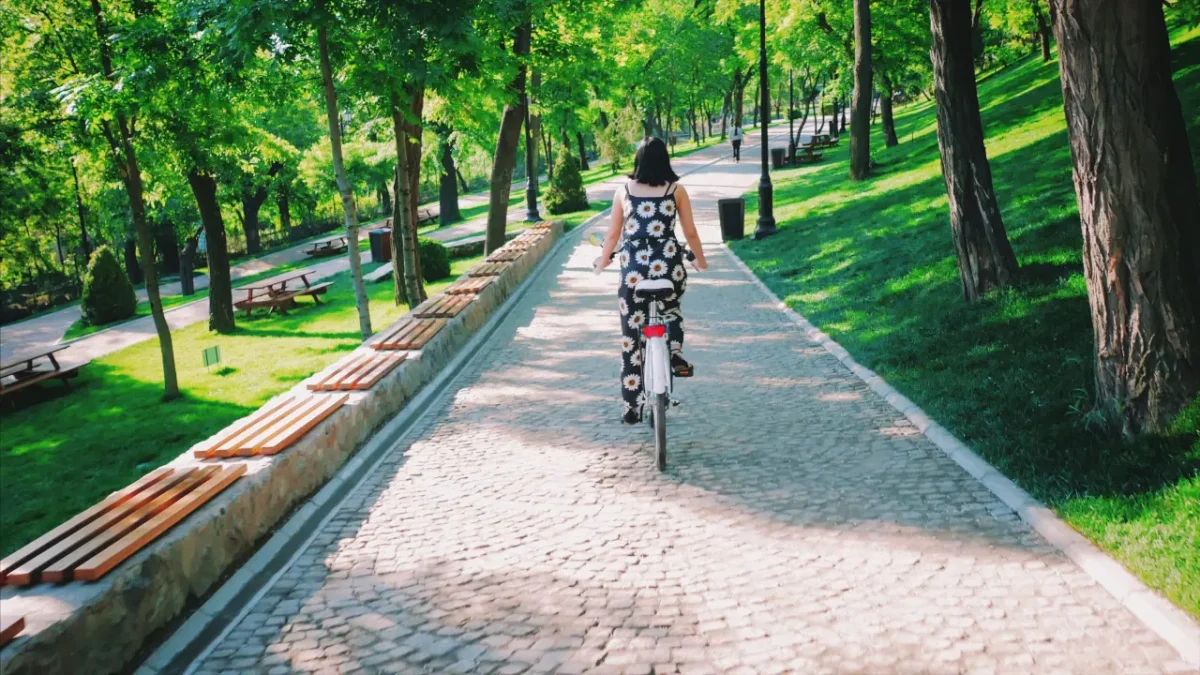
However, things are improving. With more bike lanes available, and a growing bike-culture, Romania is now, overall, more bike-friendly than it ever was. Some of the larger cities have areas dedicated to cycling (parks, for example, are perfect for that), and authorities are starting to make changes to turn things around.
Sure, it’s still a long time left before we can compare it to Amsterdam or other similar cycling havens, but at least we see progress – sometimes rapid.
Safety Tips for Cyclists in Romania
As we’ve seen already, you have to take all precautions possible to improve your chances of having a pleasant experience when cycling here. Some things are common sense, but others are things that only locals might now. So here’s what I recommend doing:
1. Always ride defensively and assume drivers won’t see you (or care that you’re there). Even better, always wear a helmet and protective gear, as well as reflective gear at night and outside the cities.
2. Avoid rush hour in big cities (8-9 AM, 4-6 PM).
3. Lock your bike securely – even though Romania is a generally safe country, bike theft can be a problem. So never leave yours unattended!
4. Try to avoid stray dogs if you see them (especially if they are in packs). This usually goes for rural areas and roads outside the city, where they could follow your bike barking.
Wrapping up
At the moment of writing this article, having in mind all the things I said above, I would have to admit that Romania isn’t the most bike-friendly country in Europe (or the world).
But things will actually improve if you’re carefully choosing the areas you’re planning to ride your bike in.
Now I’d love to hear from you: have you tried cycling in Romania? Was your experience safer or scarier than what I described?

I am a journalist and local expert who has been documenting life in Romania since 2013. Based in Constanta (after living in Bucharest and Drobeta Turnu Severin), I provide up-to-date, on-the-ground advice for expats and travelers. My articles are based on real life experiences and plenty of research – from paying Romanian bills to exploring the wild “Rawmania” countryside.
No! I did not ride a bike while we were in Romania. I would not even try it though. I don’t consider Romania bike friendly at all. The driving is crazy and l don’t remember designated lanes. I can assume in the small villages and cities, it would be possible but l still wouldn’t chance it because as you say the roads are not so great. Like home.. 🙂
Hopefully the recent plans that officials have will change things a lot and Romania will become better in this aspect. Only time will tell…
As a poor country, one cannot expect Romania to have bicycle-friendly infrastructure like, say, the dedicated bike lanes in Holland. Yes, when I first went to Romania in the late 1990s and spent some time in the small towns, I saw a few rickety old bicycles probably from pre-revolutionary times being very carefully ridden by older people.
Later, I gradually saw an influx of colorful cheap Chinese mountain bike-style bicycles which were popular with school age children. Which brings back a vivid memory of a Romanian bicycling experience I had. I once borrowed an old bicycle from a young Romanian.
I wanted to ride the bike about 9 kilometers to a neighboring town where I wanted to visit some friends. I very soon regretted my decision. Turning the pedals on the one speed bicycle was an ordeal and the bone jarring ride from the dirt road full of loose pebbles probably from a riverbed didn’t help things. Well, I made it to my friends and sure was dreading the ride home, but the thought of disappointing my young friend if I didn’t return the bicycle on time kept me going.
Contrast this story with Japan. You see lots of mainly high school children, senior citizens and a few housewives on cheap Chinese bicycles called “Mama Chari.” The bicycles are abused, left out in the rain to rust, and abandoned as soon as any repair is needed. I think bicycling is associated with poverty and everyone’s aspiration is to get a car instead. But there is a cohort of younger spandex wearing Japanese bicycle racers coming along who have already created a market for expensive bicycles and components. I think Romania is still mired in the look-down-on-bicycling phase of its development.
I can only imagine the damage riding a bike on a pebble road can do to a bike. So probably that kid’s bike had seen a lot in its life 🙂
But yes, you managed to describe the situation well and even though things have greatly improved in the country in the past years, many of the village roads are still similar to the one you described. Just a few years ago I had to drive on such a road (which was like that since I was a kid) and it wasn’t pleasant with a car either…
And also, just like in Japan (who knew the two countries had something in common?), some people in Romania also tend to associate bicycles with poverty. And Romania is that country where showing off is the main thing to do, with people buying expensive cars just to show off, even though they can’t even afford putting gas in the tank. But the new generations are changing things a bit and hopefully there will be more love for bikes, as well as better roads to drive them on.
Hello Non-bike Riding Calin;-)
Even in Portland and Seattle, where there are a lot of designated bike lanes,
bike riders are still routinely killed, sadly.
I haven’t ridden a real bike in over 40 years. (I do ride an exercise bike indoors
to keep off the pounds, though.;-)
Curious: does Romania have the e-scooters that are everywhere in the US?
I see some crazies riding them right in the middle of traffic–talk about a
death wish!!!
Definitely a well presented article!
~Teil (USA)
Ha, I ride the indoor exercise bike too – so I’m not completely non-bike riding :))
And yes, those e-scooters are becoming a thing here. Even bicycle riders complain about those: they are extremely silent, so you never hear them coming and as a result, even more accidents happen. Those things are definitely not on my list of favorites.
I was in Timişoara recently and there were bike lanes all over the place and quite a lot of people using them. Braşov, on the other hand has nothing.
I took a bicycle with me to Romania and came in from Hungary by train and then went via Oradea to Cluj with rail replacement bus. Then onto Brasov where I cycled and a village called Magura which I got a lift to and only cycled a little bit on the earth roads.
I found the sheep dogs scary and always hoped they were chained up. I have 2 questions about Romania cycling. Is there much risk of running into a bear? As I was told they even enter Brasov sometimes.
The second question is when you say many trains take bicycles, does that mean they have spaces on regional trains?Because CFR’s site says you can only get on trains marked in the timetable with a bicycle symbol which seems very few.
It’s difficult to say how likely you are to run into a bear, but lately, more and more have been spotted and even entered city areas, yes. They usually come scavenging for food, but this doesn’t mean they can’t be dangerous, so if you ever run into one, the main rule is not to try to interact with them.
Surprisingly or not, most of the bear attacks in Romania are the result of tourists (both Romanian and foreign) who try to feed them, take photos or interact with the bears.
As for the bikes, it looks like they changed the wording indeed and now only allow “pliable” bikes on all trains. This definitely reduces the amount of options, unfortuantely.