

Romania’s reputation for having some of the world’s fastest internet is legendary. For years, this country outranked major tech hubs, leaving visitors shocked when they could download a 4K movie in seconds while paying the price of a sandwich. But does this still hold up in 2026?
The short answer is yes. But the long answer is a bit more complicated. While Romania no longer ranks #1 in the charts of countries with the fastest internet in the world, the numbers (and especially monthly costs) are still amazing.
If you are a digital nomad, a gamer, or just someone who hates buffering, you will have no problems with the internet in Romania. Below, I go in-depth and show you real numbers, averages, costs, and everything else you should know.
Romania’s Internet Speed Stats
If you’re in a hurry, here is the breakdown of what you can actually expect to get here this year (I will use median numbers, as they’re closer to reality than average stats, which are pushed up by the top speeds that only a few get):
| Category | Stats (2026) | Best Provider |
| Fixed Internet Speed | ~270 Mbps Download ~190 Mbps Upload (Median) | Digi (Cheapest) / Orange (Fastest) |
| Mobile Internet Speed | ~80 Mbps Download ~10 Mbps Upload (Median) | Orange (Best Coverage/Speed) |
| Average Cost | 25 – 50 RON (€5 – €10) | Digi (Unbeatable Value) |
| 5G Availability | Major Cities & Towns | Any |
The Real User Experience
Romania still offers the best “bang-for-your-buck” internet in Europe, no question. Even if it’s no longer top of the world, the user experience has improved over the years, with larger areas being covered by high-speed internet connections.
Even more so, and even using medians not averages, the reality is even better: major cities especially, but all towns in reality, will have speeds above the averages. In a remote village in the Carpathians, you might still be relying on older copper wires or 3G mobile connections… but everywhere else, internet will be flying.
This means that Romania’s average broadband speed is around 270 Mbps (+35 Mbps compared to last year), while mobile internet clocks in at roughly 80 Mbps (+16 Mbps compared to 2025).
These numbers come from my own experience in various Romanian cities and a rural village, combined with data from Nomad Not Mad and official SpeedTest statistics.
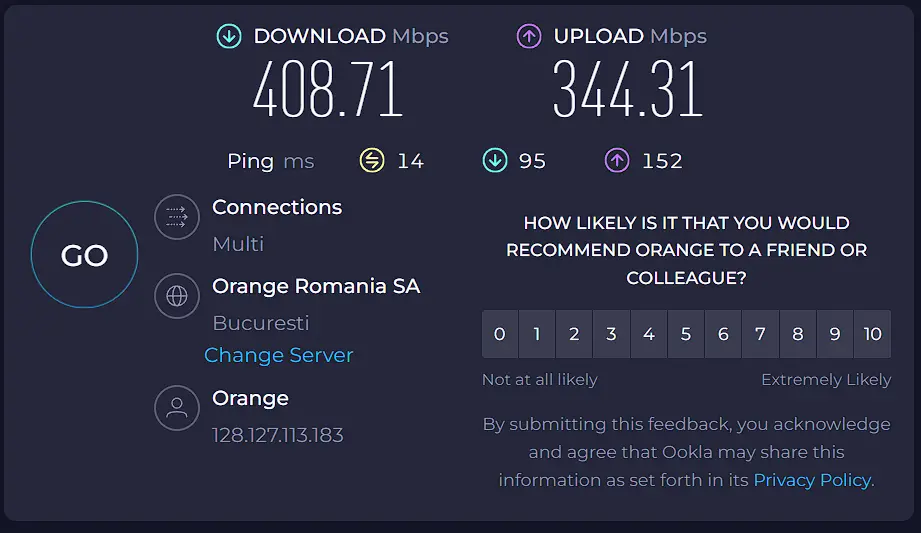
For example, here is a speed test I ran in my hometown, Drobeta Turnu Severin. I have internet from Orange (and I am extremely happy with it). The test is ran on my laptop’s WiFi – I am sure that if I were to plug in a cable, I’d get even better speeds:
At our village house, for example, we have a 100 Mbps plan for broadband internet, but I’m constantly getting speeds of around 80-90 Mbps. Recently, I saw that we can upgrade to higher speeds – but I’m only paying 17 lei/month for that (3.3 Euros) and there’s no need to do it.
Even better broadband speeds in 2026
The main broadband internet providers have announced plans for even faster internet in the larger cities, with close to ridiculous speeds:
- Digi already has 2.5 Gbps plans available in the larger cities, with 10 Gbps internet announced for Bucharest.
- Orange also announced plans to launch 10 Gbps plans in Bucharest, and they already have 2 Gbps plans in the cities.
Realistically, this is overkill for 99% of people. Most consumer routers can’t even handle 10 Gbps, and your laptop likely doesn’t have a network card that fast. But the option is there, proving that the infrastructure is ready for the future.
Mobile Internet & 5G Coverage
Romania shines at broadband, but historically, the mobile side lagged. That gap is closing fast, but there’s still a lot of catching-up left to do.
However, since 5G started rolling out in 2024 and coverage has improved a lot by now, mobile internet speeds have jumped significantly: from an average of 51 Mbps in 2024 to 64 Mbps in 2025 and now 80 Mbps. As you can see, the growth is impressive.
Smaller towns and rural areas are still on 4G (maybe even 3G in remote areas), which explains those lower nationwide averages, but the 5G coverage is now available for all cities.
For example, here is the result of a speed test I ran on Orange, my mobile provider, which reached a solid 179.12 Mbps, more than double compared to last year when it only scored 85.62 Mbps:
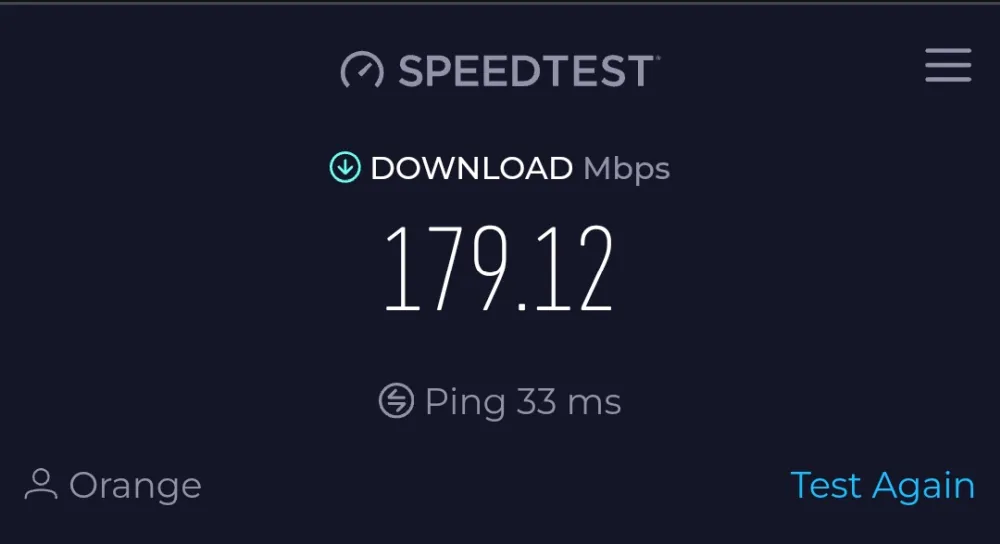
While the speed is not even close to that of my broadband connection, it’s still great and well above the average and also median speeds, proving that in the cities, mobile internet speeds are also amazing.
However, things change when I’m at the village house, with the speed dropping to as low as 5 Mbps in some areas where the mobile signal is poor.
Romania internet prices
The main internet provider in Romania, Digi, has two super cheap, yet very fast internet offers available:
- for ~30 lei/month (€6), with speeds up to 500 Mbps
- for ~41 lei/month (€8), with speeds up to 1,000 Mbps
Super fast internet at VERY affordable prices. Here’s a screenshot of the offer available on their website if you sign a 2-year contract:
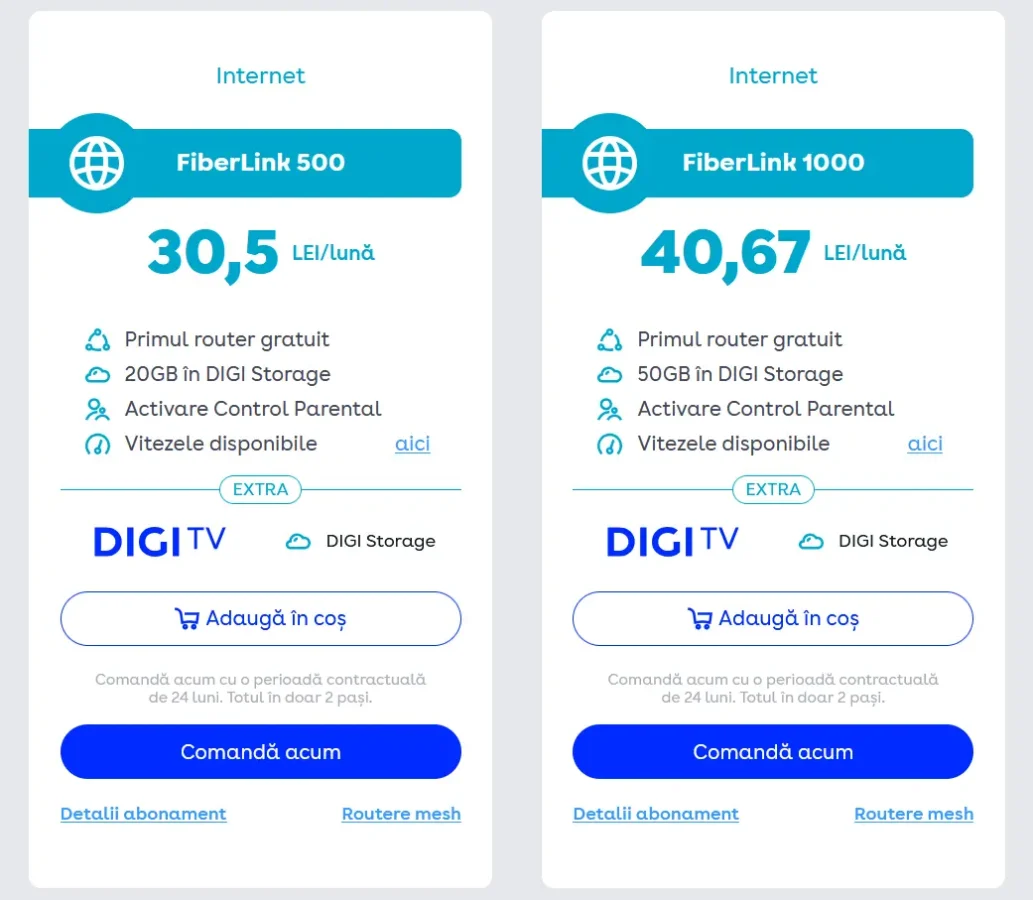
The interesting part is that these prices have been the same since 2022, despite the huge inflation that affected Romania and resulted in increased prices all over the board.
Even more so, you get FREE online TV included in each plan, working both on mobile via their app or on laptops/smart TVs. You get tens of local and international stations.
As for mobile options, I have a €7/month plan that includes unlimited EU-wide calls and texts, 200 international minutes (outside the EU), and 24 GB of data. Pretty decent and very cheap!
Reliability & Latency
This matters a lot for gamers or people who rely on low latency for work (like day traders or video conference addicts). The good news is that Romania has generally stable connections, especially on broadband.
Outages are highly uncommon and if they happen, they are fixed quickly.
The Latency is great for local servers (under 10ms). International servers might be higher, but not a lot. As you can see in my speed tests above, my mobile ping was a decent 33ms (it’s in the 20s usually), while on broadband it was just 5ms.
Life in Cafés & Public Wi-Fi
In major cities, cafés and restaurants usually have free, high-speed Wi-Fi. Hotels, shopping centers, and public institutions usually provide free internet access – but here, the internet speeds are usually lower.
Romania still doesn’t have much of a “work in a café” crowd, but you won’t be frowned upon if you buy a coffee and take out your laptop to get some work done (or watch silly cat videos – your choice). Some places even have electrical sockets to charge your devices.
Just keep an eye on security. Free Wi-Fi is great, but it can be a hot spot for hackers – so you might want to use a VPN to protect your sensitive data.
Conclusion
Even though Romania isn’t #1 on every speed chart these days, it’s still in a great position overall – especially if you’re spending most of your time in the cities or touristy areas.
You can work remotely, watch high-definition streams, and pay some of the lowest rates in Europe – and get amazing internet speed in return. So fortunately Romania’s internet is still something to write home about.
Combine that with a low cost of living and very cheap plans and you only have reasons to be happy.

I am a journalist and local expert who has been documenting life in Romania since 2013. Based in Constanta (after living in Bucharest and Drobeta Turnu Severin), I provide up-to-date, on-the-ground advice for expats and travelers. My articles are based on real life experiences and plenty of research – from paying Romanian bills to exploring the wild “Rawmania” countryside.
We have 300 speed, but to tell you the truth, I don’t think it’s any different from 100. It works fast, and that’s all l care about. The prices in Romania are quite reasonable. We have a bundle plan with cable and cell, and landline and l think it is still cheaper compared to how much we were paying in the states, so l’m happy. It’s great for nomads.
I wanted to upgrade to 1,000 during their Black Friday sale but then I thought… why? I have absolutely no complaints whatsoever with the speed here so… why pay more for something you don’t really need? 🙂 Yes, I agree, anything over 100 Mbps is really good.