
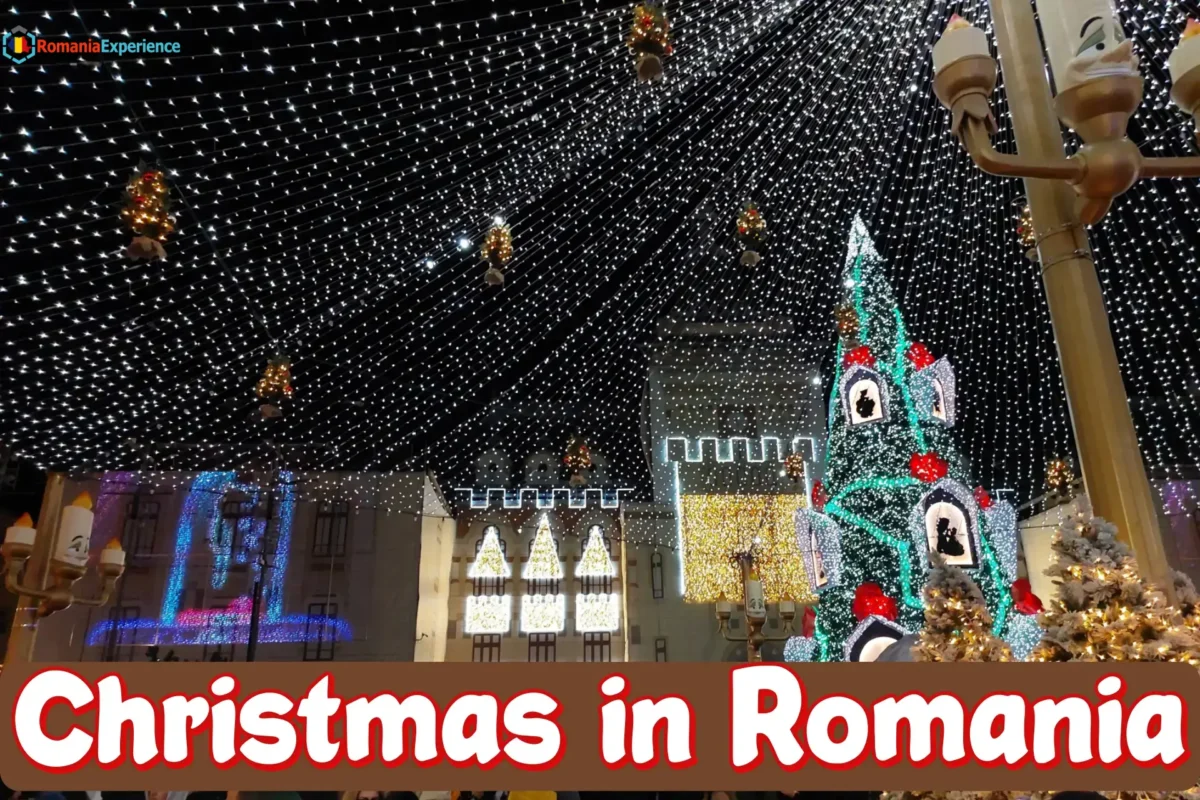
In Romania, just as it is in most Christian countries out there, Christmas is the biggest celebration of the year. For generations, Romanians have marked the birth of Christ with faith, joy, and a lot of amazing traditions. And we’re talking about them all in today’s article.
Preparations for Christmas begin well before December 25th. Officially, they start on Saint Ignatius‘ Day (December 20) and extend through Epiphany (January 6) and every region, from the wooden-gated villages of Maramures to the windy shores of Dobrogea celebrates slightly differently, making the winter holidays an amazing time of the year.
So, if you’re planning to celebrate Christmas in Romania this year, or if you’re just curious to know what us Romanians do during this time, read on!
IMPORTANT TO NOTE: Many of these interesting Christmas traditions are no longer respected in their entirety. It’s the villages where you are most likely to see them followed to a T, but at least some (or parts of them) can still be observed in larger cities too.
It All Begins with the Christmas Fast
Traditionally, in Orthodox Romania, Christmas is preceded by a six-week fast that begins on November 15. During this time, people don’t eat meat, dairy, or eggs, focusing instead on spiritual reflection. Some days allow some types of meat (usually fish), but it’s full vegan mode until then.
The final day, Ajunul Crăciunului (Christmas Eve), is the strictest of all, called “black fasting” which means that you’re not allowed to eat anything during the day. However, there’s a traditional feast in the evening, until the first star appears in the sky, with a symbolic dinner.
There are variations, though. For example, in the northern region of the country, families gather for the Christmas Eve dinner – one consisting of twelve fasting dishes, each representing one of the Apostles. It will include beans, dried plums, boiled wheat, pickled vegetables, and freshly baked cozonac (sweet bread). The meal begins with prayers and, traditionally, no one eats until the priest’s blessing has been received.
On some tables, a loaf of bread, salt, wheat, and a glass of water are set aside to honor the souls of the departed – believed to return home on this sacred night.
If you want to prepare ahead and impress your friends, I also have an article teaching you how to say Merry Christmas in Romanian.
Saint Ignatius’ Day – Slaughtering the Pig
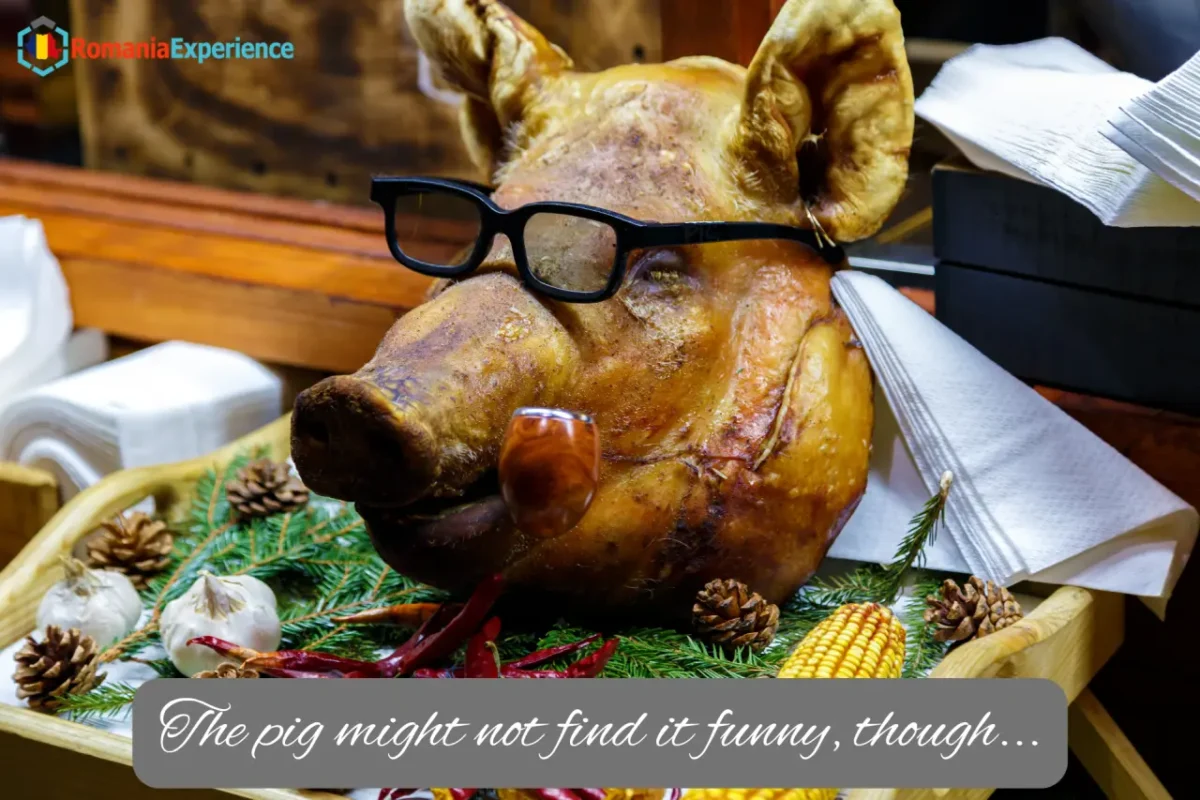
One tradition that many Romanians still follow (especially in villages) is the slaughtering of the pig during Saint Ignatius’ Day on December 20.
You can imagine how important this event was back in the day, when the pig(s) about to be slaughtered were the main source of meat for months to come. Now, many people still do this and they use every part of the animal to prepare traditional dishes such as tobă, cârnați, and piftie, which will later be shared with neighbors and guests during the Christmas feast.
The slaughtering of the pig is an event in itself, one that usually brings together the entire family, and is followed by a feast containing various cuts of meat from the pig.
Christmas Eve Rituals and Superstitions
In my case, since I was young, Christmas Eve seemed to be more important than Christmas itself. That was when many of the foods were being prepared (and I always sampled them), and – most importantly for me as a kid – Santa Claus visited during the evening.
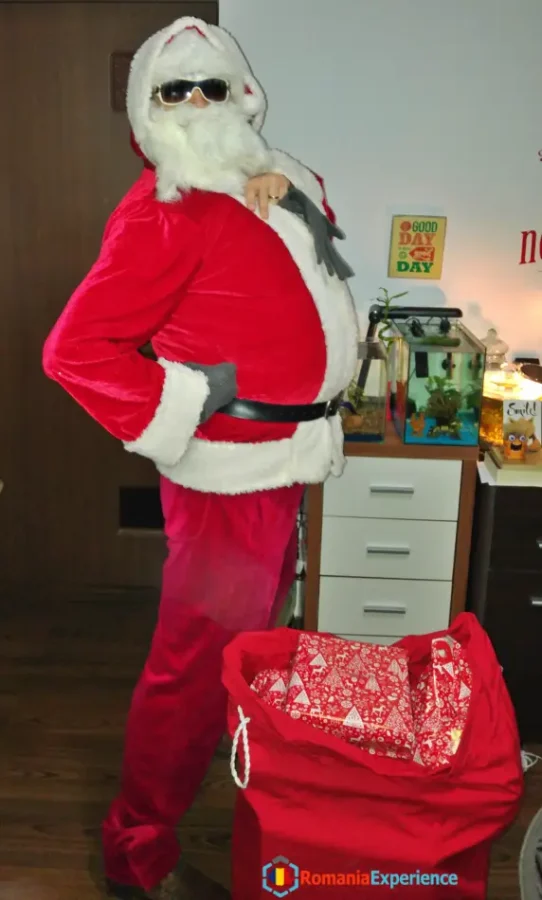
However, Romanian folklore treats Christmas Eve a bit differently, traditionally.
People once believed that on this night, water turns to wine and animals begin to speak. Because of this sacredness, the household must remain pure: nothing is thrown away (not even garbage!), lent, or borrowed. Doing so is supposed to drive away luck and/or blessings.
For more like this, I recommend checking out my article sharing all Romanian traditions you should know.
The Priest and the Icon of the Nativity
Another treasured tradition is the blessing of homes, which is done by priests who travel from house to house, carrying the Icon of the Nativity, announcing the coming of Christ’s birth and blessing each house they enter.
In cities, this sometimes starts sooner so that all houses and apartments are covered, and it is still practiced today, although many people no longer let the priests inside their homes because they consider another tradition (that of giving them money when they finish blessing the house) just a form of begging.
Caroling
Caroling is the heart of Romanian Christmas, with various songs being (almost) as popular as Mariah Carey’s “All I Want from Christmas Is You”.
Jokes aside, caroling remains an important part of the Romanian traditions, and it’s all done for good reasons: it’s said that God sent carols to Earth to cleanse people of sin and that, if they ever ceased to be sung, evil would walk freely among men.
Officially, carols begin on the night of December 23-24, and groups move from house to house, singing blessings for health and prosperity. In return, hosts reward them with pretzels, apples, walnuts, and pastries, although today, money and sweets have joined the mix.
And, of course, caroling also became a “job” with some people starting it as early as December 1st, walking around and singing on the streets, hoping to receive money. Even more atrocious is the fact that, in the past few years, they started walking around carrying portable speakers that play carols and they just want the money.
Back to more fun things, we have another beloved custom (although, again, you’ll only see it done in villages nowadays).
Umblatul cu Steaua or “Walking with the Star” has children carry a bright, handcrafted star made of paper and candles, symbolizing the one that guided the Magi to Bethlehem. Singing the popular carol Steaua sus răsare (“The Star Rises Above”), they announce the birth of Christ to every doorstep.
If this is interesting, make sure to also check out my in-depth guide to Romanian culture, too.
Moș Ajun and Moș Crăciun
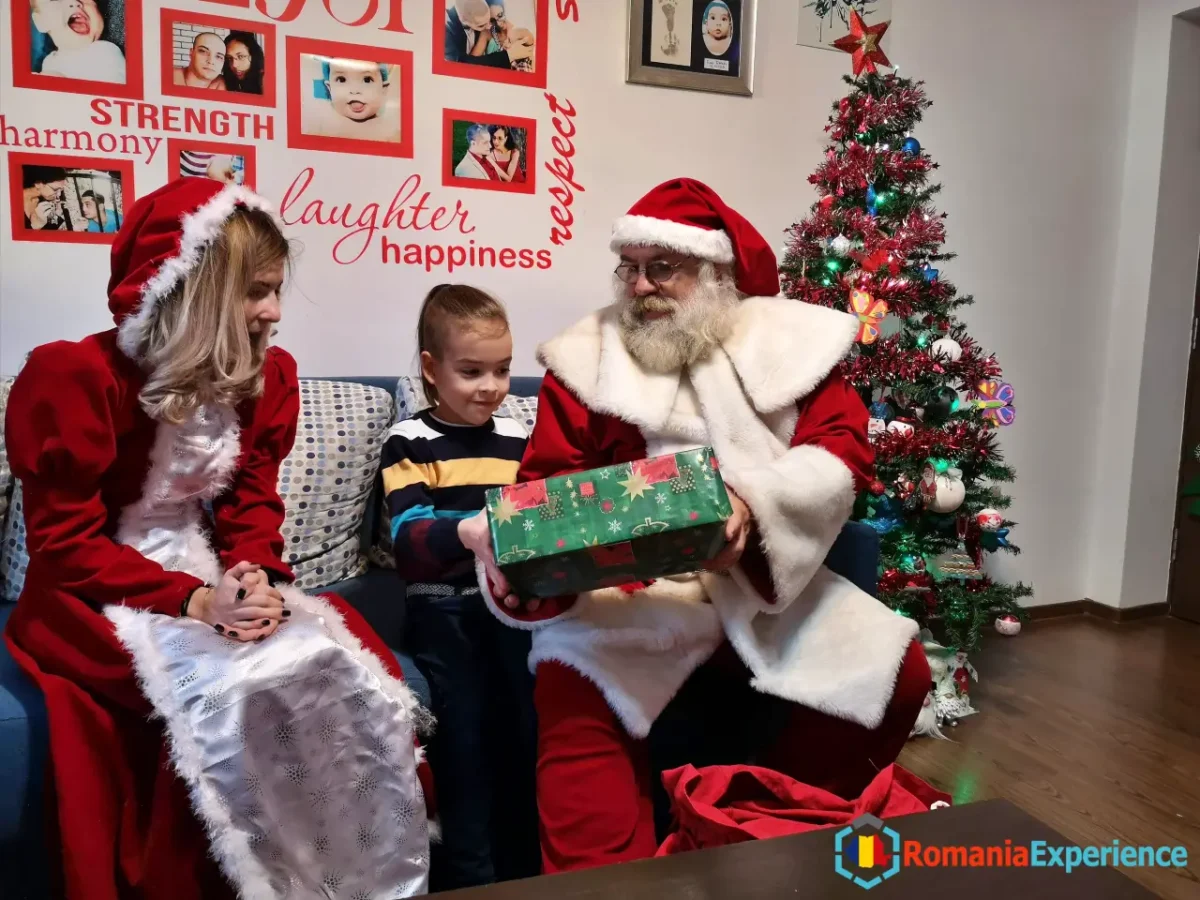
Before the Western Santa Claus became popular, Romanians told stories of two mysterious brothers: Moș Ajun (Old Man Christmas Eve) and Moș Crăciun (Father Christmas).
According to legend, when the Virgin Mary was about to give birth, she sought shelter at Moș Ajun’s humble home. Too poor to help, he sent her to his wealthier brother, Moș Crăciun, who owned a stable. There, Mary gave birth to Jesus, aided by Crăciun’s wife.
When Crăciun learned what had happened, he was moved to tears, realizing the miracle that took place under his roof. In repentance and joy, he celebrated the newborn Child by offering gifts, a gesture that became the origin of Christmas gift-giving in Romanian folklore.
Another version says that Moș Crăciun later placed the Holy Child beneath an apple tree, picking its fruits and tossing them to nearby children. Of course, this tradition is little known today – especially by the younger generations who grew up with the Westernized versions of Santa Claus.
Decorating the Christmas Tree
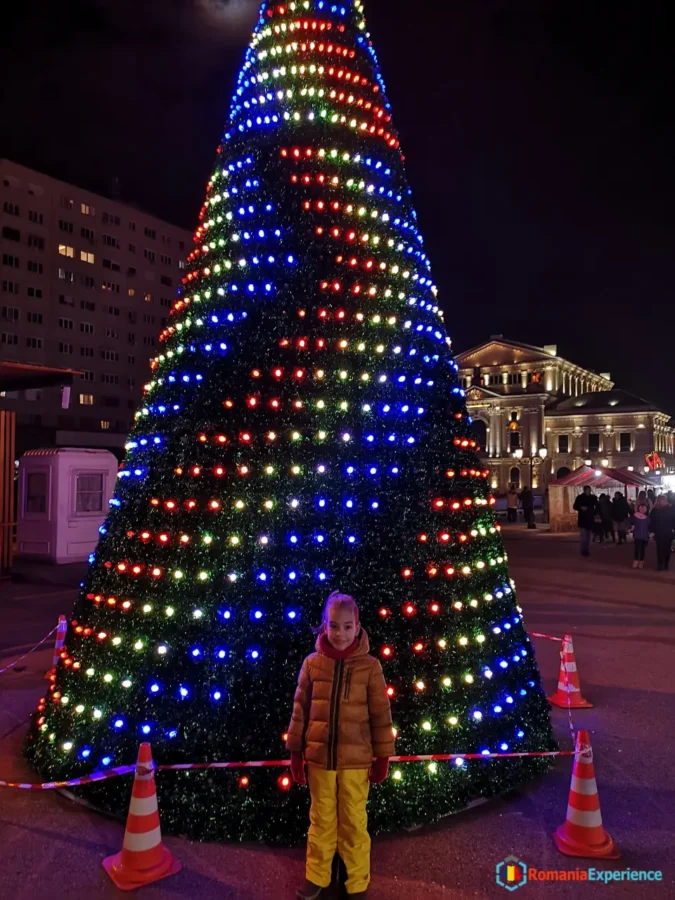
Although decorating the Christmas tree is now central to Romanian holiday life, the custom is relatively recent, adopted from Central Europe in the 19th century.
Before then, the fir tree held a different, more solemn meaning. It was often used in funerary rites, symbolizing both life and death, and sometimes placed beside graves or in homes after the passing of an unmarried person.
With time, the evergreen fir became a Christian emblem of eternal life and the Holy Trinity. Its ornaments, originally fruits and sweets, then bells and paper-made decorations, and later glass globes, came to represent abundance, wisdom, and divine gifts.
While many families decorate their trees on Christmas Eve, as it was the tradition (mainly because real trees were used), many also decorate them as early as December 1st to feel the holiday spirit sooner. Either way, this is an important event that the entire family enjoys.
Traditional Christmas Food
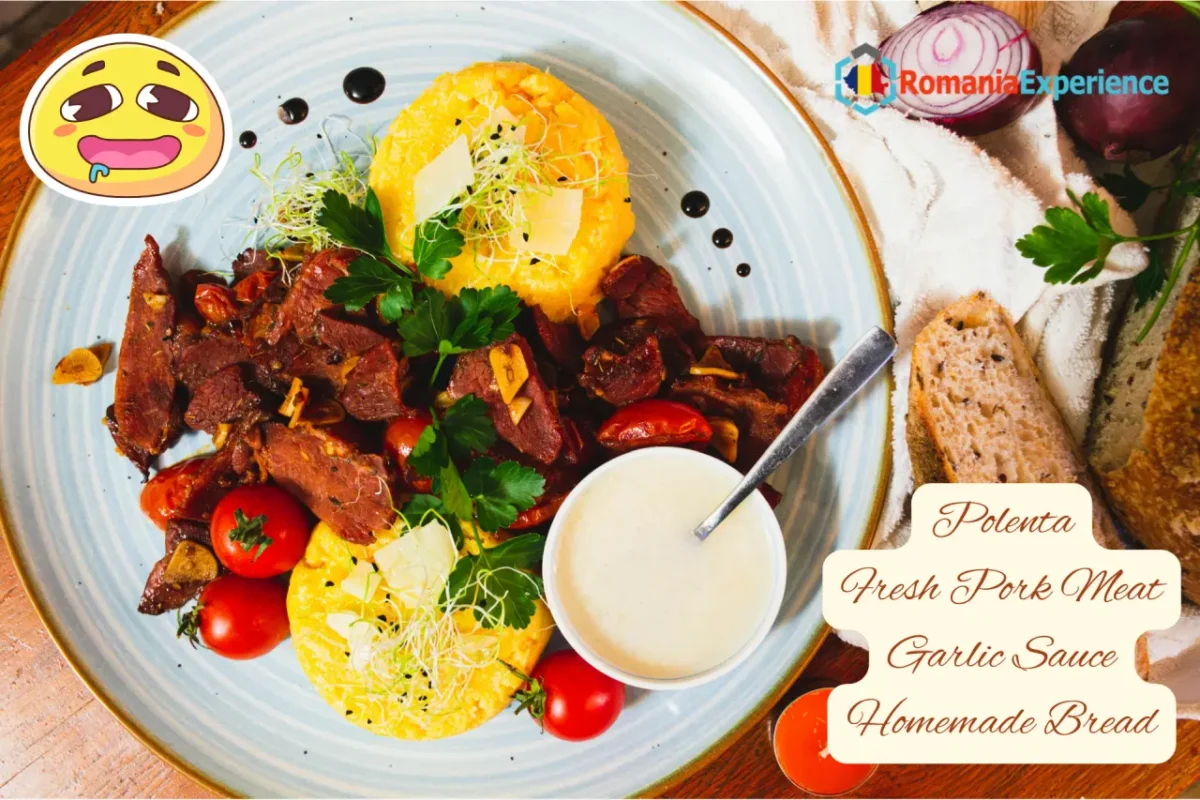
As you can imagine, food plays an important role each Christmas, no matter if it was preceded by the long fasting period or not. I won’t get too much in-depth with this part as I already have an article dedicated to traditional Christmas food in Romania, but there are some things that have to be mentioned.
Romanian Christmas tables usually overflow with flavor and various dishes, many consumed specifically during this occasion. It’s customary to have guests over – at least some family members – and, still, most of the food is homemade (and delicious).
Some of the stars of the Romanian Christmas table are:
- Sarmale (cabbage rolls), simmered slowly in clay pots and eaten in packs of 5 and more.
- Salată boeuf (beef salad), layered with vegetables and homemade mayonnaise – and sometimes missing beef or any type of meat altogether.
- Piftie, transparent meat jelly flavored with garlic (although this is sometimes left for New Year’s celebration)
- Pork meat goodies – sausages of various kinds, lebăr (liver sausage), tobă (pork belly filled with the pork’s organs and gelatin – something tastier than it sounds), and caltabos (boiled sausage also made from pork organs).
- Cozonac, rich sweet bread filled with walnuts and cocoa.
Of course, this only scratches the surface and focuses on the most traditional foods you can find here. Expect everybody to go over the top with the Christmas menu preparations, offering plenty of tasty food.
Wrapping up
It might sound cliche, but I do believe that you have to be here to truly experience the magic of Romanian Christmas. There are some things – especially when it comes to the winter holidays – that no amount of words or images can capture.
Still, I did my best to present as much as I could and hopefully convince you that spending a winter (or more) in Romania might be a good idea. We also have plenty of amazing Christmas markets in case the more traditional approaches don’t work.
Now over to you: have you experienced Christmas here in Romania? Was there anything that left a mark?

I am a journalist and local expert who has been documenting life in Romania since 2013. Based in Constanta (after living in Bucharest and Drobeta Turnu Severin), I provide up-to-date, on-the-ground advice for expats and travelers. My articles are based on real life experiences and plenty of research – from paying Romanian bills to exploring the wild “Rawmania” countryside.