
Let me start with a quick story – an important one. At our son’s Christening, a ceremony steeped in the centuries-old rituals of the Romanian Orthodox Church, the air was heavy with incense and the chanting of priests.
But there was another thing that made it heavy: my son’s godfather. He is a trans man, known by most of our family up until that point as a woman.
Yes, the stares and whispers were present, a few older relatives muttered about what they considered normal, but, the overwhelming response was simple acceptance.
The party continued. People laughed, danced, and celebrated. All was good in the end.
And I fell this story perfectly encapsulates the profound, often contradictory transition happening across Romania today – at least when it comes to the LGBTQ+ community.
Because, looking from outside (and even from inside), answering whether Romania is LGBTQ-friendly is difficult. The scene is growing and becoming more visible, but the fight for equal rights remains an arduous, uphill battle for now, especially with the older generations.
For another success story of a gay man from China finding love in Romania, I recommend reading my previous article here.
Traditional Romanians and Gay Individuals

Romania is a very traditional and conservative country overall. We have just started “tasting” democracy in 1989, with the fall of our last communist dictator, Nicolae Ceausescu. And while progress has been made, it is still slow in many areas.
I have lived through these shifts and watched how societal attitudes toward gay, trans and bisexual individuals evolve (I mention these specifically because they are the most visible).
Still, Romania overall is not very gay friendly. While most of the Romanians would not openly criticize members of the LGBTQ+ community (or at least not confront someone about it), many might still consider it strange or unnatural.
While this is valid in the country as a whole, expect people to be more closed-minded in the smaller cities and especially in villages.
Much of this stems from the massive, unyielding influence of religion (even though that, as well, is starting to diminish).
But the state still faces constant criticism for, for example, pouring more funds into church projects than into hospitals or schools.
The priests still have a massive influence over the crowds and things like the National Cathedral (the largest Orthodox Cathedral in the world) are being built.
The Orthodox Church actively teaches the public to view homosexuality as a sin and when generations are raised with this doctrine, prejudice becomes deeply ingrained and difficult to forget.
Several years ago, there was even an attempt to amend the country’s constitution to define the “Traditional family” as existing only between a man and a woman.
Over 3 million signatures were gathered for this (out of Romania’s population of 18 million – so still plenty), but fortunately, the minimum number of participants wasn’t met (due to a nationwide boycott), so this didn’t become a law.
But even though the “traditional family” definition didn’t go through, the reality is that many Romanians are still far away from accepting the LGBTQ+ community.
Extremist political parties are gaining traction here, mirroring the general trend across Europe. This political climate adds another layer of friction to an already tense environment.
The Legal Reality for LGBTQ+ Individuals
Gay marriages are not officiated or recognized in Romania. However, in May 2023, the European Court of Human Rights issued a landmark ruling against the Romanian state.
The court declared that the country is violating fundamental human rights by refusing to offer legal recognition, such as civil partnerships, to same-sex couples.
Still, the government has stubbornly stalled on implementing any changes, making this the most significant ongoing battle for equality in the nation.
Transgender individuals face an equally grueling administrative nightmare. For years, the procedures for changing legal identification have been deliberately opaque.
But a massive breakthrough occurred in October 2024. The European Court of Justice ruled in favor of a British-Romanian trans man, mandating that EU states must recognize gender and name changes legally acquired in other member countries.
This doesn’t mean that things are easier in Romania, but for those who still have at least a bit of fight left in them, it can be done.
But despite all these things, the younger population is more open-minded and has a healthier and saner approach to LGBTQ+ members. While there are still exceptions, they tend to accept and embrace everybody, no questions asked.
So eventually, as the younger ones get older, things will get better here.
How is life in Romania for gay people?
Being gay in Romania is certainly not as heavily frowned upon today as it was ten or twenty years ago. People in the larger cities are learning to accept gay men and women living alongside them.
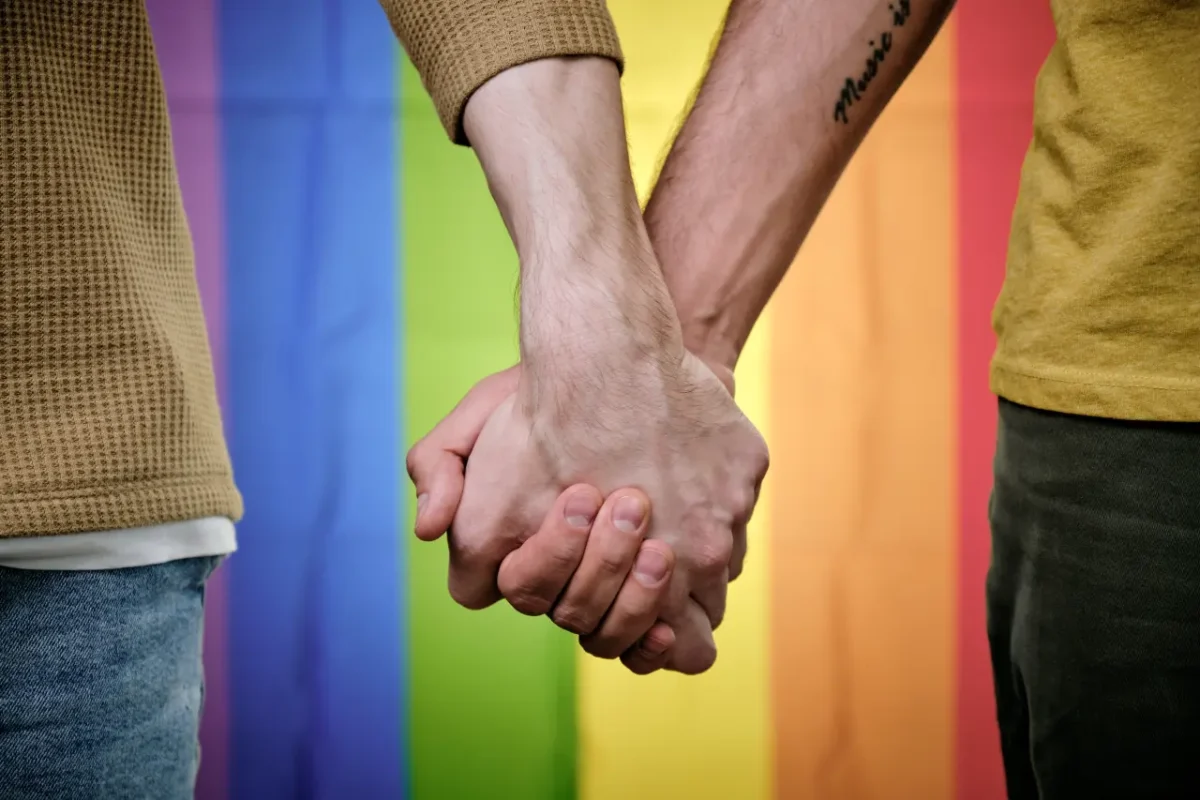
You will rarely, if ever, see men holding hands while walking down the streets, in bars or restaurants. Any sort of public display of affection – even hugs – would start a staring competition and might even result in some sort of verbal abuse.
As you see, I said “men holding hands”. For women, things are a bit easier. It’s not uncommon for girls and women to hold hands, hug and be very close, so they don’t draw too much attention. And generally, they are less frowned upon than men are.
In the 90s and even early 2000s, you would’ve been considered crazy to come out as gay. Gay people were beaten and abused and even though that extreme hostility has faded, being openly gay or bisexual outside the major cities will still come as a shock to the locals, no matter your gender.
Kissing your same-sex partner in public remains the ultimate taboo in most rural areas and even in cities. I doubt you will face physical violence in broad daylight, but the possibility of a confrontation always hangs in the air.
There are a few more places that are gay-only in Bucharest and apparently in Cluj Napoca – but that’s about it.
The rest of the country doesn’t really offer exclusive places for LGBTQ+ members to spend their time mingling with others. Some underground spots exist, but they change locations frequently and intentionally avoid public visibility.
Things are changing though
As I kept repeating throughout this article, things are definitely changing. Visibility is definitely growing together with acceptance.
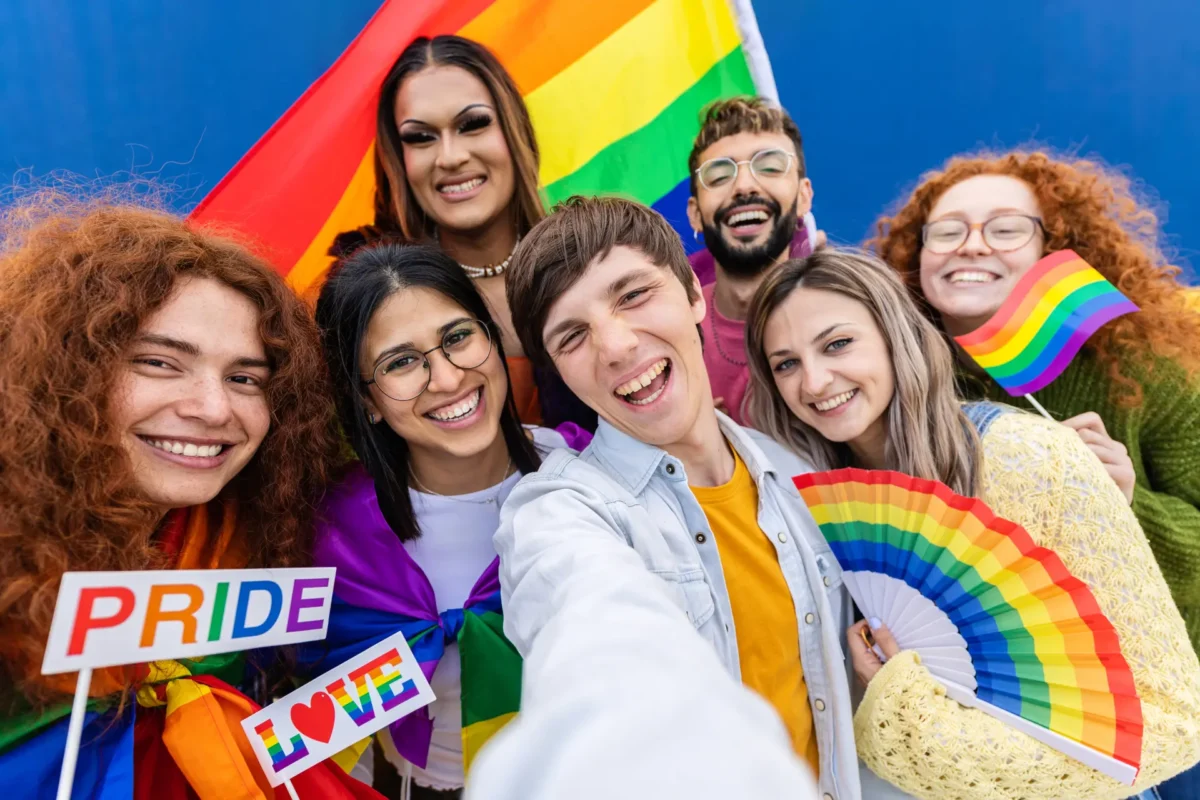
If you visit the capital during the summer, you will see exactly what I mean, as Bucharest Pride has grown massively over the last few years.
It now draws tens of thousands of participants marching through the city center. Attending this event feels like a breath of fresh air and proves that a strong, supportive community is building here despite the conservative pushback.
For example, shortly after the previous Pride parade concluded, a controversial local politician gathered a group of Orthodox priests and conservative supporters.
They walked the same route through the capital, armed with holy water, and blessing the streets to spiritually cleanse the pavement of the parade’s presence (source here in Romanian language).
This is a clear reminder of the deep ideological divide we still face. Yet, the pushback fails to erase the progress.
We are a long way from calling Romania a fully welcoming utopia, though. But we are undeniably on the right track. It is not perfect, but it is a huge shift from where we started, and I think that is better than nothing.
As I mentioned before, I look at the younger generations and see a bright, colorful future taking shape. Many young people I know are completely open about their sexual orientation, and their peers accept it as a simple fact of life, treating it with an indifference that feels quietly revolutionary. So there is hope.
Conclusion
Right now, Romania is definitely not one of the most gay friendly (or, generally speaking, LGBTQ+ friendly) country in the world.
But the hostile environment of the past is slowly dissolving. I want everyone to feel safe visiting my home and day by day, year by year, that safety is becoming a reality. So being a member of the LGBTQ community should not deter you from visiting and enjoying everything the country has to offer.
If you have additional comments or stories to share, I would love to hear them in the comments down below!

I am a journalist and local expert who has been documenting life in Romania since 2013. Based in Constanta (after living in Bucharest and Drobeta Turnu Severin), I provide up-to-date, on-the-ground advice for expats and travelers. My articles are based on real life experiences and plenty of research – from paying Romanian bills to exploring the wild “Rawmania” countryside.
Like you, Calin, this is a subject where I may not be an authority, but because of certain friends and relatives I have a passing interest. I was pleased to hear a couple of months ago where, under pressure from the European Court of Justice, Romania would be granting marital rights to same-sex couples.
Although the process will certainly be very slow, I believe this legal decision will ultimately provide a path that can normalize these relationships in the eyes of the general public. It was less than a year before when the notorious homophobic American zealot Kim Davis made headlines as she trotted about Romania speaking her obsessive hate of gay marriage to anyone who would listen.
For those who may not know, Davis was a Kentucky county clerk who had been jailed for failure to fulfill the legal requirements of her job when she refused to issue marriage licenses for same-sex couples, citing her personal religious beliefs. It was this dubious honor which provided the notoriety that raised her from a backwater civil servant to national, and ultimately international fame. It seemed, at least as one would read in the press, she found a ready audience in many of the people in deeply religious Romania.
However, I don’t think I’ve personally seen anything that would make me wary of inviting my LGBTQ friends for a visit. As at your son’s Christening party, there could definitely be stares and whispers. What I don’t know, though, is whether I could recommend Romania as country in which to emigrate. At least not yet.
Great comment, as always! I wasn’t aware about Kim Davis, to be honest, but I am not surprised to hear that she found a crowd here :)Hopefully things will change indeed and recommending the country as a great one to come to, no matter what your race is or your preferences, will be easier in the near future.
The culture in Romania is so different than in the U.S. that when I am in Romania something always surprises me. For example I have often seen grown women walking hand in hand in Romania. I perceived it was a mother and her adult daughter. In the U.S. I do not see this although I see gay women holding hands infrequently. This is not common except in some locales. Then there is the kissing “thing”. I am still adjusting to kissing my male relatives when we meet. 🙂
Haha, yeah, kissing and hugging is the norm here, as well as ladies holding hands. When I was in school and during my college years, whenever two girls met, they had to kiss and hug. I’m not sure if this is still done today, tough. Things would be a bit different if it were males holding hands and kissing, though…
Great post C! I’m not surprised at the attitude of the people there. It’s the same as in Nigeria. All these religious nut jobs and their beliefs. I’ve been around gay people ever since l moved to the States. It’s been interesting to say the least watching how people react. My best friend’s parents were the most homophobic people ever and were so critical. They had to face some ugly truths about themselves when my friend finally told them he was gay. Live and let live is my motto. Take care of your own shit and stop poking around other peoples lives 🙂
Exactly! There are so many other things to worry about anyway. If everybody would understand this, life would be so much easier and pleasant. But hopefully time will heal all these wounds and open the eyes that have to be opened…
At least Romania is not doing what Poland is doing right now. Declaring that some regions are homosexual free. They are not allowed to even exist there!
I found this shocking, considering Hitler wiped out so many people there, like he did in other countries. So one would think experiencing the extermination of people who are viewed differently would be more accepting. But I guess you can blame religion for this too.
This is really upsetting and has indeed made me change my future holiday plans of visiting Poland. I just can’t spend my money on a country if that country is deliberately discriminating against a group of people. It’s very disappointing.
When I was visiting Bucharest in 2018 and having dinner with my model friend Lia, this subject was brought up. It was clear her views were very conservative regarding this. I found it surprising since she is young.
My other friend with me on the other hand, was much more supportive of the LGBTQ community. So I guess it just depends. And Lia was more religious, so this type of thinking is definitely with these views about the LGBTQ community. Hopefully they will have more progressive views and attitudes about this as time goes on.
Yes, there are countries where things are even worse, for sure. And I also agree that many of the younger people are still very religious and conservative. But overall, things are better than they were 10 years ago and with more aggressive campaigns, I am sure that 10 years from now, things will be much, much better.
Funny to stumble across this now after Romania sent an openly gay singer with an explicitly gay song (wrs) and a non-binary singer (Roxen) to Eurovision in the past two years 😉 although of course showbiz has always had high levels of LGBT representation in every country.
Me and my boyfriend will go to Sibiu this October and we are looking forward to it, we had no problems in e.g. Armenia, Russia, Azerbaijan, Georgia and these countries are surely more conservative than Romania.
I also hope you will have an amazing stay in Romania!
To follow up on our experience, funnily enough we had a guide for a day trip and he was also gay (and Romanian) 🙂 We never felt at all in danger or judged, it felt like fairly mainstream European towns (we went to Sibiu, Sighișoara, Mediaș, Biertan). I would recommend this region at least to any LGB (hard to give clear advice for T from my experience as it is different) travellers who are questioning (and any straight travellers too!)
Really happy to hear about your positive experience!