
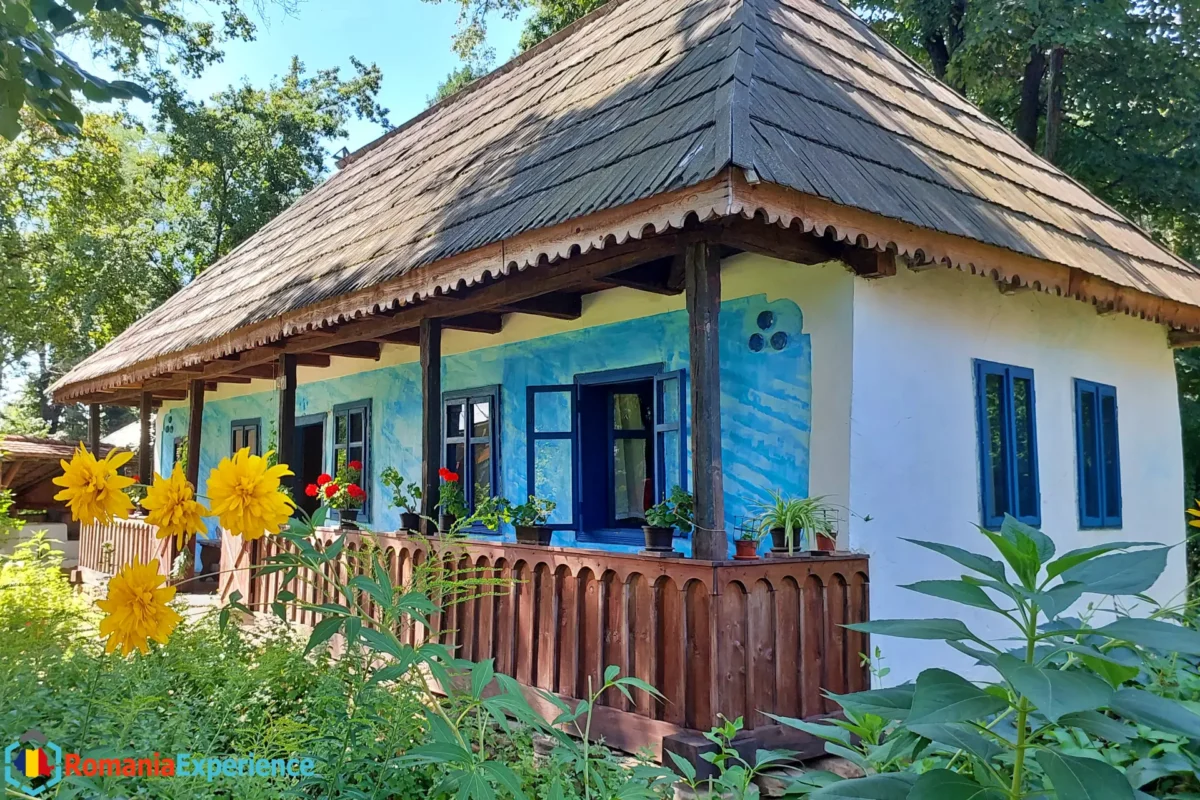
Bucharest, Romania’s capital, is a city with a rich history, one that spans over millennia.
Today, we’re going to learn a bit more about the city’s history – because, if you decide to visit or move here, knowing these details will make everything more interesting.
Plus, you get bonus points with a Romanian woman if you know details that many others might not.
And Bucharest does have a lot to offer in terms of history! The actual area it is built on has been inhabited since the Paleolithic era, and during medieval times it became Vlad the Impaler’s fortress, transitioning into a cultural hub known as “Little Paris,” and surviving one of the most oppressive communist regimes in Europe.
So let’s quickly dive in to Bucharest’s history and learn a few fun facts about the city. (Speaking of these, you can read some additional fun facts about Romania here).
Prehistory of Bucharest, Romania

As I mentioned in the intro, the land we now call Bucharest was inhabited back in the Paleolithic era (the Stone Age). Archaeologists have found stone tools proving that early humans settled here.
Later on, archaeological evidence from the Neolithic era (some 6,000 years ago) showed the existence of a few settlements on the shores of the Dambovita River, which runs through the heart of modern-day Bucharest.
During this time, the base of the Glina and Gumelniţa culture were established (known as “Old Europe” in history).
These evolved during the early Bronze Age, focusing on animal husbandry and advancing tools, as well as a deeper sense of community.
There is little evidence from these ancient times, but it is believed that the inhabitants lived very simple lives, relying mostly on hunting and gathering, but also on rudimentary forms of agriculture and domesticating animals later on.
The region’s fertile land and proximity to water sources helped a lot in the creation of more organized societies.
It was basically “the beginning of time” for Bucharest’s history, and one can only imagine how different, but even more so interesting, were the lives of these prehistoric inhabitants of the area.
Bucharest during the Iron Age

Starting around 3,000 years ago during the Iron Age, the area was populated by Romania’s ancestors: the Getae and the Dacians, who spoke an Indo-European language.
Various settlements were established in the area, with connection to the important cultures of the time, mainly the Romans and Greeks.
Also, it is during this time that we could notice the evolution of the area, when the foundation of modern Romania was built.
An interesting fact from this time is that Bucharest was never under Roman occupation, although Dacia (what is mostly considered to be Romania today) was, following Trajan’s Dacian Wars that ended in 106.
The establishment of Bucharest
The modern history of Bucharest as we know it today actually begins sometime in the 14th century, when the urban settlement is believed to have been established by Mircea the Elder, ruler of Wallachia, and one of Romania’s greatest leaders.
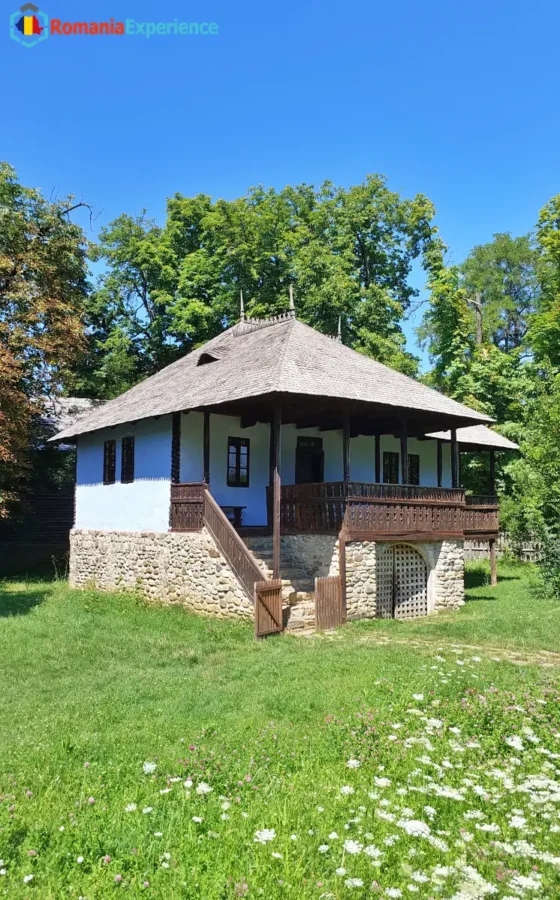
When it was established, Bucharest was a small fortress and trade outpost. But its strategic location along important trade routes at the time contributed to its growth and development.
Over time, it was influenced by the Byzantine, Ottoman, and Western European styles when it comes to architectural styles, resulting in a pretty unique and interesting blend, of which little remains today, unfortunately.
The first official recorded mention of Bucharest is found in a written document dating back to 1459, signed by Vlad the Impaler (the historical figure behind the Dracula myth).
He built the Curtea Veche (Old Princely Court), the ruins of which I highly recommend visiting today in the Old Town.
Bucharest’s massive growth in the 17th century
It was during the 17th century that Bucharest recorded massive growth, mainly as its population grew due to its strategic location. Thousands were flocking in to live in the city, as there were plenty of opportunities present here.
During those times, many new buildings were erected, including churches, monasteries and even small palaces.
This is also when the unique Brâncovenesc architectural style was born under the rule of Constantin Brâncoveanu.
It is an impressive mix of Renaissance, Byzantine, and Ottoman aesthetics. I always tell visitors to look out for the intricate stone carvings and arched porches that define this style while walking around the older neighborhoods.
You can get a bit more in depth with Romanian culture too.
The 18th Century and the Phanariot Era
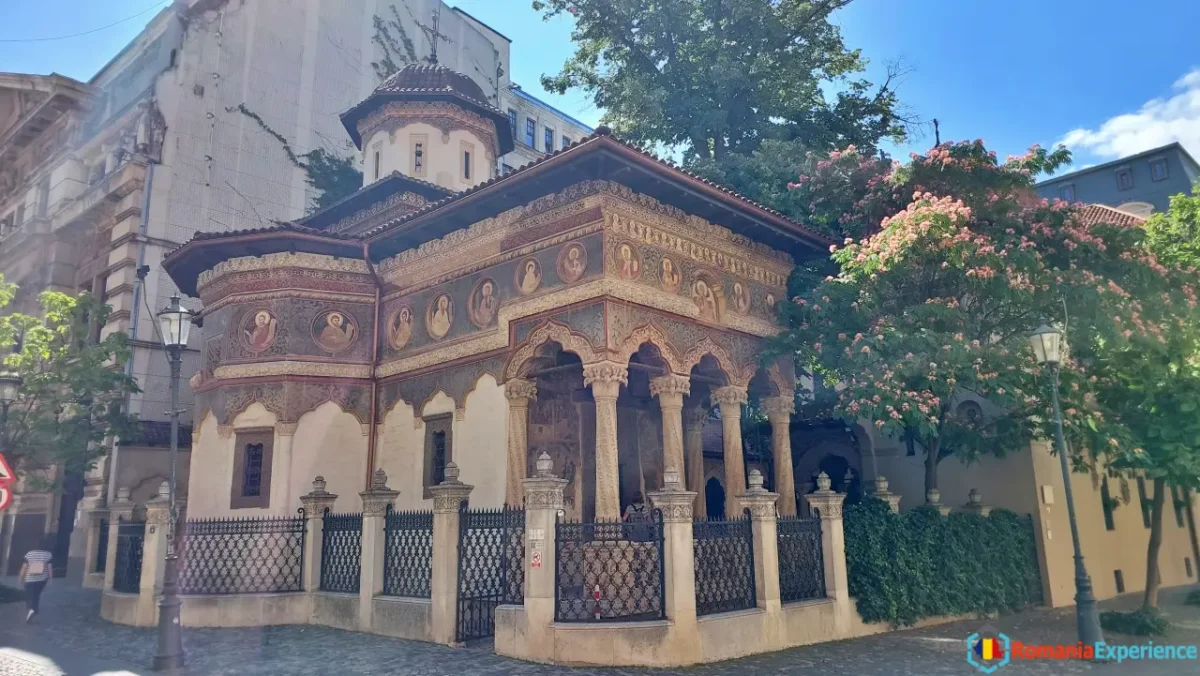
The 18th century brought the Phanariot rulers to Wallachia. These were Greek nobles appointed by the Ottoman Empire, and their influence left a major mark on the city’s culture and administration.
It was during this period that one of my favorite buildings in the city was constructed: the Stavropoleos Church, built in 1724.
It survived fires, earthquakes, and communist bulldozers, and it remains one of the top attractions in the Old Town today. Stopping by its peaceful courtyard is an absolute must – a short, free break while exploring the area.
Bucharest becomes Romania’s capital in the 19th century

Romania, as a unified country, didn’t exist until the 19th century, when the principalities of Wallachia and Moldavia united to create the Romanian United Principalities. That happened in 1862.
That is also when Bucharest became Romania’s capital – on January 22nd, 1862. Except for a brief period during World War I, when the capital was moved to Iasi, Bucharest was always the country’s capital.
As you can imagine, once the city became the country’s capital, things really started to move up, with new buildings being built and a massive influx of people arriving here.
Actually, it was during this time that Bucharest ended up being called
“Little Paris,” for its architecture and the massive use of the French language, especially by the city’s elite.
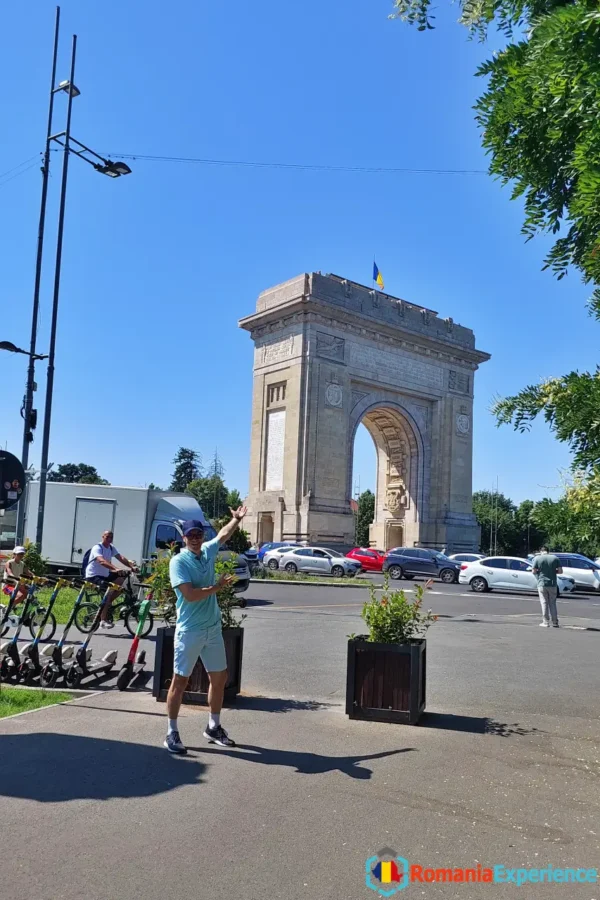
Building up on this, back in 1922, the Arch of Triumph was built, resembling Paris’ own Arc de Triomphe.
World War II, The 1977 Earthquake, and the Communist Regime
Unfortunately, the Second World War caused massive damage to the city, resulting in most of its most important buildings being bombed and destroyed.
But the architectural landscape suffered even more under the communist regime that followed.
In 1977, a devastating 7.2-magnitude earthquake leveled parts of the city. The country’s dictator, Nicolae Ceaușescu, used this natural disaster as an excuse to bulldoze a third of the historic center.
He displaced thousands of families to build his massive Palace of the Parliament and the heavy, gray communist blocks of flats that are still part of the city’s architecture today.
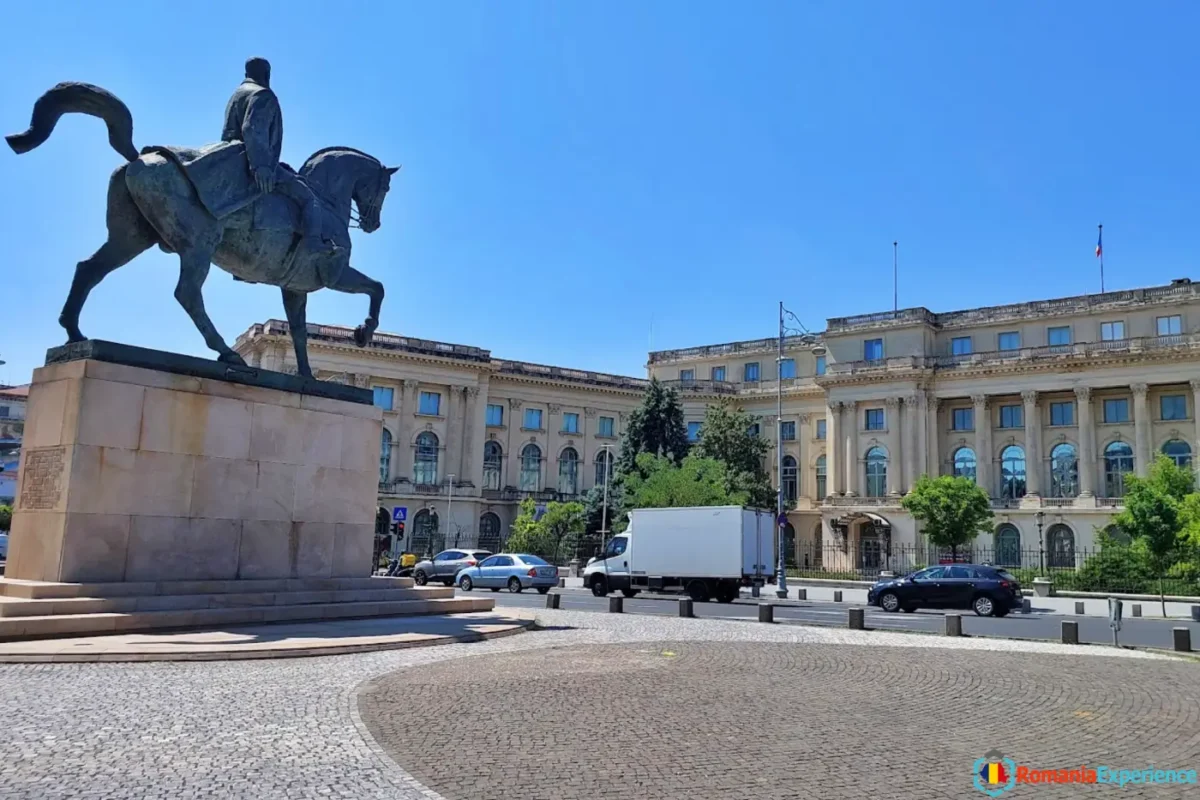
However, there are still some of the old, beautiful buildings and monuments standing today, most of them in the city center area. So, if you’re looking to get a bit of history first hand, that’s the area you should visit first.
You can choose one of my recommended hotels next to Bucharest’s train station to be close to the city center.
The 1989 Revolution and Post-Communist Transition
The oppressive communist era ended in December 1989 with a bloody revolution, and Bucharest was the epicenter of this uprising, although it started in the city of Timisoara.
The protests culminated in Revolution Square, where Ceaușescu fled by helicopter before his capture.
Walking through that square today and seeing the bullet holes still visible in some of the surrounding buildings is a very sobering experience.
Next, the 1990s brought a difficult transition period as the city struggled to adapt to a free-market economy. But the foundation for a modern European capital was successfully laid during those tough years and most of modern Bucharest is built on that early 90s foundation.
Conclusion
For a city as important as Bucharest, this is nothing but a brief history that covers the basics. I tried to keep it as short as possible, but at the same time without skipping any important details.

The city grew nicely and today is an interesting mixture or communist buildings, architectural wonders of the past and modern, impressive structures.
It definitely has its own personality – one that I am not necessarily a big fan of, but which others find charming.
Either way, Bucharest is a city with a rich history and an extremely important city in Romania’s history, hence my decision to write about it.
I know there are many more stories to be told, so if you have one (or more) that are interesting, don’t hesitate to share it in the comments section below.
Love reading Romania Experience? Support my work on Patreon to help fuel future guides, constant updates, and get ad-free access as a thank you!

I am a journalist and local expert who has been documenting life in Romania since 2013. Based in Constanta (after living in Bucharest and Drobeta Turnu Severin), I provide up-to-date, on-the-ground advice for expats and travelers. My articles are based on real life experiences and plenty of research – from paying Romanian bills to exploring the wild “Rawmania” countryside.